- Call : +91 9540210956
- Email: [email protected]
- Artemis Hospital Sector 51 Gurgaon
- 09Am - 5Pm


Chest Drain After Lung Surgery: Care, Removal and Recovery
- Home
- Blog Details

Waking up after lung surgery and finding a tube coming from the side of your chest can feel unsettling. Patients often ask whether it means something went wrong, how long it will stay in, and whether they can walk with it.
A chest drain is commonly part of planned recovery after lung surgery. It removes air and fluid from the space around the lung while the surgical team monitors healing. Understanding its purpose can make the first days after surgery easier to manage.
Why Is a Chest Drain Needed?
Air, fluid or blood can collect in the chest after an operation. A drain provides a route out and helps the remaining lung expand. The tube connects to a drainage system designed to prevent air or fluid returning to the chest.
Royal Brompton and Harefield's chest drain information explains this purpose. The drain sits in the space around the lung; it is different from a breathing tube.
A drain can also be used for conditions such as a collapsed lung. Your team will explain why it is needed in your case.
How Long Does It Stay In?
Some drains are removed within the first couple of days, while others need to remain longer. The amount of air and fluid draining, your clinical progress and chest imaging guide the decision. There is no single removal date that applies to everyone.
UCLH's information on VATS and thoracotomy describes how staff monitor drains and use chest X-rays when assessing removal.
Ask what your team is waiting to see before removal. Comparing your drain with another patient's can be misleading because the operations and recovery differ.
What Does Bubbling or Fluid in the Bottle Mean?
With a water-seal system, bubbling may indicate air leaving the chest. Fluid can look yellow, pink or light red after surgery. Staff assess the pattern and quantity rather than relying on appearance alone.
An ongoing air leak can keep a drain in place longer. This does not automatically mean another operation is necessary. University Hospitals Birmingham's recovery guide explains different drain systems and how they are monitored.
Can You Walk With a Chest Drain?
Many patients can walk with a drain, but ask a nurse to help you get started. If your system is connected to wall suction, staff need to explain the limits on movement.
- Keep a conventional drainage bottle upright and below the drain's entry point, as instructed.
- Carry the bottle by its handle, keeping the tubing free from pulling or tangling.
- Ask for help when getting out of bed or changing position.
- Do not disconnect, clamp or adjust the system yourself.
Guy's and St Thomas' chest drain guidance describes precautions for moving with a bottle. Follow the instructions for your device: portable valve systems may have different handling requirements.
Pain and Problems to Report
Tell your nurse if pain makes breathing or movement difficult. Also report increased breathlessness or a tube that appears to have moved. These are reasons for staff to assess you rather than adjust the equipment yourself.
A blocked drain can sometimes cause sudden breathlessness or swelling under the skin of the chest. North Tees and Hartlepool's chest drain information advises telling nursing staff immediately if you suspect a problem.
If the tube comes loose or the system disconnects, call staff immediately. Do not try to push the tube back in or repair the connection. After discharge, sudden severe breathlessness, severe chest pain or fainting requires emergency assessment.
What Happens When the Drain Is Removed?
A trained clinician removes the dressing and releases the securing stitch as appropriate, then gently withdraws the tube. You may be asked to breathe in a particular way. Removal can be briefly uncomfortable.
Ask about dressing care, any remaining stitch and symptoms to report. The Guy's and St Thomas' guide describes the removal process. Your team's instructions should guide care of your own wound.
Can You Go Home With a Drain?
Sometimes a patient who is otherwise ready for discharge goes home with a suitable portable system while air or fluid continues to drain. Birmingham's recovery guide describes this option. It requires a clear follow-up arrangement.
Before leaving, ask for written device instructions, a contact number, the review date and a plan for problems outside clinic hours. Make sure you and your caregiver understand the plan.
Frequently Asked Questions
Does a drain mean the surgery failed?
No. A drain is often expected after chest surgery. Ask your surgeon how your recovery is progressing.
Can I remove it when the bottle looks empty?
No. Drain removal is a clinical decision, and an empty-looking bottle is not enough to establish that it is safe.
Where can I read about the rest of recovery?
Our lung surgery recovery guide covers the wider recovery period. Before an operation, see our preparation checklist.
Discussing Your Recovery Plan
Ask your surgical team what drain is planned, what determines removal and whom to contact after discharge. If you are considering lung surgery or need a review of your surgical reports, book a consultation with Dr. Parveen Yadav. An urgent drain problem should go directly to your treating team or emergency care.

Dr. Parveen Yadav
18+ Yrs Exp | 5,700+ Thoracic & Robotic Cancer Surgeries
Dr. Parveen Yadav is a Director and Senior Consultant in Thoracic and Surgical Oncology, specializing in minimally invasive and robotic lung and esophageal surgeries, with advanced training from AIIMS and Tata Memorial Hospital.
View Full ProfileRecent Posts

EBUS Biopsy: What to Expect and How It Helps Stage Lung Cancer
- Dr. Parveen Yadav
- Oct 06, 2026

Rib Pain When Coughing: Causes, Warning Signs and Treatment
- Dr. Parveen Yadav
- Oct 02, 2026

Food Stuck in Chest: Causes, Warning Signs and When to Get Help
- Dr. Parveen Yadav
- Sep 28, 2026
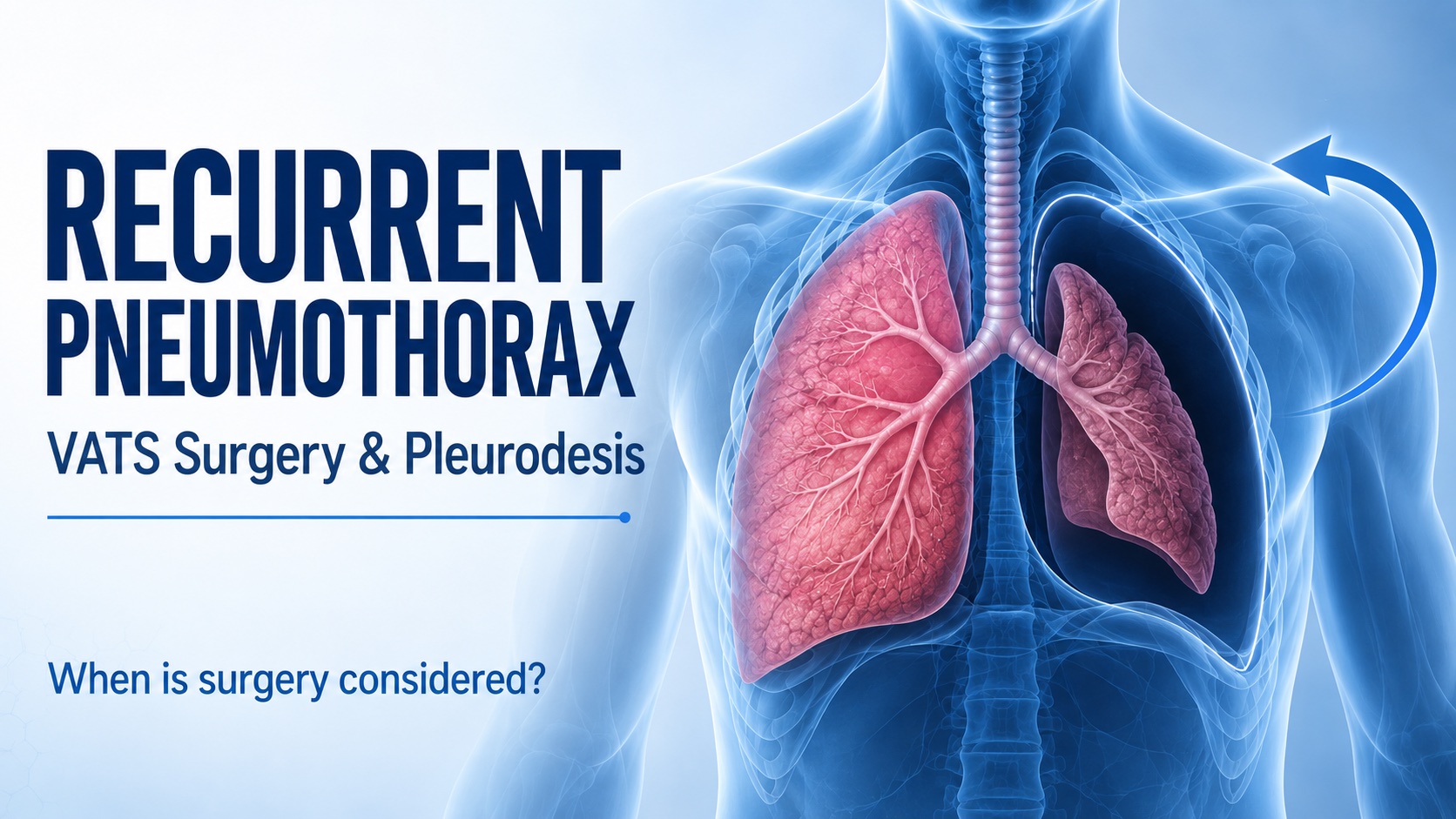
Recurrent Pneumothorax: When Are VATS and Pleurodesis Needed?
- Dr. Parveen Yadav
- Sep 24, 2026
Related Posts
Recurrent Pneumothorax: When Are VATS and Pleurodesis Needed?
Learn when recurrent pneumothorax needs surgery, how VATS and pleurodesis help prevent another collapsed lung, and what recovery and follow-up involve.
- Read More
- Sep, 24 2026

Fluid Around the Lung (Pleural Effusion): Causes and Treatment
Understand pleural effusion (fluid around the lung): what causes it, common symptoms, how it is investigated and why treatment depends on the underlying cause.
- Read More
- Sep, 17 2026

Preparing for Lung Surgery: A Patient Checklist
A practical, patient-first checklist for preparing for lung surgery, from tests and medicines to smoking cessation, support at home and questions for your surgeon.
- Read More
- Sep, 14 2026
Copyright 2026 © Dr .Parveen Yadav all rights reserved.
Proudly Scaled by Public Media Solution!