- Call : +91 9540210956
- Email: [email protected]
- Artemis Hospital Sector 51 Gurgaon
- 09Am - 5Pm


Recurrent Pneumothorax: When Are VATS and Pleurodesis Needed?
- Home
- Blog Details
A second collapsed lung can be more unsettling than the first. You may have recovered, returned to work and started feeling confident again, only to face another chest X-ray, another drain and another interruption to daily life. At that point, the question changes from “How do we re-expand the lung?” to “Can we reduce the chance of this happening again?”
Recurrent pneumothorax is a reason to discuss a longer-term plan with a respiratory specialist and thoracic surgeon. That plan may include VATS surgery, treatment of abnormal lung tissue and pleurodesis. Understanding what each procedure does helps you weigh the benefits, recovery and limitations without assuming that everyone needs the same operation.
First: New Symptoms Need Assessment, Even After Surgery
If you develop sudden chest pain or new breathlessness after a previous pneumothorax, seek urgent medical assessment. Severe breathing difficulty, fainting, confusion or blue lips requires emergency care. Do not wait for a routine consultation, and do not assume a previous operation makes another collapse impossible.
Symptoms alone cannot confirm whether the lung is fully expanded. A chest X-ray is commonly used to assess a suspected recurrence. Even relatively mild symptoms deserve attention when they are new. Gloucestershire Hospitals' patient guidance explains the warning symptoms and assessment of spontaneous pneumothorax.
What Is Recurrent Pneumothorax?
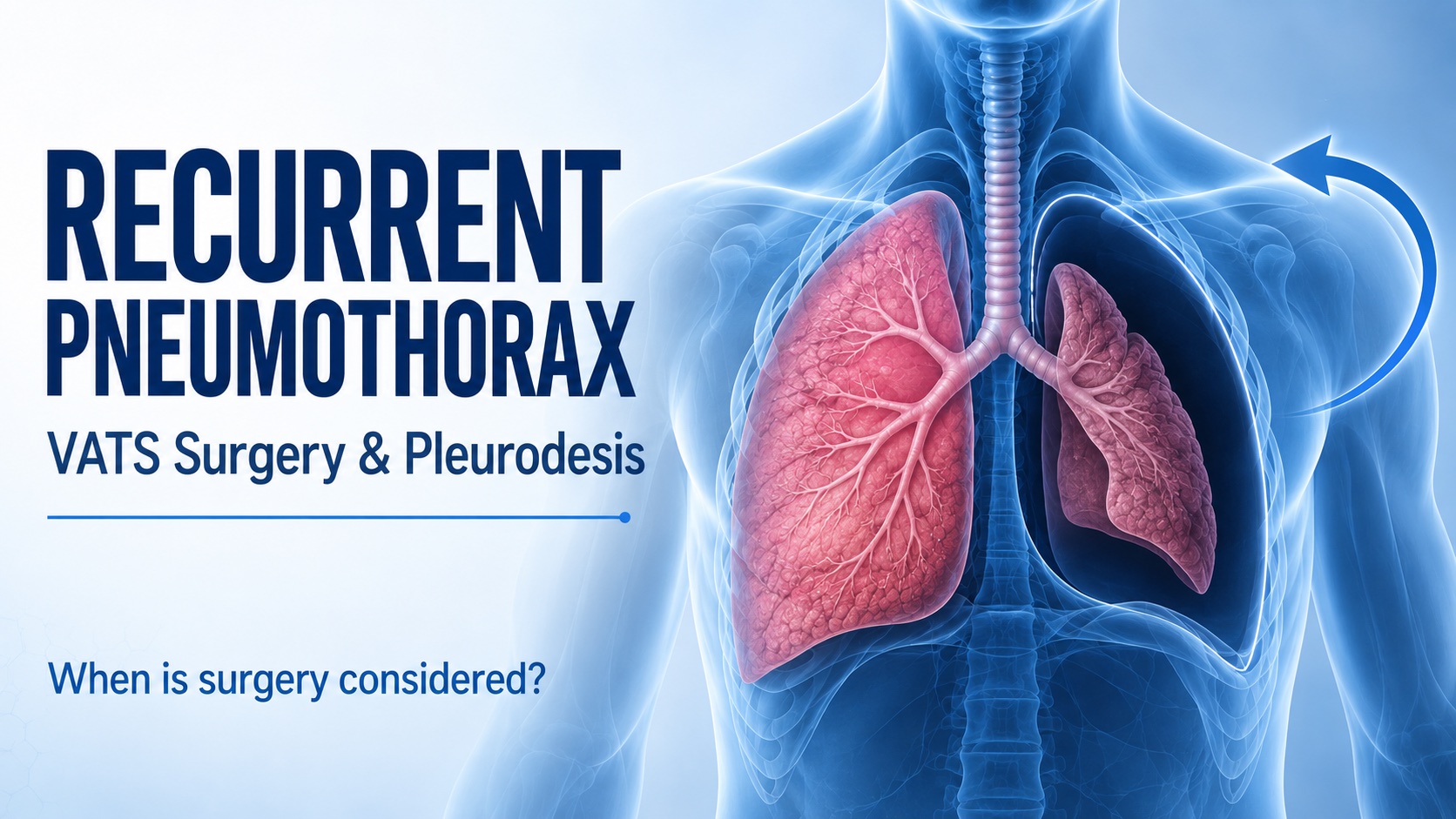
A pneumothorax occurs when air collects between the lung and the chest wall. The air separates the lung from the chest wall and allows it to collapse partially or more extensively. A recurrent episode means that pneumothorax has happened again after a previous episode.
Doctors distinguish primary spontaneous pneumothorax, occurring without a previously recognised lung disease, from secondary spontaneous pneumothorax, which occurs alongside an underlying condition. Examples include COPD and other diseases that damage lung tissue. Injury-related pneumothorax and pneumothorax following a medical procedure are separate situations.
That distinction matters because the patient's breathing reserve and the cause of the leak affect management. A prevention plan for a young person with otherwise healthy lungs may differ from one for someone with significant existing lung disease. Worcestershire Acute Hospitals describes these categories. For a broader introduction, read our pneumothorax symptoms and treatment guide.
Why a Chest Drain and Recurrence Prevention Are Different
A chest drain allows air already trapped around the lung to escape. It helps the lung re-expand while the team observes whether the leak settles. Removing the drain after recovery does not, by itself, mean that the underlying tendency to leak has been permanently corrected.
Some patients recover without needing a prevention procedure. Others develop another episode or continue leaking during the original admission. Those are different clinical problems, although both may lead to a surgical review. Oxford University Hospitals' pneumothorax booklet explains drainage and the reasons for referral.
For your consultation, list the date and side of every episode, how it was treated, and whether an X-ray confirmed recovery between episodes. Bring the discharge summaries and images. A clear timeline helps the team distinguish a new collapse from an unresolved problem.
When Is Surgery Considered?
The British Thoracic Society recommends considering elective surgery after a second episode on the same side or a first episode on the opposite side. Surgical advice may also be appropriate for a persistent air leak or a lung that does not re-expand.
Sometimes recurrence prevention is discussed after the first episode, particularly after tension pneumothorax or where another episode would carry special occupational risks. Referral timing for an ongoing leak is individualised; a patient should not use an internet day-count to decide whether treatment is being delayed.
These are reasons for assessment, not automatic instructions to operate. Fitness, lung disease, the consequences of recurrence and the patient's preferences all belong in the discussion. See the BTS Guideline for Pleural Disease.
Can patient preference influence the decision?
Yes. The 2024 ERS/EACTS/ESTS guideline conditionally supports early surgery for selected primary spontaneous pneumothorax patients who prioritise preventing recurrence. “Conditional” means the balance is not identical for everyone; benefits and burdens need discussion.
Tell the team how another episode might affect your work, access to medical care or planned travel. Also explain concerns about pain, time away from family and having another procedure. These priorities help the consultation focus on the trade-offs that matter to you. Read the joint European guideline.
Understanding VATS, Bullectomy, Pleurodesis and Pleurectomy
These terms are often mentioned together, but they describe different parts of treatment. Ask your surgeon to write down the complete planned procedure rather than just saying “keyhole surgery”.
| Term | What it describes |
|---|---|
| VATS | A camera-assisted approach through small chest incisions |
| Bullectomy or bleb resection | Removal of selected abnormal air-filled areas of lung |
| Pleurodesis | Encouraging the lung and chest-wall pleural surfaces to adhere |
| Pleural abrasion | Irritating the chest-wall lining to encourage adhesion |
| Pleurectomy | Removing a portion of the chest-wall pleural lining |
VATS is the access method
Video-assisted thoracoscopic surgery uses a camera and surgical instruments through small openings. It allows the surgeon to inspect and treat the affected side of the chest. In some circumstances, an open incision is needed. Consent should cover that possibility and the reason a change of approach might be necessary.
Treating abnormal lung tissue
Blebs and bullae are abnormal air-filled areas that can be associated with leakage. If suitable areas are identified, the surgeon may remove them. This targets the lung abnormality; a pleural procedure may be added to reduce the chance of another collapse.
Encouraging the lung to adhere to the chest wall
Pleural abrasion and pleurectomy use different methods to encourage adhesion. Pleurodesis can also involve a substance such as sterile medical talc. These are alternatives or components of a planned operation, rather than a list of procedures every patient must receive. University Hospital Southampton explains these surgical options.
Can Pleurodesis Be Done Without an Operation?
Yes. Chemical pleurodesis can sometimes be delivered through a chest drain. The aim is to create inflammation that makes the two pleural surfaces stick together. The lung generally needs to expand sufficiently for those surfaces to come into contact.
It is not simply another name for draining air. Pleurodesis adds a deliberate treatment step, with its own consent, pain relief and monitoring. Chest discomfort and fever can occur, and the procedure does not work in every patient. Cambridge University Hospitals explains chest-drain pleurodesis.
If surgery is unsuitable, ask whether a drain-based option could meet the treatment goal. Also ask whether the immediate problem is an ongoing leak, poor expansion or preventing a later recurrence: those questions may lead to different recommendations.
What If an Air Leak Continues and Surgery Is Too Risky?
A continuing air leak requires a specialist plan. Options depend on the cause, whether the lung is expanded and the patient's overall condition. In selected secondary spontaneous pneumothorax patients with a persistent leak, the European guideline conditionally supports an autologous blood patch, which uses the patient's own blood through the drain.
This is not a treatment to arrange independently, and evidence does not support every option equally. Ask the team to explain what they expect a proposed intervention to achieve and how they will decide whether it has worked. A clear review point is especially helpful when treatment has already involved several days in hospital.
Assessment Before Planned Pneumothorax Surgery
The pre-operative assessment reviews your fitness for the procedure and general anaesthesia. Depending on your situation, it may include blood tests, an ECG, imaging and lung-function tests. Tell the team about previous anaesthetic problems, allergies, heart or lung conditions and all medicines you take.
Ask for written instructions about fasting, medicines and arrival. Do not stop blood thinners or other prescribed treatment without individual advice. If you already have a chest drain, ask how admission and transfer will be arranged. Blackpool Teaching Hospitals' VATS guide covers preparation and consent.
Practical planning matters too. Arrange someone to bring you home, help with shopping and heavier tasks, and keep hospital contact details accessible. If you live far from the treating hospital, ask where urgent reassessment should happen and where follow-up imaging can be performed.
Benefits and Risks: What Surgery Can and Cannot Promise
The purpose of recurrence-prevention surgery is to lower the chance of another collapse and, where relevant, address a persistent leak. It cannot promise that pneumothorax will never happen again. An operation on one side also should not be understood as protection for the opposite lung.
Possible problems include bleeding, chest infection, breathing difficulties and air tracking beneath the skin. A continued air leak may require longer drainage or further treatment. Liverpool Heart and Chest Hospital's pleurectomy leaflet describes the procedure and important risks.
Ask for the expected recurrence and complication risks for the specific procedure being proposed. Check whether an estimate applies to patients with your type of pneumothorax and over what follow-up period. A number quoted for healthy young patients may not describe someone with substantial underlying lung disease.
Recovery in Hospital and at Home
After the operation
You will be monitored while recovering from anaesthesia. A chest drain commonly remains to remove air and fluid and allow the team to assess lung expansion. Pain relief, assisted movement and breathing exercises form part of early recovery.
Ask what must happen before the drain can be removed and what the criteria are for discharge. The answer should relate to your breathing, drainage and progress. A longer stay does not automatically mean the treatment has failed; it may reflect a problem that needs more time or monitoring.
Making recovery instructions usable
Before going home, ask someone from the team to go through the medicine schedule with you. Write down when dressings or stitches need attention, what activity is encouraged and which symptoms require a call. Ask for clarification if two instructions appear to conflict.
Arrange short, manageable periods of activity alongside rest, following your discharge plan. Avoid setting a return-to-work date solely from another patient's story. Desk work, driving and a physically demanding job place different demands on recovery. NHS recovery guidance emphasises individual advice and support after discharge.
When to contact the team
Report worsening wound pain, redness, discharge or fever promptly. If pain is preventing the breathing or movement exercises you were advised to do, ask for the pain plan to be reviewed. Sudden breathlessness or new chest pain still needs urgent assessment rather than being assumed to be part of routine healing.
Smoking, Exercise, Flying and Scuba Diving
Smoking increases the risk of another pneumothorax. Ask for cessation support and discuss what has made previous attempts difficult. A practical plan is more useful than leaving hospital with only an instruction to stop. Dorset County Hospital's guidance discusses smoking and returning to activity.
Do not fly while a pneumothorax remains unresolved. Published advice commonly requires waiting at least seven days after complete resolution has been confirmed, but recent chest surgery, individual risk and airline requirements can mean a longer delay. Obtain clearance from your treating team before booking or travelling.
Scuba diving is a separate concern because pressure changes can make a recurrence especially dangerous. A previous pneumothorax generally rules out diving unless stringent specialist criteria are met after definitive treatment. Having surgery is not, by itself, permission to dive. North Tees and Hartlepool discusses travel and diving precautions.
Frequently Asked Questions
Does a second pneumothorax always mean I need surgery?
It is a strong reason for a specialist discussion about prevention. The decision still depends on the affected side, recovery from the current episode, underlying disease, surgical fitness and your preferences.
Can pneumothorax return after VATS or pleurodesis?
Yes. These treatments reduce risk but do not eliminate it. Keep your operation details and seek assessment if symptoms return, even if the surgery was years ago.
Is pleurectomy the same as removing the lung?
No. Pleurectomy treats the pleural lining. Any planned removal of lung tissue, such as a bullectomy, is a separate part of the operation and should be explained during consent.
How long will I need a chest drain?
There is no single duration that applies to everyone. Ask how the team is measuring the air leak and lung expansion, what would allow removal and what the next step would be if drainage remains necessary.
Should I avoid normal activity forever?
Ask for a staged plan, including what you can do now and what needs clearance later. Return to exercise is different from clearance for flying or diving. Keep those questions separate so you receive specific advice.
Planning a Consultation for Recurrent Pneumothorax in Gurgaon
Bring the images and reports from each episode, discharge summaries, details of any previous chest operation and a medicine list. Write down your main concern: another emergency admission, an ongoing leak, treatment risks or getting back to work.
During your consultation, ask which problem the proposed procedure addresses, what the alternatives are and how recovery will be followed. Arrange a consultation with Dr. Parveen Yadav for an individual assessment. The most useful outcome is a clear plan for treatment, follow-up and what to do if symptoms recur.
Cover: AI-generated conceptual medical illustration created for this article; not a patient scan or surgical planning diagram.

Dr. Parveen Yadav
18+ Yrs Exp | 5,700+ Thoracic & Robotic Cancer Surgeries
Dr. Parveen Yadav is a Director and Senior Consultant in Thoracic and Surgical Oncology, specializing in minimally invasive and robotic lung and esophageal surgeries, with advanced training from AIIMS and Tata Memorial Hospital.
View Full ProfileRecent Posts
Chest Drain After Lung Surgery: Care, Removal and Recovery
- Dr. Parveen Yadav
- Oct 10, 2026

EBUS Biopsy: What to Expect and How It Helps Stage Lung Cancer
- Dr. Parveen Yadav
- Oct 06, 2026

Rib Pain When Coughing: Causes, Warning Signs and Treatment
- Dr. Parveen Yadav
- Oct 02, 2026

Food Stuck in Chest: Causes, Warning Signs and When to Get Help
- Dr. Parveen Yadav
- Sep 28, 2026
Related Posts
Chest Drain After Lung Surgery: Care, Removal and Recovery
Understand why a chest drain is used after lung surgery, how to move safely with it, what guides removal and which warning signs need urgent help.
- Read More
- Oct, 10 2026

Fluid Around the Lung (Pleural Effusion): Causes and Treatment
Understand pleural effusion (fluid around the lung): what causes it, common symptoms, how it is investigated and why treatment depends on the underlying cause.
- Read More
- Sep, 17 2026

Preparing for Lung Surgery: A Patient Checklist
A practical, patient-first checklist for preparing for lung surgery, from tests and medicines to smoking cessation, support at home and questions for your surgeon.
- Read More
- Sep, 14 2026
Copyright 2026 © Dr .Parveen Yadav all rights reserved.
Proudly Scaled by Public Media Solution!