


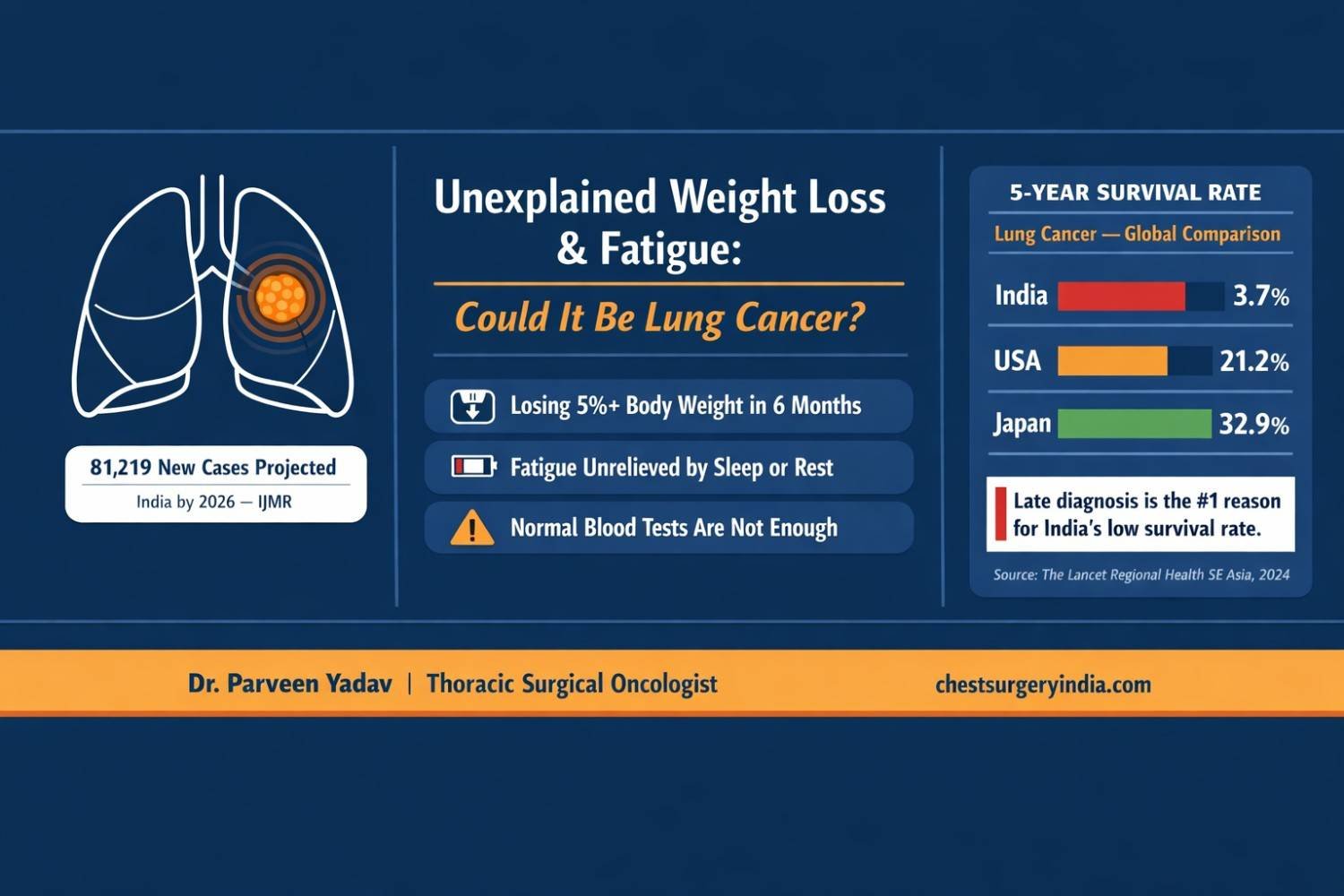
Priya came to my clinic on a Tuesday afternoon. She was 54, a non-smoker, a school teacher from South Delhi who had been exhausted for months. She had lost almost 8 kilograms since January without changing a single thing about her diet. Her family doctor had checked her thyroid, blood sugar, and hemoglobin. Everything came back normal. "It is probably stress," he told her. "Try eating more."
By the time she sat across from me, her lung cancer had already reached Stage III.
I share Priya's story not to alarm you, but because it is not rare. In my years as a thoracic surgical oncologist, I have seen this exact pattern more times than I would like to count. A patient, often a non-smoker, comes in after months of unexplained fatigue and weight loss. They have seen two or three doctors. Nobody has taken a chest X-ray. By the time someone finally does, the window for early surgery has narrowed significantly.
If you or someone you love has been losing weight without trying, or feels exhausted in a way that sleep does not fix, this article is for you. Let me explain what your body may actually be signaling.
| Quick Definition: Unexplained weight loss and persistent fatigue are among the earliest systemic signals of lung cancer. They occur because the tumor alters the body's metabolism and hormone balance, often well before any cough or breathing difficulty appears. |
Most people still believe lung cancer is a disease that only affects heavy smokers. In my clinical experience, that belief costs lives.
India is facing a lung cancer crisis that goes largely unnoticed. According to the Indian Journal of Medical Research (2025), lung cancer incidence in India is projected to reach 81,219 cases by 2025, up from 63,708 in 2015. Critically, 80 to 85% of those patients will present with advanced, incurable disease, accounting for nearly 60,000 deaths each year.
Here is the part that surprises most patients: in a large north Indian study, nearly 44% of new lung cancer cases were recorded in non-smokers (PMC, 2024). Air pollution, indoor cooking smoke, occupational chemical exposure, and genetic mutations are driving lung cancer into households that have never had a cigarette.
There is also a uniquely Indian delay factor that deserves more attention: tuberculosis. Because TB and early lung cancer share overlapping symptoms, including fatigue, weight loss, and a chronic cough, lung cancer in India is frequently misdiagnosed as TB for months or longer. During that time, the cancer grows.
Here is the surprising truth about cancer-related weight loss: it is not just about your appetite.
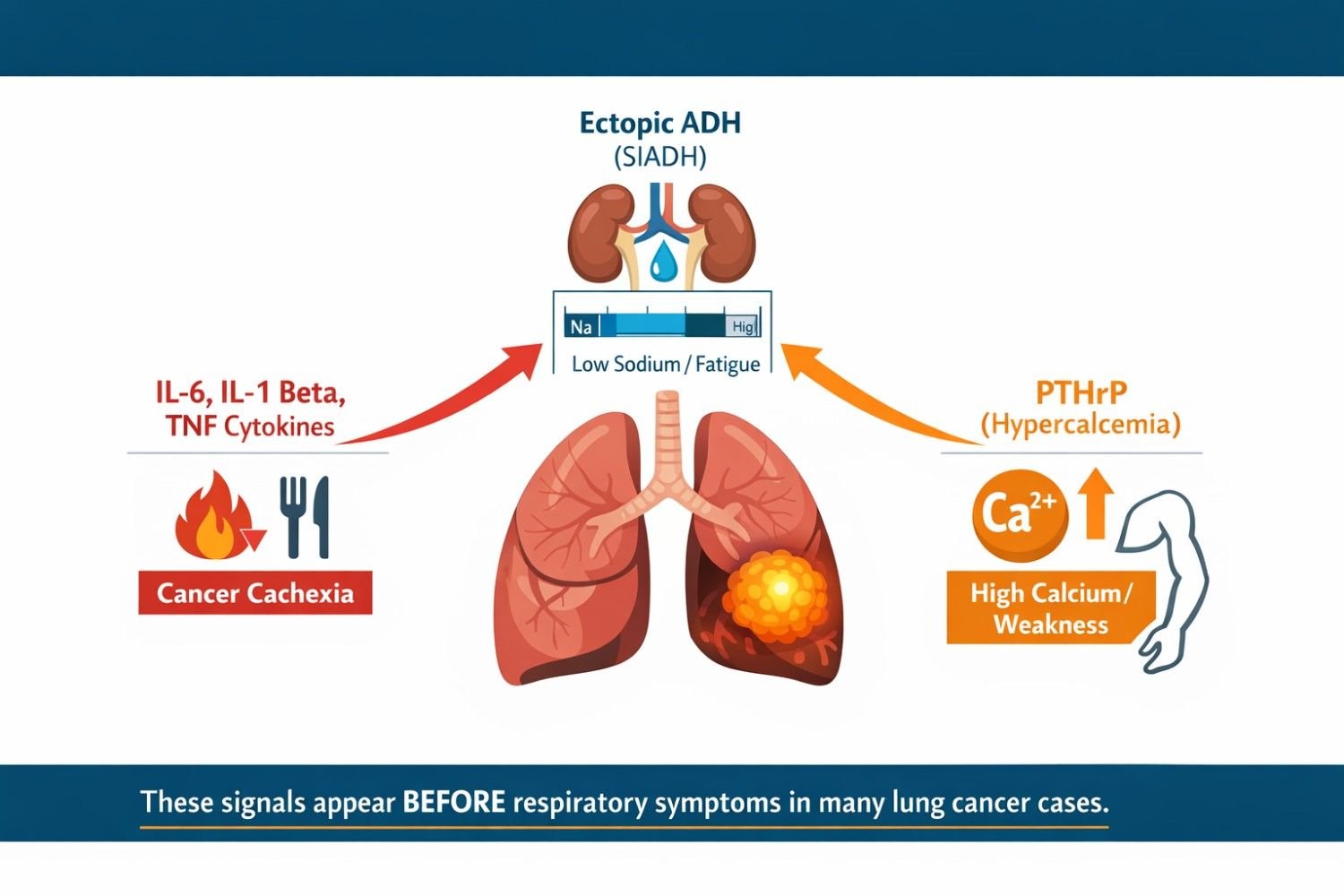
When lung cancer is present, the tumor triggers a widespread inflammatory response. It releases signaling proteins called cytokines, including IL-1 beta, IL-6, and tumor necrosis factor (TNF), into the bloodstream. These chemicals instruct the body to burn more energy even at rest, while simultaneously suppressing hunger. The result is a double blow: you eat less and burn more. This condition is called cancer cachexia. According to research published in the NIH database, cachexia is a metabolic syndrome characterized by unintended weight loss, muscle wasting, and fatigue, distinguished from ordinary weight loss by the inability to reverse it with nutritional support alone. Families who push patients to 'eat more' are not wrong to try, but they are fighting a biological process that goes far deeper than a plate of food.
Approximately 60% of lung cancer patients have already experienced significant weight loss at the time of diagnosis (Klarity Health). That number tells you exactly how early in the disease course this symptom can appear.
| Medical Alert: A January 2024 study published in JAMA found that unintentional weight loss was significantly associated with increased lung cancer risk. Researchers at Dana-Farber Cancer Institute concluded that anyone losing more than 5% of their body weight in six to twelve months, without a dietary or exercise explanation, should see a doctor promptly. For a 70 kg person, that is roughly 3.5 kg. |
I ask every patient who mentions fatigue to describe it to me. Most say the same thing: 'I sleep eight hours and wake up just as exhausted.' That is not a lifestyle problem. That is cancer-related fatigue (CRF), and it operates very differently from the tiredness that follows a long workday.
The same cytokines driving weight loss also disrupt sleep architecture, impair muscle function, and reduce mental clarity. But there is a deeper mechanism that almost no mainstream health article explains.
Lung cancer is one of the cancers most strongly associated with paraneoplastic syndromes, as documented by the American Cancer Society. In these syndromes, the tumor produces hormones, peptides, or antibodies that travel through the bloodstream and damage tissues at locations far from the lung itself. This can happen before the tumor is large enough to cause any cough or breathing difficulty.
Two syndromes every patient and family member should understand:
SIADH (Syndrome of Inappropriate ADH Secretion): The tumor produces anti-diuretic hormone (ADH), causing the kidneys to retain excess water. Blood sodium drops, triggering fatigue, muscle cramps, nausea, and confusion. According to a review in Translational Lung Cancer Research, 10 to 45% of small cell lung cancer patients can produce ectopic ADH.
Hypercalcemia: Some lung tumors produce parathyroid hormone-related peptide (PTHrP), which raises calcium in the blood. The result is weakness, fatigue, dizziness, constipation, and confusion. This occurs in 2 to 6% of lung cancer patients at initial diagnosis. Both conditions can send a patient through rounds of blood tests without being flagged as lung cancer, simply because no one ordered a chest image.
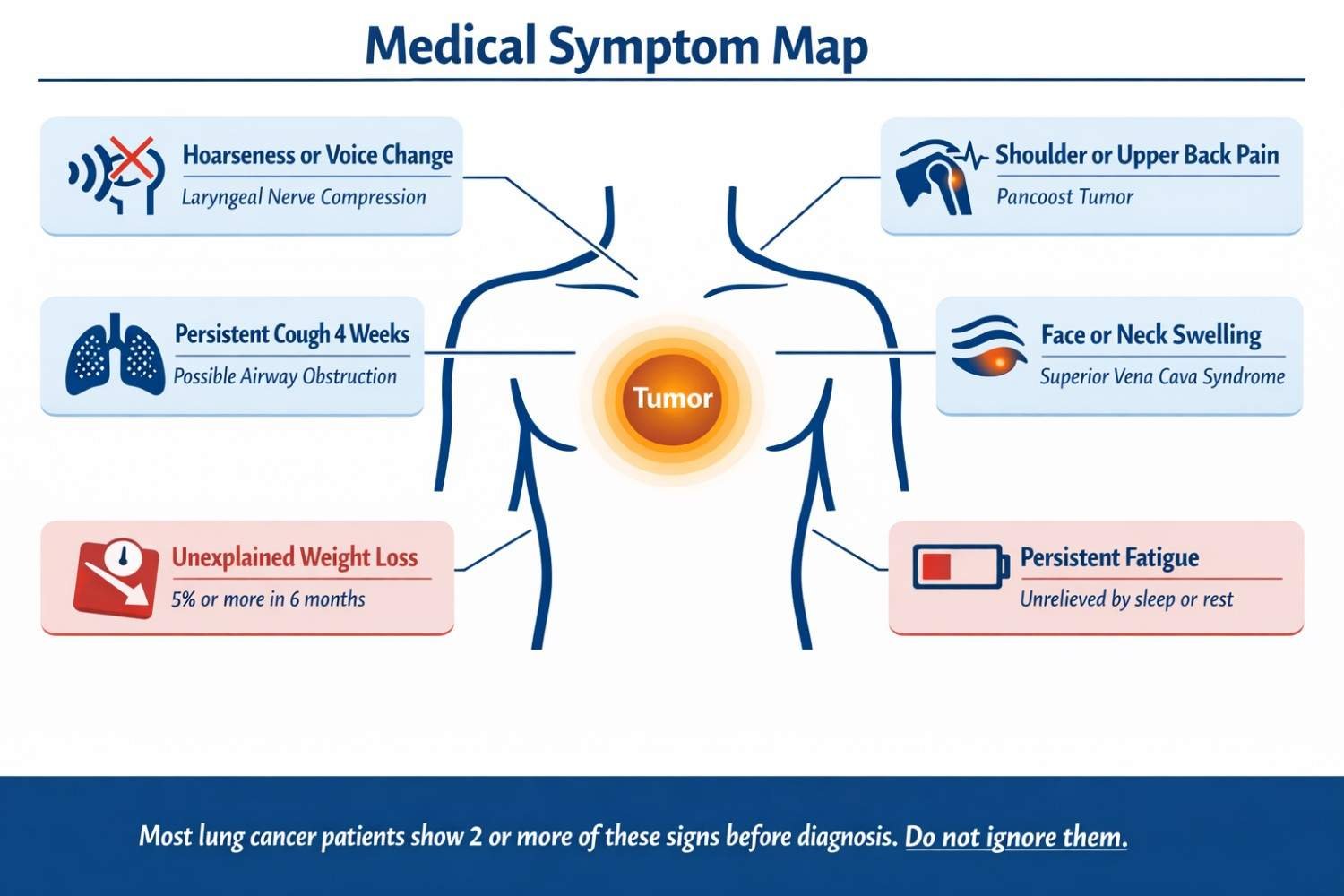
Weight loss and fatigue rarely appear alone in lung cancer. When either occurs alongside even one of the following symptoms, the case for immediate chest imaging becomes very strong.
| Symptom | What It May Indicate | Recommended Action |
| Persistent cough (4+ weeks) | Airway obstruction by tumor | Chest X-ray or LDCT |
| Shoulder or upper back pain | Pancoast tumor at lung apex | Urgent chest imaging |
| Hoarseness without a cold | Laryngeal nerve compression | ENT and chest evaluation |
| Finger clubbing | Chronic hypoxia from tumor | Full respiratory workup |
| Recurrent pneumonia | Airway blocked behind tumor | CT scan |
| Face, neck, or arm swelling | Superior vena cava syndrome | Emergency evaluation |
Most screening guidelines focus on smokers aged 50 and above as the primary risk group. That guidance matters, but it misses a growing and underevaluated group of patients.
Non-smokers developing adenocarcinoma, the most common type among women and non-smokers in India, are increasingly the patients I see. According to a 2024 review in The Lancet Regional Health Southeast Asia, a substantial proportion of lung cancer patients across Asia are never-smokers, and adenocarcinoma is the dominant histopathologic subtype.
You may be at elevated risk even as a non-smoker if you:
• Live or work in a high-AQI city such as Delhi or Gurugram
• Have a first-degree relative who was diagnosed with lung cancer
• Have a history of COPD, interstitial lung disease, or prior tuberculosis
• Had occupational exposure to asbestos, chromium, or cadmium
• Are a woman in a household where cooking relies on wood or kerosene
This is where I want to be completely direct with you.
Standard blood panels, including thyroid function, CBC, blood sugar, and liver enzymes, do not detect lung cancer. Lung cancer is invisible on routine blood work in its early stages. The only test that can find it is imaging: a chest X-ray to start, and a Low-Dose CT scan (LDCT) for higher-risk individuals.
If your weight loss and fatigue have lasted more than four weeks and your blood results are all normal, that is not reassurance. That is a gap in the investigation. The next step must be chest imaging. If something is found, a PET-CT, bronchoscopy, and tissue biopsy follow. Molecular profiling, including EGFR, ALK, ROS1, and KRAS gene mutation tests, has become standard practice in 2025 and directly determines whether targeted therapy is an option.
Concerned About Unexplained Symptoms? Do not wait for symptoms to worsen. Talk to a chest specialist before the window narrows. Contact Dr. Parveen Yadav at Chest Surgery India |
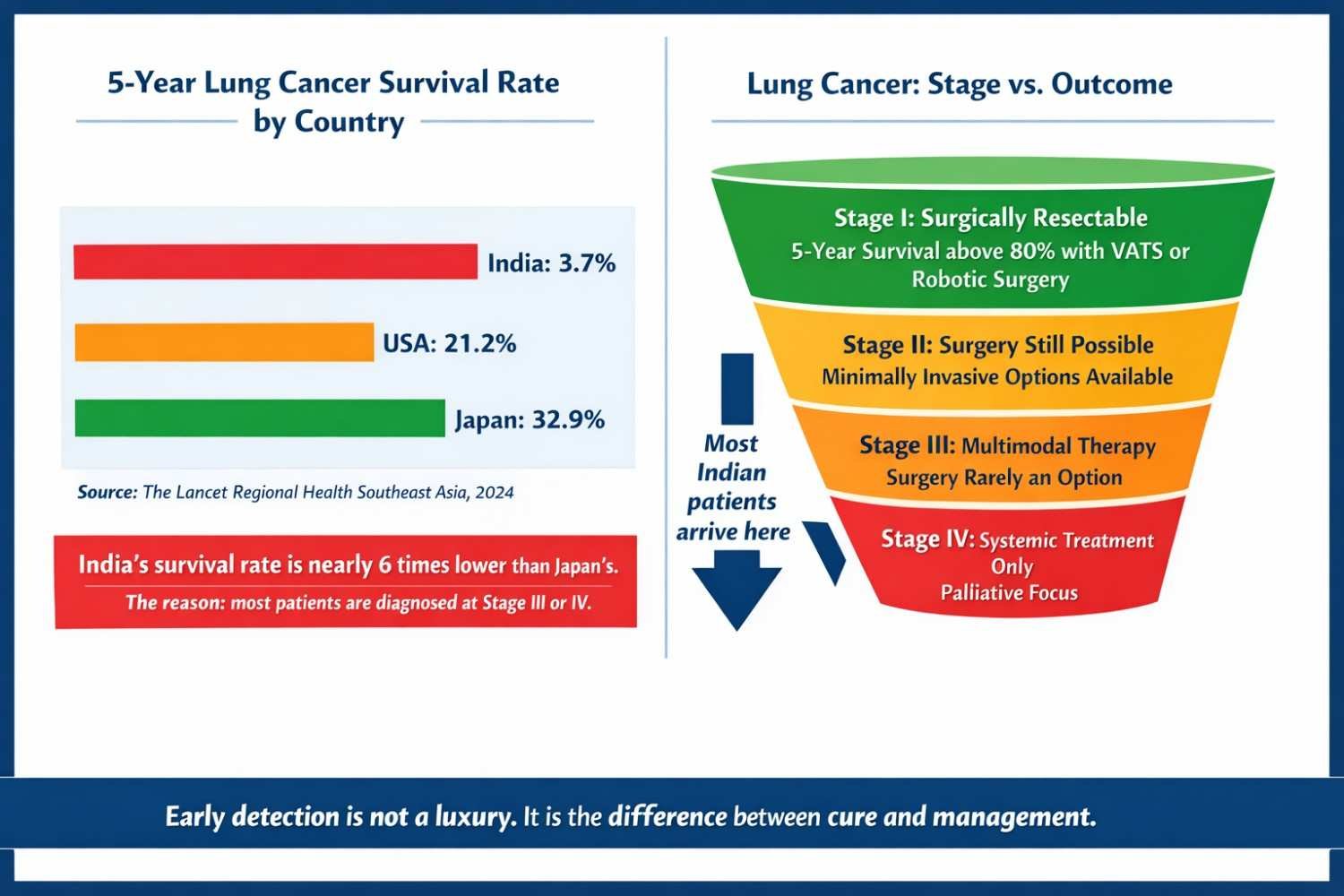
Here is a fact I share with every patient's family: lung cancer caught at Stage I or Stage II is a surgically treatable disease. According to The Lancet Regional Health Southeast Asia (2024), the age-standardised 5-year survival rate for lung cancer in India is only 3.7%, compared to 21.2% in the USA and 32.9% in Japan. That gap is almost entirely explained by the stage at which patients arrive.
At Stage I or II, minimally invasive surgery, including VATS (Video-Assisted Thoracoscopic Surgery) and robotic-assisted lobectomy, removes the tumor precisely while preserving lung function. Most patients are discharged in three to five days. Long-term outcomes are meaningfully better than at any later stage.
By Stage III or IV, the surgical window has closed. Treatment shifts to combinations of chemotherapy, immunotherapy, targeted therapy, and radiation. Outcomes are significantly harder. This is why acting on early, unexplained symptoms is not an overreaction. It is the most important thing you can do for someone you love.
Learn About Lung Cancer Treatment in Gurgaon Explore surgical and non-surgical treatment options with a leading lung cancer surgeon in Gurgaon. View Lung Cancer Treatments at Chest Surgery India |
If three or more of the following apply to you or a family member, please do not wait. Request a chest X-ray at minimum, and ask your doctor directly: 'Should we do chest imaging?'
• Weight loss of more than 5% in six months without changing diet or exercise
• Fatigue that has lasted more than four weeks and does not improve with rest
• A cough that has been present for three to four weeks or longer
• Shoulder, upper back, or chest pain without a clear physical injury
• Two or more chest infections or bouts of pneumonia in the past year
• Normal blood results but symptoms that keep continuing or worsening
• History of heavy smoking, tuberculosis, COPD, or long-term high pollution exposure
• Unexplained weight loss and persistent fatigue are early systemic signals of lung cancer, not just stress or aging
• Cancer cachexia and paraneoplastic syndromes including SIADH and hypercalcemia cause these symptoms through mechanisms that standard blood tests will not detect
• Nearly 44% of new lung cancers in north India occur in non-smokers; smoking history alone cannot determine who is at risk
• India's 5-year lung cancer survival rate is 3.7%, largely because most patients arrive at Stage III or IV; Stage I and II are surgically curable
• If blood tests return normal but symptoms persist beyond four weeks, the next step must be chest imaging
I go back to Priya. After her Stage III diagnosis, she went through targeted therapy and chemotherapy. Her cancer is currently stable. She is still teaching. And she now tells every colleague who mentions unexplained tiredness or weight loss the same thing: 'Do not let anyone say it is just stress without taking a chest X-ray first.'
She is right. The body does not send random signals. When unexplained weight loss and fatigue arrive together, they deserve a proper investigation, not just reassurance. The earlier that investigation happens, the more options a patient has.
If you are reading this because something does not feel right for you or someone in your family, trust that instinct. Ask for chest imaging. Talk to a thoracic specialist. The earlier you act, the more we can do together.
Not Sure Where to Start? Get a Free Second Opinion. A second surgical opinion from a thoracic oncologist can change the entire course of diagnosis and treatment. Request a Free Second Opinion at Chest Surgery India |
| Have a question? Are you or a family member dealing with symptoms that have gone unexplained for weeks? Share in the comments below or reach out directly. Early questions lead to early answers, and earlier answers lead to better outcomes. |

18+ Yrs Exp | 5,700+ Thoracic & Robotic Cancer Surgeries
Dr. Parveen Yadav is a Director and Senior Consultant in Thoracic and Surgical Oncology, specializing in minimally invasive and robotic lung and esophageal surgeries, with advanced training from AIIMS and Tata Memorial Hospital.
View Full Profile
Robotic vs VATS lobectomy? An expert guide to choosing the best lung cancer treatment in Gurgaon & Delhi. Learn the pros, cons, and key differences.
A lung cancer diagnosis is overwhelming. A second opinion can confirm your path, find better treatments, and give you critical peace of mind. Learn why
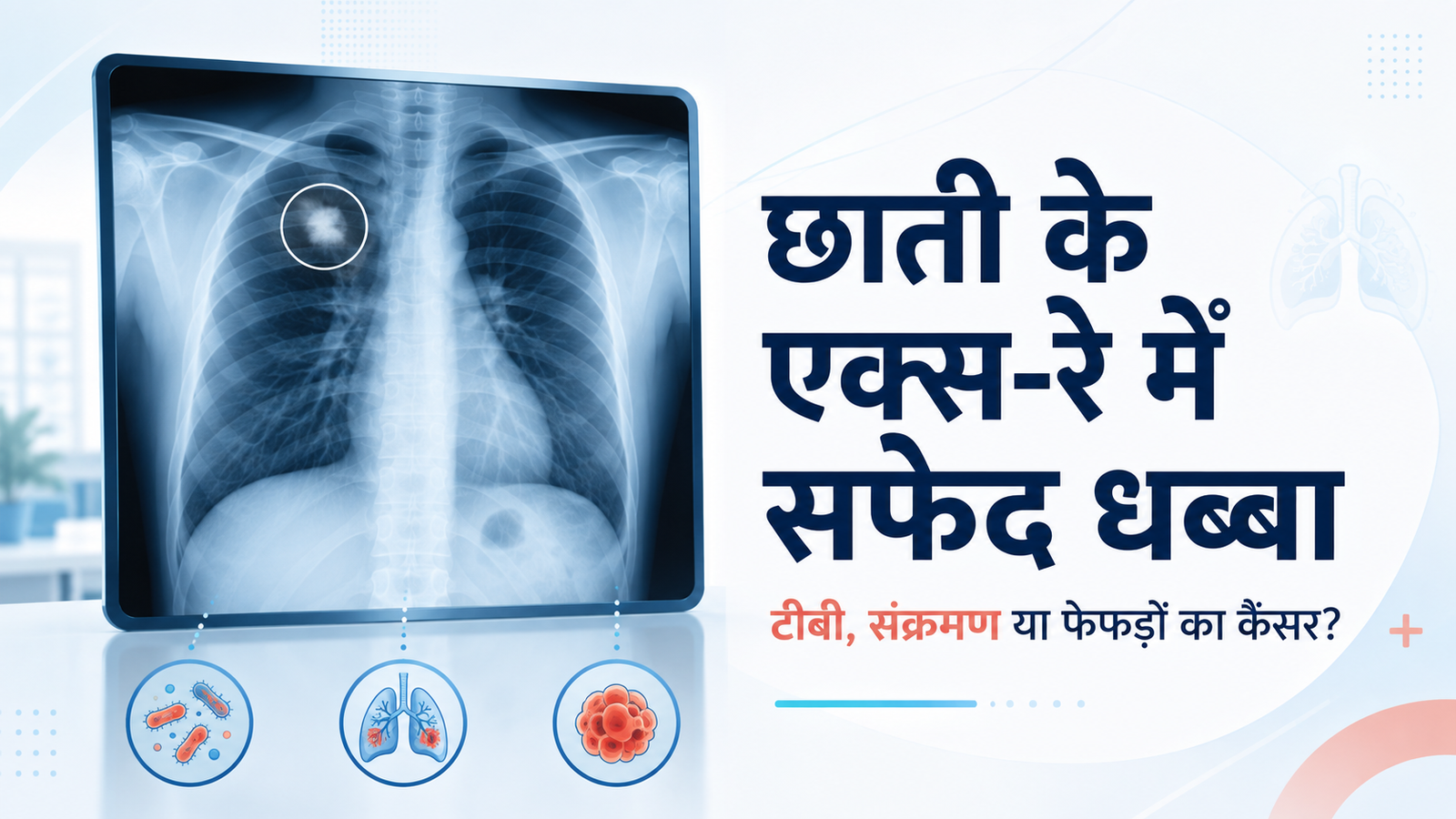
छाती के X-Ray में सफेद धब्बा दिखने का मतलब हमेशा कैंसर नहीं होता। जानें इसके संभावित कारण, टीबी और लंग कैंसर में अंतर तथा जरूरी जांच।
Copyright 2026 © Dr .Parveen Yadav all rights reserved.
Proudly Scaled by Public Media Solution!