


Ramesh was 54 years old and had been a school principal for over two decades. He talked for hours every day. So when his voice turned raspy one October morning, he didn't think much of it. His wife said it was the weather. His colleagues blamed overuse. He bought throat lozenges in bulk, drank warm water with honey, and waited for it to pass.
Three weeks passed. Then five. Then two months. The hoarseness never left. By the time Ramesh finally walked into a specialist's clinic, a laryngoscopy revealed something that changed everything: a small but aggressive tumor sitting on his left vocal cord.
The good news? It was caught at Stage I. He went through radiation, preserved his voice, and is now back to teaching. The turning point was simply this: he finally stopped waiting.
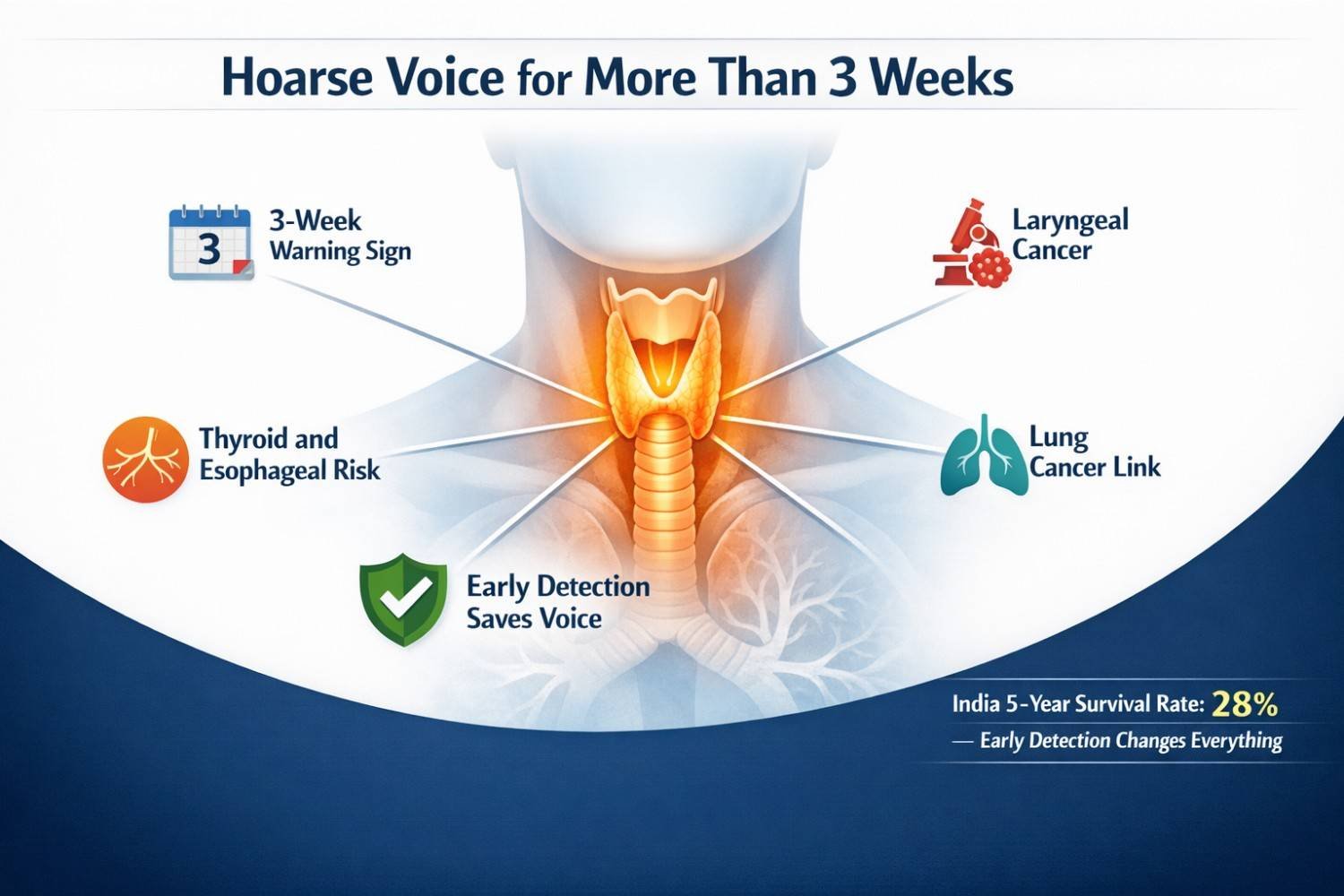
Ramesh's story is not rare. Across India and around the world, thousands of people live with a hoarse voice for weeks or months without realizing it could be more than a passing irritation. A hoarse voice lasting more than three weeks is one of the body's most important early warning signals and one of the most commonly ignored.
| A hoarse or rough voice that does not improve within three weeks deserves medical evaluation. It is often benign, but in some cases, it is the first sign of a serious underlying condition, including cancer. |
Hoarseness means your voice sounds different from its usual self. It may come across as breathy, rough, raspy, or strained. The pitch may drop, the volume may reduce, or your voice may simply give out mid-sentence.
The reason behind it is almost always connected to the vocal cords, which are two bands of tissue inside the larynx (voice box). When you speak, air from your lungs passes over these cords, making them vibrate and produce sound. Anything that irritates, inflames, or damages the vocal cords can change the quality of that sound.
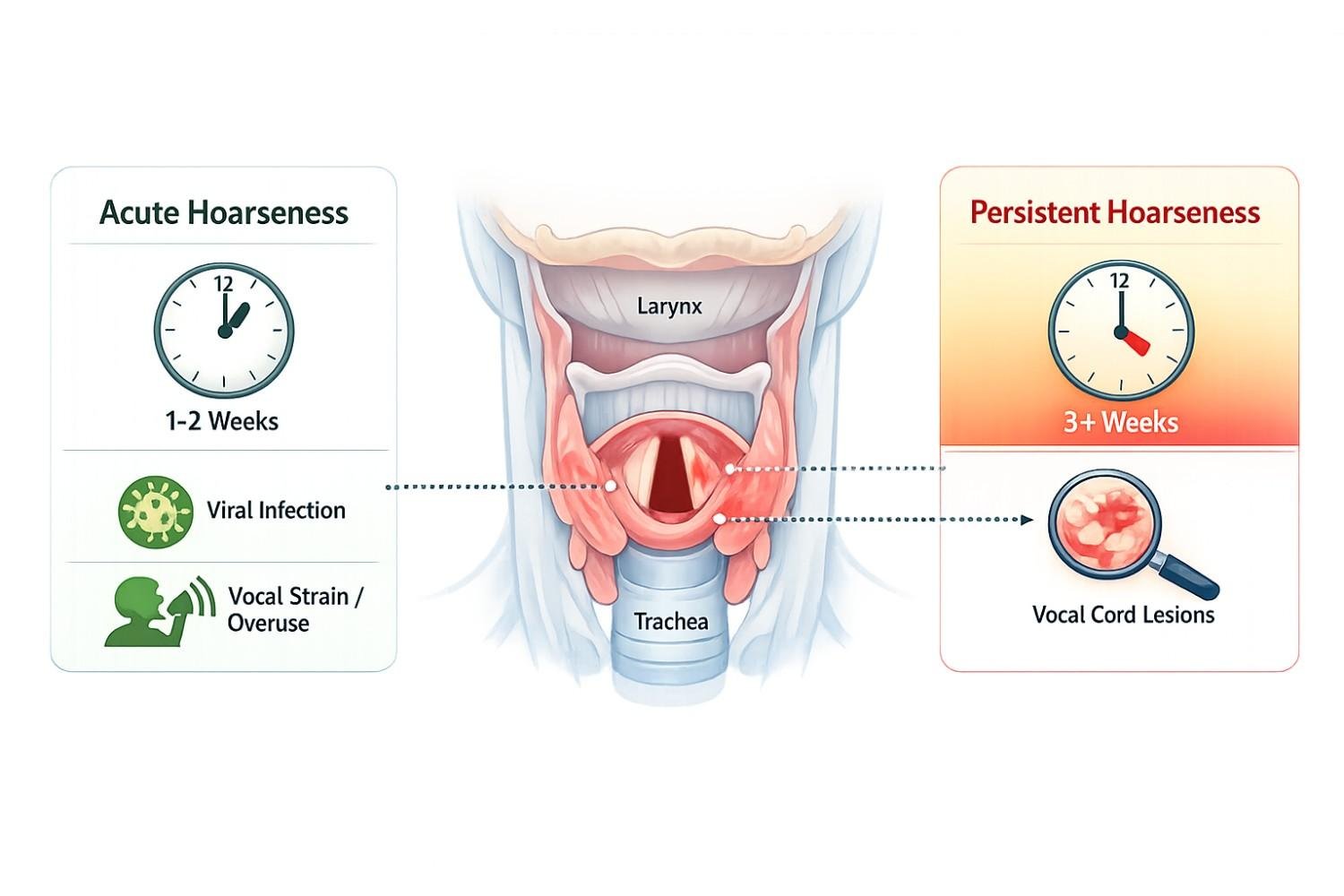
There is a critical difference between short-term hoarseness and hoarseness that persists:
| Type | What It Suggests |
| Lasts under 2 weeks | Usually a viral infection, vocal overuse, or minor irritation |
| Lasts 2 to 3 weeks | Could still be benign, but warrants monitoring and possible doctor visit |
| Lasts more than 3 weeks | Requires medical evaluation to rule out cancer and other serious causes |
Before jumping to the worst-case scenario, it helps to understand the many reasons a voice can become hoarse. Most cases are not related to cancer at all.
Viral laryngitis, caused by a cold or upper respiratory infection, is the number one reason for a hoarse voice. It usually resolves within one to two weeks. According to the National Institute on Deafness and Other Communication Disorders (NIDCD), hoarseness is often a direct symptom of problems in the vocal folds of the larynx, most commonly from short-term inflammation.
When stomach acid repeatedly travels up into the esophagus and reaches the larynx, it causes persistent inflammation of the vocal cords. This is known as laryngopharyngeal reflux, and it is one of the most underdiagnosed causes of chronic hoarseness in adults. Many people have no heartburn at all, making it easy to miss.
Teachers, singers, lawyers, and call center workers frequently develop hoarseness from speaking too loudly, too long, or in poor acoustic environments. This leads to vocal cord nodules or edema over time.
Cigarette and bidi smoke directly irritates the lining of the larynx. Long-term smokers often develop a condition called Reinke's edema, where fluid builds up under the vocal cord surface, producing a chronically hoarse, low-pitched voice. Here is the dangerous part: smokers are already hoarse for these non-cancer reasons, which can lead to delays in diagnosing an actual tumor.
An underactive thyroid causes fluid retention in the laryngeal tissues, resulting in a thickened, husky voice. Many patients and doctors overlook the thyroid as a cause of voice change.
Parkinson's disease, multiple sclerosis, and stroke can all impair the nerve signals that control vocal cord movement, leading to a weak or breathy voice.
Medical guidelines from organisations including Cancer Research UK and the American Cancer Society consistently advise seeing a doctor if hoarseness lasts more than two to three weeks without an obvious cause like a cold.
Here is why the three-week mark is the threshold: viral infections and minor irritation almost always clear up within 14 days. Persistent hoarseness beyond three weeks means something structural, neurological, or oncological may be at play.
• A lump or swelling in the neck
• Difficulty swallowing or pain when swallowing
• Coughing up blood
• Unexplained weight loss
• Shortness of breath or noisy, high-pitched breathing
• Ear pain on one side without obvious cause
• A history of smoking, especially for 10 or more years
| Important: If you are a smoker or ex-smoker and your voice has been hoarse for more than three weeks, do not wait. The risk of delayed diagnosis in this group is well-documented in research. |
| Concerned about a persistent hoarse voice? Book a consultation with a thoracic specialist or explore throat cancer treatment in Gurgaon at Chest Surgery India. |
Laryngeal cancer is cancer of the voice box. It is one of the top 10 cancers affecting Indian men, and India shares the same age-standardized incidence rate for laryngeal cancer as the United States, at 4.3 per 100,000 population, according to GLOBOCAN data. Yet the 5-year survival rate for laryngeal cancer in India sits at roughly 28%, far lower than many other Asian countries, largely because most patients present at an advanced stage.
According to a study published in PMC reviewing laryngeal cancer epidemiology, the worldwide age-standardised rate of laryngeal cancer incidence is 2.0 per 100,000, with the burden approximately five times higher in men than in women.
The larynx has three zones. Cancers that form directly on the vocal cords (the glottis) cause hoarseness very early, even when the tumor is small. This is actually an advantage: early hoarseness = early detection opportunity.
But cancers that form above the vocal cords (supraglottis) or below them (subglottis) often do not cause voice changes until they are at a more advanced stage, or until they spread to the vocal cords themselves. According to the American Cancer Society, these cancers are sometimes not found until a growing mass appears in the neck, indicating lymph node spread.
| Statistic | Detail |
| 52% | Percentage of laryngeal cancer patients who had hoarseness as a symptom (UK study of 806 patients) |
| 2.7% | Probability of laryngeal cancer when a patient visits a doctor specifically for hoarseness |
| 3%+ | Probability when hoarseness is accompanied by other symptoms (sore throat, swallowing difficulty) |
| 93%+ | Percentage of locally advanced laryngeal cancer patients with hoarseness (Romanian study) |
| 28% | India's 5-year survival rate for laryngeal cancer — among the lowest in Asia |
Sources: Healthline, February 2024 | PMC Laryngeal Cancer Epidemiology India
This is one of the most underappreciated connections in respiratory medicine, and most general articles about hoarseness skip it entirely.
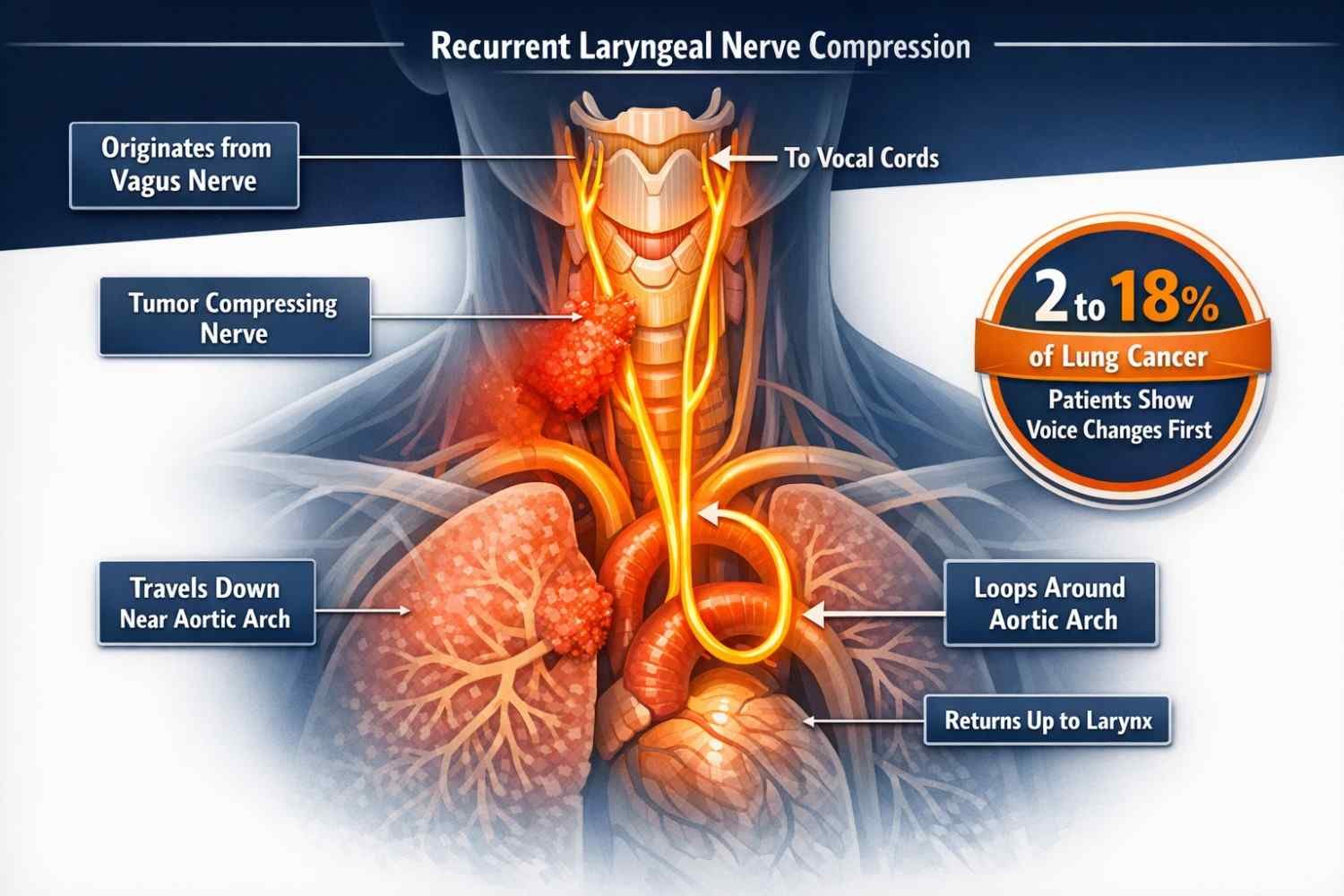
Your vocal cords are controlled by a nerve called the recurrent laryngeal nerve (RLN). Here is what makes this nerve unusual: instead of traveling directly from the brain to the voice box, it takes a long detour, looping down through the neck into the chest, passing close to the top of the left lung and the aorta, and then traveling back up to the larynx.
If a lung tumor forms near the upper-left lung, it can press on this nerve. When that happens, one vocal cord becomes weak or partially paralyzed. The result is persistent hoarseness, often without any throat pain, sore throat, or infection. Research has found that 2 to 18% of lung cancer patients experience voice changes before any other symptom appears. In some cases, the only early warning sign is a change in voice.
| Surprising truth: A patient can have a perfectly normal throat and still have a hoarse voice caused by a lung tumor pressing on a nerve deep inside the chest. This is why a chest CT scan is sometimes needed even when the throat looks fine. |
As noted by LungCancer.net, hoarseness that does not improve after three weeks can be a sign of lung cancer, and this is especially important for people who currently smoke or used to smoke.
The recurrent laryngeal nerve runs directly alongside the thyroid gland. When a thyroid cancer grows and invades this nerve, it can paralyze the vocal cord on the same side, producing a hoarse voice. A study published in Scientific Reports found that among patients with T4a papillary thyroid carcinoma, 51% had preoperative vocal cord palsy, meaning hoarseness was present before surgery.
Here is the part that is particularly sobering: in 45% of those cases, there was no palpable lump in the neck. Hoarseness was the primary, and sometimes only, presenting symptom of a locally advanced thyroid cancer.
The esophagus (food pipe) runs directly behind the trachea and close to the laryngeal structures. As esophageal cancer grows, it can press on surrounding nerves and tissues, contributing to voice changes. Difficulty swallowing combined with hoarseness is a particularly significant red-flag combination that warrants urgent investigation.
The mediastinum is the space in the center of the chest between the lungs. Tumors that develop here, whether lymphoma, thymoma, or metastatic disease, can compress the recurrent laryngeal nerve and present with a chronically hoarse voice as one of the first symptoms.
| If your hoarseness is accompanied by difficulty swallowing or chest discomfort, a thoracic specialist evaluation is essential. Learn about esophageal cancer treatment in Gurgaon or mediastinal tumor treatment at Chest Surgery India. |
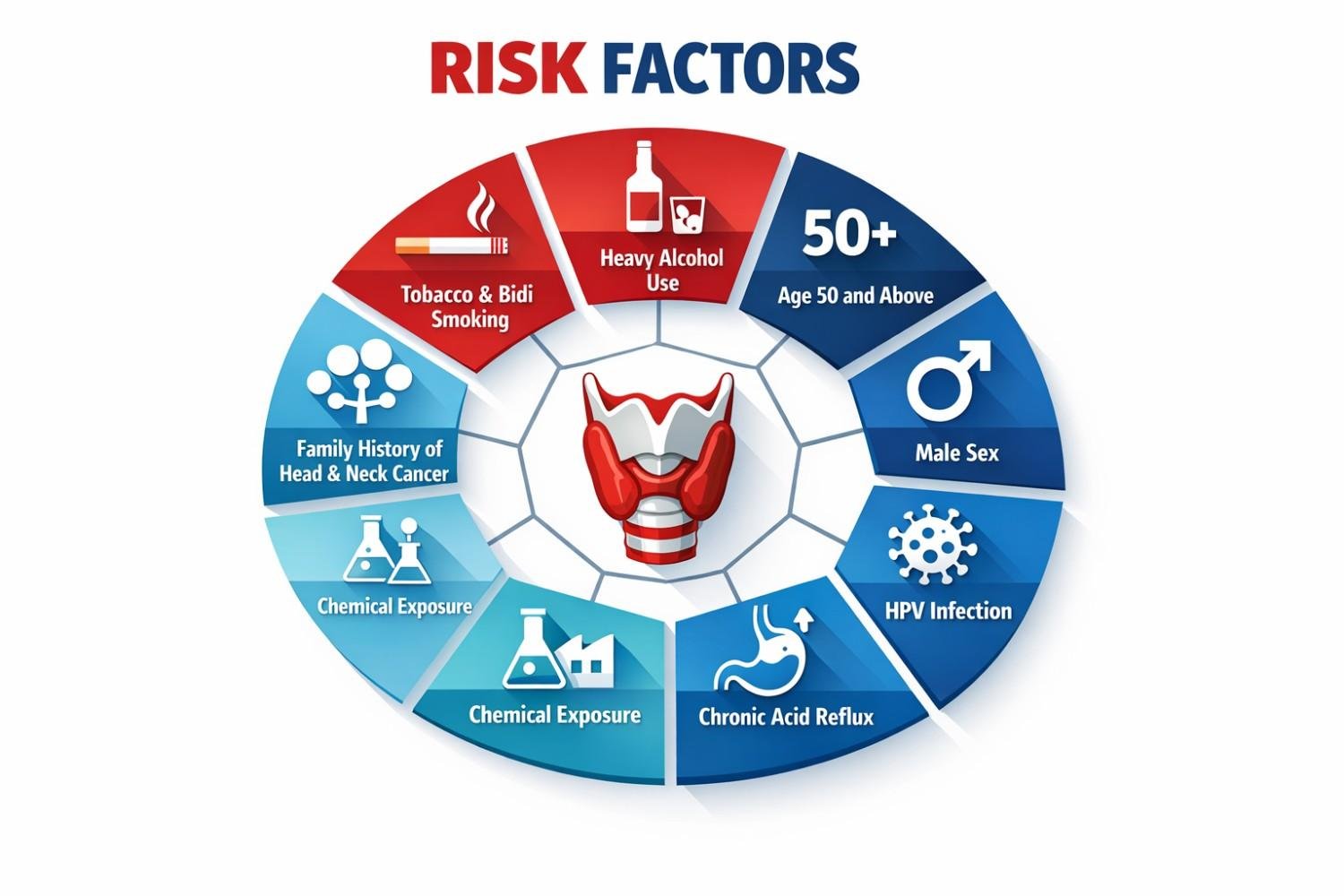
Not everyone with a hoarse voice needs to panic. But certain profiles carry a meaningfully higher risk, and those individuals should act faster.
| Risk Factor | Why It Matters |
| Tobacco use (cigarettes, bidis) | Strongly linked to laryngeal cancer. Bidi smoking shows a clear dose-response relationship with laryngeal cancer risk in Indian studies |
| Heavy alcohol use | Alcohol combined with tobacco multiplies cancer risk significantly |
| Age 50 and above | Most laryngeal and thoracic cancers are diagnosed after age 55 |
| Male sex | Men are 5 times more likely to develop laryngeal cancer than women |
| HPV infection | Certain HPV strains can cause laryngeal papillomatosis and increase cancer risk |
| Chronic untreated GERD | Long-term acid exposure inflames laryngeal tissue |
| Occupational exposure | Asbestos, chemical fumes, and sawdust raise laryngeal and lung cancer risk |
| Family history of head and neck cancer | Genetic susceptibility plays a role |
Source: PMC Global Laryngeal Cancer Trends, 2024 | Karunagappally Cohort Study, PMC
Many people delay seeing a specialist because they do not know what to expect. Here is a straightforward breakdown of what the evaluation process typically looks like.
An ENT (ear, nose, and throat) specialist uses a thin flexible tube with a camera, called a laryngoscope, to directly visualize the vocal cords. This is done in the clinic and usually takes only a few minutes. It can reveal inflammation, nodules, polyps, or a visible tumor.
This is the step most people do not expect when they come in for a voice problem. But a chest CT is critical when the throat appears normal yet hoarseness persists. This is specifically designed to look for lung tumors pressing on the recurrent laryngeal nerve, mediastinal masses, and thyroid involvement.
If a suspicious lesion is found, a tissue sample is taken under general anesthesia and examined under a microscope. This confirms whether cancer is present and identifies the type.
If cancer is confirmed, a PET-CT scan helps determine how far the disease has spread, which directly guides treatment choices.
| What most websites don't say: A normal throat exam does not rule out cancer. If a lung or mediastinal tumor is pressing on the recurrent laryngeal nerve, the vocal cords may look perfectly normal under a laryngoscope. A chest CT is a critical next step. |
For cancers caught at Stage I or II, cure rates are excellent. Treatment with radiation therapy or limited surgery can eliminate the tumor while preserving the ability to speak. As noted by the Sean Parker Institute for the Voice at Weill Cornell Medicine, early-stage laryngeal cancer is highly curable, and recent surgical advances mean the larynx does not need to be removed in most cases.
For larger tumors or those that have spread, a combination of chemotherapy and radiation is typically used, sometimes followed by surgery. In some cases, a partial or total laryngectomy (removal of the voice box) may be necessary. Voice rehabilitation with a speech therapist can significantly improve quality of life after treatment.
When hoarseness results from these cancers pressing on the recurrent laryngeal nerve, treating the primary tumor is the priority. Minimally invasive and robotic-assisted surgery offers faster recovery and better precision for thoracic procedures. Voice function may partially or fully recover once the pressure on the nerve is relieved.
| If you or someone you know has been hoarse for more than three weeks, do not delay. Book an appointment with Dr. Parveen Yadav, Director of Thoracic Surgery at Artemis Hospital, Gurgaon, for expert evaluation of tracheal cancer treatment in Gurgaon and all chest-related cancer symptoms. |
Not all cancers are preventable. But a significant portion of laryngeal and lung cancers are directly tied to modifiable risk factors.
• Quit tobacco completely. This is the single most impactful step. Both cigarette and bidi smoking are dose-dependently linked to laryngeal cancer risk in Indian populations.
• Treat acid reflux early. Chronic GERD without treatment damages laryngeal tissue over years.
• Get vaccinated against HPV. HPV vaccination in younger age groups can reduce the risk of HPV-related laryngeal and throat cancers.
• Practice vocal hygiene. Avoid shouting for long periods, stay hydrated, and rest your voice when sick.
• Get screened if you are high-risk. Smokers over 45, particularly those with any new voice change, should see an ENT or thoracic specialist promptly.
A hoarse voice is rarely just a nuisance. For most people, it resolves on its own within a couple of weeks. But when it does not, it is the body's way of asking for attention.
The three-week rule exists for a reason. Laryngeal cancer, caught early, has very high cure rates and can often be treated without losing the ability to speak. Lung, thyroid, and esophageal cancers that silently compress the recurrent laryngeal nerve can also be treated more effectively when found early, before they spread.
India's laryngeal cancer survival rate remains far below where it should be, primarily because patients present too late. That can change, one conversation at a time.
| Key Takeaways: A hoarse voice lasting more than 3 weeks needs evaluation. Laryngeal cancer causes early hoarseness. Lung, thyroid, and esophageal cancers can also cause hoarseness through nerve compression. Early-stage treatment offers the best outcomes and voice preservation. |
If your voice has been rough, raspy, or weak for more than three weeks, ask yourself this: what would I tell a close friend in the same situation? Would you tell them to wait, or would you tell them to go get checked? What is stopping you from doing that today?
1. Cancer Research UK: Laryngeal Cancer Symptoms
3. American Cancer Society: Laryngeal and Hypopharyngeal Cancer Signs and Symptoms
4. Healthline: Laryngeal Cancer Symptoms (Updated 2024)
5. LungCancer.net: Hoarseness as a Lung Cancer Symptom
6. PMC: Epidemiological Review of Laryngeal Cancer in India
7. PMC: Global Laryngeal Cancer Trends, 2024
8. Nature/Scientific Reports: Thyroid Cancer With RLN Involvement
9. Sean Parker Institute for the Voice, Weill Cornell: Cancer
10. Merck Manual: Laryngeal Cancer (Revised Sept 2024)
11. PMC: Cancer Incidence Estimates India 2022 and 2025 Projection
12. PMC: Karunagappally Cohort Study, Bidi Smoking and Laryngeal Cancer

18+ Yrs Exp | 5,700+ Thoracic & Robotic Cancer Surgeries
Dr. Parveen Yadav is a Director and Senior Consultant in Thoracic and Surgical Oncology, specializing in minimally invasive and robotic lung and esophageal surgeries, with advanced training from AIIMS and Tata Memorial Hospital.
View Full Profile
Robotic vs VATS lobectomy? An expert guide to choosing the best lung cancer treatment in Gurgaon & Delhi. Learn the pros, cons, and key differences.

A lung cancer diagnosis is overwhelming. A second opinion can confirm your path, find better treatments, and give you critical peace of mind. Learn why

छाती के X-Ray में सफेद धब्बा दिखने का मतलब हमेशा कैंसर नहीं होता। जानें इसके संभावित कारण, टीबी और लंग कैंसर में अंतर तथा जरूरी जांच।
Copyright 2026 © Dr .Parveen Yadav all rights reserved.
Proudly Scaled by Public Media Solution!