


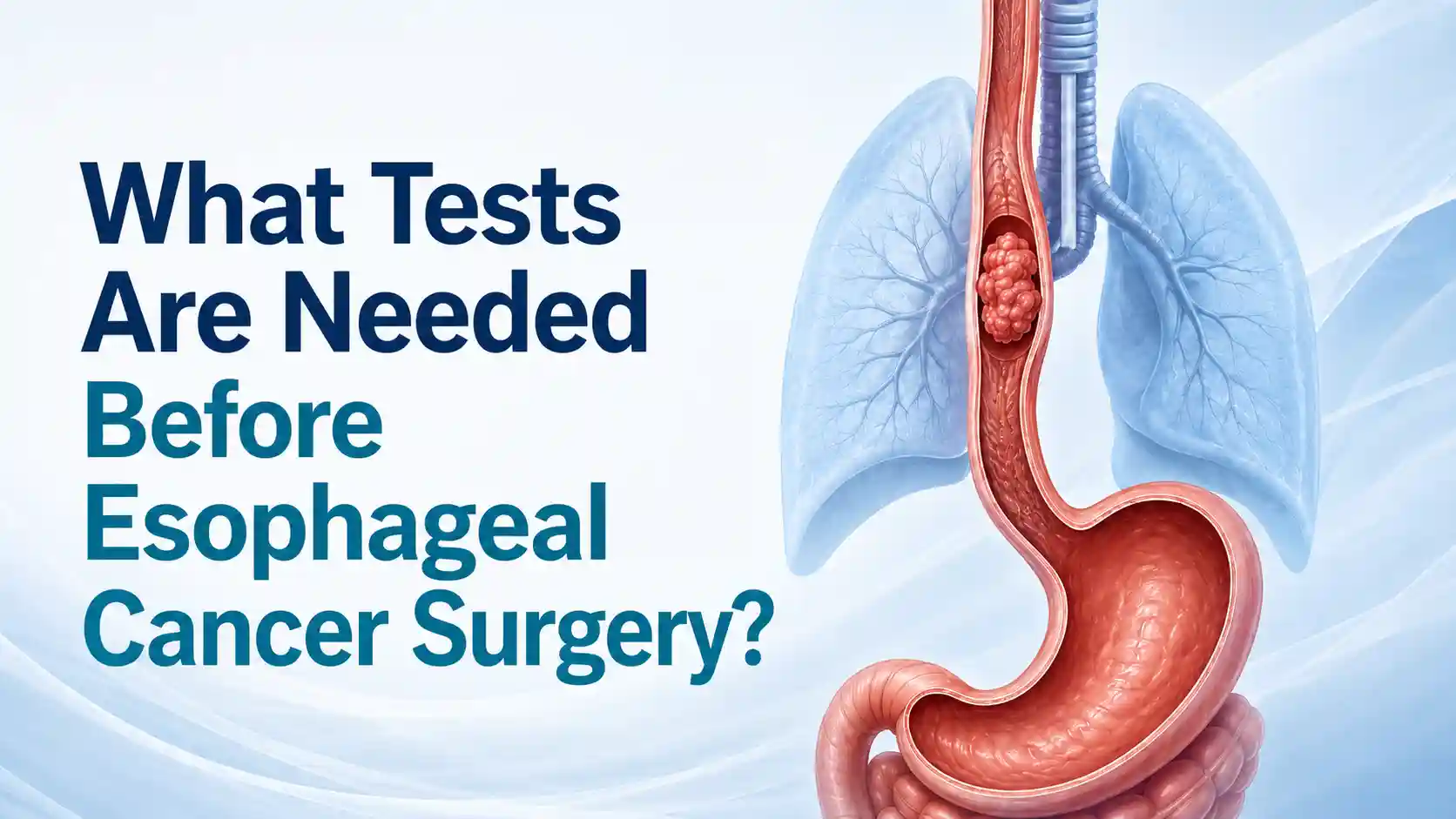
Before planning surgery for food pipe cancer, doctors need a clear picture of the disease. That is why tests before esophageal cancer surgery are so important. These tests help confirm the cancer, check how far it has spread, understand whether surgery is possible, and decide if chemotherapy or radiation is needed before the operation.
Many patients come with only an endoscopy report or a biopsy report. But for esophageal cancer surgery, that is usually not enough. The surgeon needs to know the exact tumor location, stage, lymph node status, lung fitness, heart condition, nutrition level, and overall surgical risk.
At Chest Surgery India, patients looking for esophageal cancer treatment in Delhi NCR are evaluated with a complete treatment-planning approach, including diagnosis, staging, surgery, chemotherapy, radiation, and advanced options where suitable.
Esophageal cancer surgery, also called esophagectomy, is a major operation. During surgery, the cancer-affected part of the esophagus may be removed, nearby lymph nodes may be taken out, and the food passage is reconstructed. Mayo Clinic explains that esophagectomy may involve removing the affected esophagus segment, nearby lymph nodes, and sometimes part of the stomach, depending on the case.
Pre-surgery tests help answer some key questions:
Without these answers, treatment can become incomplete or poorly planned. The goal is not to do every test possible. The goal is to do the right tests at the right time.
The first step is a detailed consultation. The doctor will ask about swallowing difficulty, weight loss, acidity, vomiting, cough, chest discomfort, smoking, alcohol use, previous illnesses, past surgeries, current medicines, and family history.
A physical examination may include checking weight, signs of weakness, dehydration, anemia, neck glands, chest findings, and general fitness. The American Cancer Society notes that when symptoms suggest esophageal cancer, doctors usually begin with medical history and physical examination before moving to endoscopy, biopsy, and imaging tests.
This step may seem basic, but it helps the surgeon understand how urgently treatment is needed and which tests should be prioritized.
Upper endoscopy is one of the most important tests for esophageal cancer. It is also called EGD, or esophagogastroduodenoscopy. A flexible tube with a camera is passed through the mouth into the esophagus so the doctor can directly see the tumor, narrowing, bleeding, ulcer, or abnormal growth.
During the same procedure, a biopsy is taken. A biopsy means removing a small tissue sample from the suspicious area and sending it to the lab. This is the test that confirms whether cancer cells are present.
For patients searching for endoscopy biopsy esophageal cancer, this is the most important point to understand: endoscopy can show an abnormal area, but biopsy confirms the diagnosis. Mayo Clinic describes biopsy as taking a small tissue sample from inside the esophagus through an endoscope and sending it to the lab to look for cancer cells.
The biopsy report may also mention the cancer type, such as squamous cell carcinoma or adenocarcinoma. This matters because treatment planning can differ based on cancer type, location, and stage.
You can also read this detailed guide on how esophageal cancer is diagnosed for a step-by-step explanation of diagnostic tests.
A CT scan gives detailed cross-sectional images of the body. Before esophageal cancer surgery, doctors usually need CT imaging of the chest and abdomen. Sometimes the neck may also be included depending on tumor location.
A CT scan helps check:
The American Cancer Society explains that CT scans can help show whether esophageal cancer has spread to nearby organs, lymph nodes, or distant parts of the body.
A CT scan alone may not always give the full stage, but it is a major part of pre-surgery evaluation. It helps the surgeon understand whether the cancer appears operable and whether more tests are needed.
A PET CT before esophageal cancer surgery is often advised to check whether the cancer has spread beyond the esophagus and nearby lymph nodes. In a PET scan, a small amount of radioactive sugar is injected. Cancer cells often absorb more sugar than normal cells, so active cancer areas may show up on the scan.
PET CT combines metabolic information from PET with detailed body images from CT. This helps doctors look for disease that may not be clear on a regular CT scan.
The American Cancer Society explains that PET/CT can be useful when doctors think cancer may have spread but do not know where, because it combines areas of higher radioactivity with detailed CT images.
This test is important because if cancer has already spread to distant organs, major surgery may not be the best first treatment. In such cases, chemotherapy, immunotherapy, targeted therapy, radiation, stenting, or palliative care may be discussed depending on the patient’s condition.
EUS means endoscopic ultrasound. It is usually done through an endoscope, similar to upper endoscopy, but with an ultrasound probe attached. EUS helps doctors see how deep the tumor has grown into the esophageal wall.
For patients searching for EUS for esophageal cancer staging, the simple explanation is this: EUS helps measure the depth of the tumor and check nearby lymph nodes.
This matters because the depth of tumor invasion is a major part of staging. A very early tumor may need a different treatment plan than a tumor that has grown deeper into the esophageal wall or nearby nodes.
The American Cancer Society states that EUS can help determine tumor size, how far the cancer has grown into the esophageal wall, whether nearby lymph nodes may be involved, and can also allow needle biopsy of suspicious lymph nodes.
EUS may not be possible in every patient, especially if the tumor has caused severe narrowing and the scope cannot pass safely. In such cases, the surgeon may rely on other imaging tests.
Bronchoscopy is not required for every esophageal cancer patient. It is usually considered when the tumor is in the upper or middle part of the esophagus and the doctor needs to check whether the airway is involved.
During bronchoscopy, a thin camera is passed into the windpipe and breathing tubes. This helps assess whether the tumor is close to or affecting the trachea or bronchi.
The American Cancer Society notes that bronchoscopy may be done as part of the workup for cancer in the upper part of the esophagus to see whether it has spread to the upper airways.
This test can be very important for surgical safety. If the airway is involved, the treatment plan may need to change.
Blood tests help doctors understand the patient’s general health before major surgery. These tests do not diagnose esophageal cancer by themselves, but they are important for safety.
Common blood tests may include:
CBC can show anemia, which may happen if the tumor has been bleeding or if the patient has poor nutrition. Blood chemistry tests help check liver and kidney function. The American Cancer Society mentions CBC and blood chemistry tests as part of blood testing that doctors may order when esophageal cancer is suspected.
Before surgery, low hemoglobin, poor protein levels, uncontrolled diabetes, or infection may need correction.
Esophageal cancer surgery involves the chest and can affect breathing during recovery. That is why lung fitness is important, especially for patients who smoke, have COPD, asthma, tuberculosis history, or shortness of breath.
A pulmonary function test, also called PFT, checks how well the lungs are working. It may measure how much air the patient can breathe in and out and how efficiently the lungs function.
The surgeon and anesthesia team may also advise breathing exercises before surgery. This is especially important because better lung preparation can support smoother recovery after thoracic surgery.
Heart fitness is another important part of preoperative assessment. Esophageal cancer surgery is a major procedure, and the heart must be able to tolerate anesthesia and surgical stress.
Cardiac evaluation may include:
Patients with previous heart attack, stent placement, bypass surgery, chest pain, irregular heartbeat, uncontrolled blood pressure, or advanced age may need more detailed cardiac clearance.
Many esophageal cancer patients lose weight before treatment because swallowing becomes difficult. Some can eat only soft food or liquids. Some may not be able to swallow enough calories or protein.
Nutrition status affects healing, immunity, strength, and recovery after surgery. NCI notes that many people with esophageal cancer have difficulty eating because the esophagus may be narrowed by the tumor or affected by treatment, and some patients may need special nutritional support or a feeding tube.
Before surgery, the care team may assess:
Good nutrition before surgery can make recovery safer and more comfortable.
Before surgery, the anesthesia team reviews the patient’s reports, medical history, medicines, allergies, previous anesthesia experience, heart and lung fitness, and surgical risk.
This is also the time to discuss:
Patients should bring all reports and prescriptions to this visit. Missing information can delay surgery.
If you are visiting a thoracic surgeon for esophageal cancer surgery planning or a second opinion, carry these documents:
Incomplete reports can lead to repeated tests, delayed treatment, and confusion. A well-organized file helps the surgeon give a clear opinion faster.
A second opinion is useful when you have been advised surgery but are unsure, when different doctors have suggested different plans, or when you do not understand the stage clearly.
You should consider a second opinion if:
Chest Surgery India offers a free second opinion from a thoracic surgeon, where patients can share CT scan, PET scan, biopsy, diagnosis summary, treatment plan, and specific questions for expert review.
Esophageal cancer surgery is not just about removing a tumor. It requires careful judgment about staging, operability, lymph nodes, reconstruction, nutrition, lung health, and recovery.
Dr. Parveen Yadav is listed as Director of Thoracic and Robotic Surgeries and Surgical Oncology at Chest Surgery India. His profile mentions 18+ years of experience in minimally invasive thoracic and robotic onco surgeries, training at AIIMS and Tata Memorial Hospital, Da Vinci robotic certification, and more than 5,700 major thoracic procedures, including over 1,000 surgeries for esophageal cancer and other esophageal diseases.
For patients in Gurgaon, Delhi NCR, and across India, this type of specialist review can help make the treatment plan clearer and more personalized.
The right tests before esophageal cancer surgery help doctors plan treatment safely and correctly. Endoscopy and biopsy confirm the cancer. CT scan and PET CT check spread. EUS helps with staging. Bronchoscopy may be needed for upper or middle esophageal tumors. Blood tests, lung function tests, cardiac evaluation, anesthesia check-up, and nutrition assessment help decide whether the patient is fit for surgery.
If you or your loved one has been diagnosed with food pipe cancer, do not rush into treatment with incomplete reports. A complete evaluation can make a major difference in treatment planning.
For expert guidance on reports, staging, and surgery planning, consult Dr. Parveen Yadav at Chest Surgery India, Artemis Hospital, Sector 51, Gurgaon. You can also share your reports for a second opinion before making a treatment decision.
The most important tests usually include upper endoscopy with biopsy, CT scan, PET CT, EUS for staging, blood tests, lung function test, cardiac evaluation, and anesthesia assessment. Some patients may also need bronchoscopy.
Yes. A biopsy is usually required to confirm cancer. Endoscopy can show a suspicious growth, but biopsy confirms whether cancer cells are present and what type of cancer it is.
PET CT helps check whether cancer has spread to distant organs or lymph nodes. This is important because if cancer has spread widely, surgery may not be the best first treatment.
EUS, or endoscopic ultrasound, helps check how deep the tumor has grown into the esophageal wall and whether nearby lymph nodes look suspicious. It helps doctors decide the stage and treatment plan.
No. Bronchoscopy is usually done when the tumor is in the upper or middle esophagus and the doctor needs to check whether the windpipe or airway is involved.
Usually, no. Endoscopy and biopsy confirm the diagnosis, but surgery planning needs staging tests such as CT scan, PET CT, EUS, and fitness evaluation.
Bring endoscopy, biopsy, CT scan, PET CT, EUS if done, blood tests, treatment summary, chemotherapy or radiation records, and all current medicines. If available, carry biopsy slides or blocks too.
Patients can consult Dr. Parveen Yadav at Chest Surgery India, Artemis Hospital, Sector 51, Gurgaon, for esophageal cancer evaluation, surgery planning, and second opinion support.
18+ Yrs Exp | 5,700+ Thoracic & Robotic Cancer Surgeries
Dr. Parveen Yadav is a Director and Senior Consultant in Thoracic and Surgical Oncology, specializing in minimally invasive and robotic lung and esophageal surgeries, with advanced training from AIIMS and Tata Memorial Hospital.
View Full Profile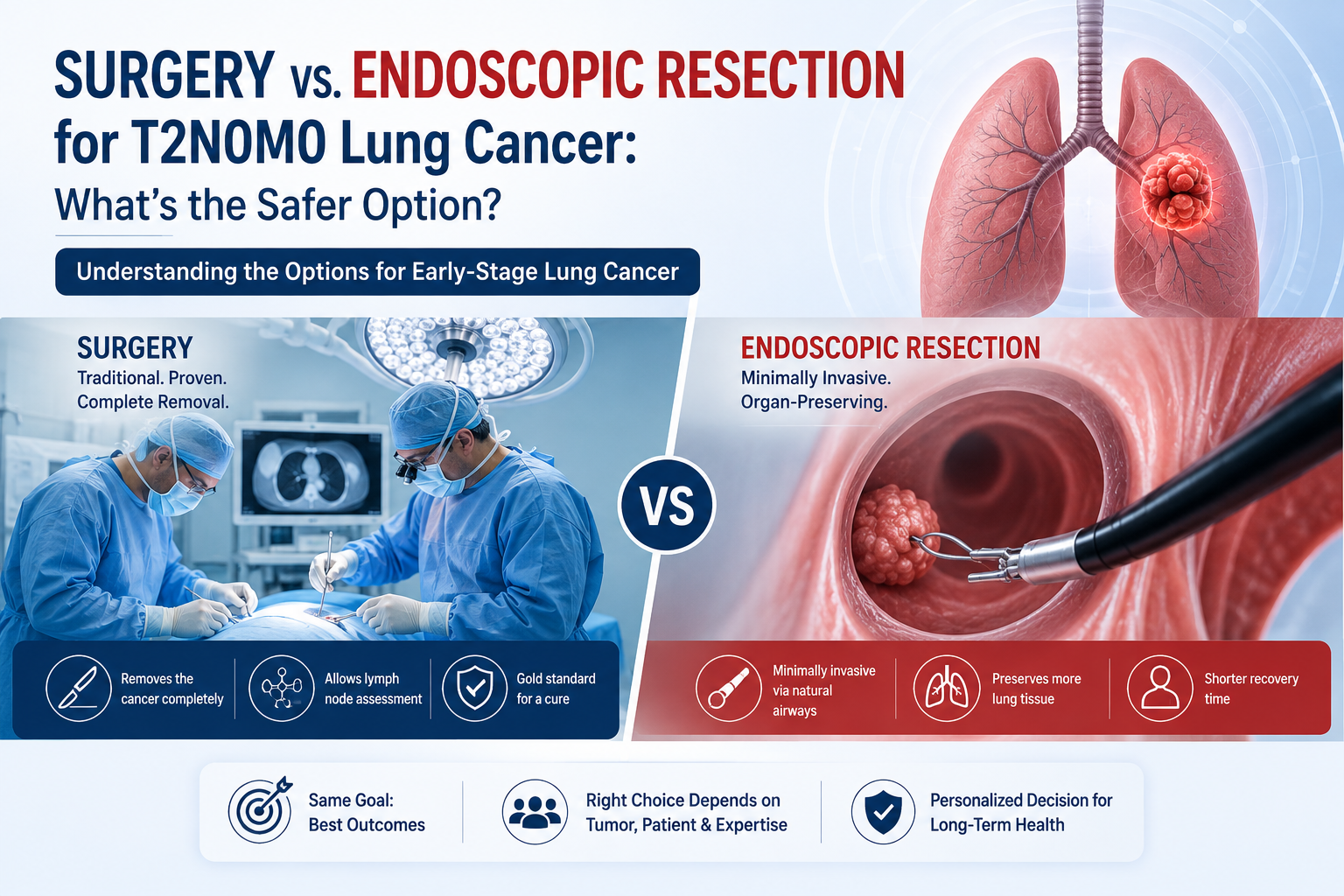
T2N0M0 lung cancer diagnosis? Compare surgery vs. non-surgical options like SBRT. Learn about safety, survival rates, and what's the safer choice for you.
Robotic vs VATS lobectomy? An expert guide to choosing the best lung cancer treatment in Gurgaon & Delhi. Learn the pros, cons, and key differences.
A lung cancer diagnosis is overwhelming. A second opinion can confirm your path, find better treatments, and give you critical peace of mind. Learn why
Copyright 2026 © Dr .Parveen Yadav all rights reserved.
Proudly Scaled by Public Media Solution!