- Call : +91 9540210956
- Email: [email protected]
- Artemis Hospital Sector 51 Gurgaon
- 09Am - 5Pm


EBUS Biopsy: What to Expect and How It Helps Stage Lung Cancer
- Home
- Blog Details
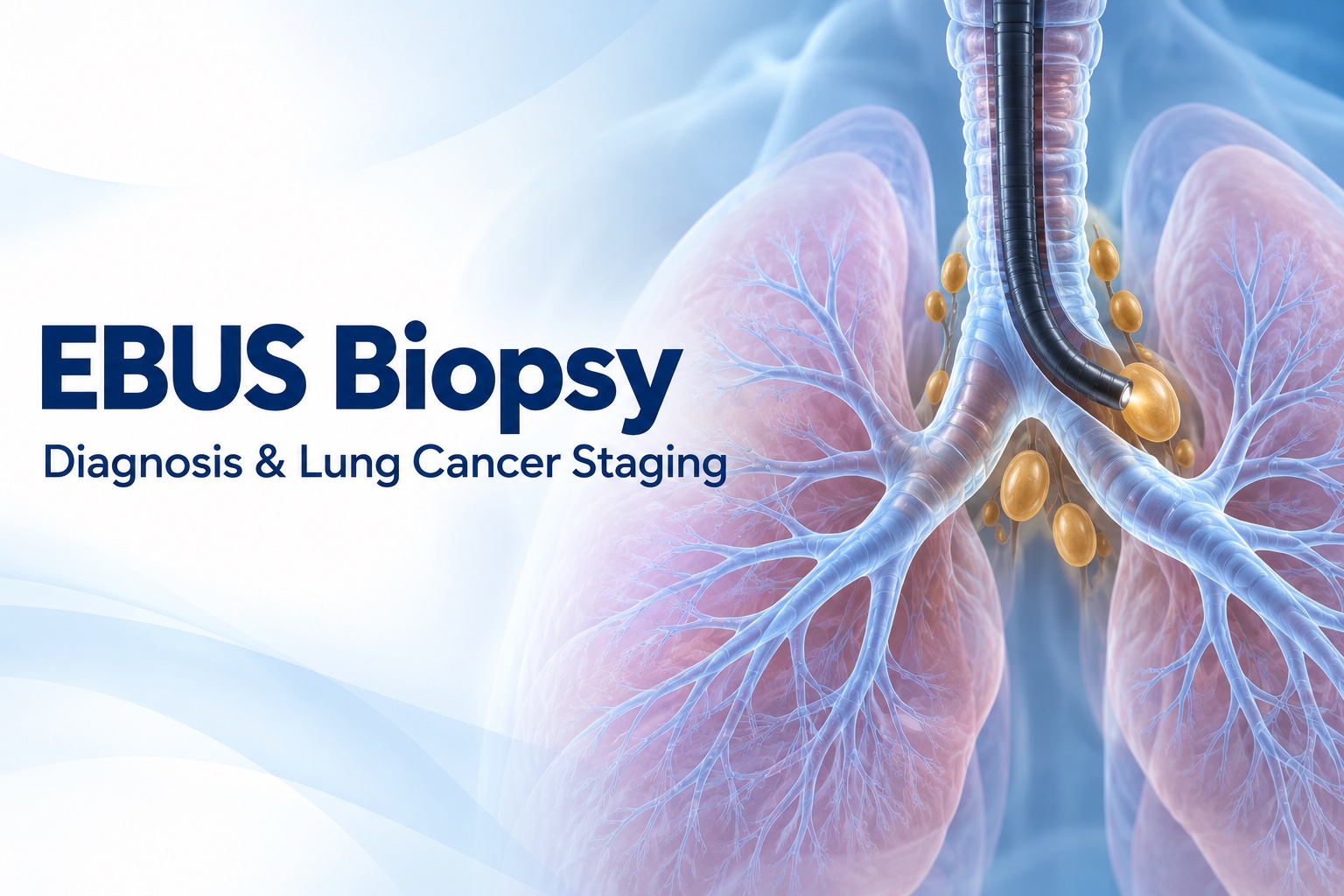
Your CT or PET-CT report mentions enlarged lymph nodes in the chest, and your doctor recommends an EBUS biopsy. Does that mean cancer has spread? And why is another test needed when you have already had a scan?
EBUS helps doctors take samples from lymph nodes or selected abnormalities near the main airways. It can help establish a diagnosis and, when lung cancer is suspected, clarify its stage before treatment is planned. Being referred for EBUS does not itself confirm cancer.
What Is an EBUS Biopsy?
EBUS stands for endobronchial ultrasound. A flexible camera is passed through the mouth into the windpipe and airways. Its ultrasound probe shows structures beyond the airway wall, allowing the doctor to guide a sampling needle towards a nearby lymph node.
The sampling procedure is often called EBUS-TBNA: endobronchial ultrasound-guided transbronchial needle aspiration. The samples go to a laboratory for examination. Cambridge University Hospitals explains the procedure in its patient guide.
Why Are Chest Lymph Nodes Being Checked?
Lymph nodes are part of the immune system. They may enlarge with infections, inflammatory conditions or cancer. A scan identifies their size and location, but a tissue sample may be needed to explain the finding. Your team should tell you what question the biopsy is intended to answer.
For background on chest investigations, read our guide to tests used to diagnose lung tumors.
How Does EBUS Help With Lung Cancer Staging?
Diagnosis identifies the disease; staging describes how far a cancer has spread. If cancer cells are found in particular chest lymph nodes, this may change the treatment plan.
NICE guidance on lung cancer diagnosis and staging recommends ultrasound-guided sampling of suspicious chest nodes when their status would affect treatment. The results are considered alongside imaging and other investigations, rather than interpreted alone.
A negative EBUS does not always rule out cancer in the lymph nodes. If suspicion remains high and the result would change treatment, further investigation, including surgical staging, may be considered. Ask whether the sample was adequate and whether it answers the question raised by your scan.
EBUS, Ordinary Bronchoscopy or Another Biopsy?
Ordinary bronchoscopy looks inside the airways. EBUS adds ultrasound to examine nearby structures that the camera alone cannot see. Other biopsy routes may be more suitable for a different target. The choice depends on where the abnormality sits and what information is needed.
The Dudley Group's EBUS leaflet explains this distinction. Ask your specialist why the proposed route suits your particular scan.
How Should You Prepare?
- Follow your hospital's fasting instructions; contact the team if they are unclear.
- Provide a medication list, including blood thinners and diabetes medicines. Obtain individual instructions rather than stopping medicines yourself.
- Tell the team about allergies and existing heart or breathing conditions.
- Arrange transport and an adult to stay with you afterwards if you are having sedation.
During the test, throat-numbing medicine and sedation are commonly used. The team monitors you while samples are collected, then observes you in recovery. North Tees and Hartlepool's patient information describes preparation and what happens on the day.
Recovery and Warning Signs
Wait for staff to confirm that swallowing is safe before eating or drinking. Follow the discharge restrictions after sedation, including those on driving and operating machinery.
A sore throat or a little blood-streaked sputum can occur. Significant coughing up of blood, severe chest pain or new breathlessness needs immediate hospital assessment. Contact the treating team if you develop fever or feel unwell. The Dudley Group leaflet outlines these warning signs.
Frequently Asked Questions
Is EBUS an operation to remove cancer?
No. Its purpose here is to collect diagnostic samples. Treatment is discussed once the results and other investigations have been reviewed.
Will I get results on the same day?
Usually not. Laboratory analysis takes time and extra tests may be needed. Ask when and how you will receive the result, and whom to contact if the appointment is delayed.
Can a sample be inconclusive?
Yes. Sometimes the sample does not provide enough information and another biopsy is needed. North Tees and Hartlepool's guidance discusses this possibility.
Planning Your Next Consultation
Bring your scan images, reports, medication list and any previous biopsy results. Useful questions include: Which node is being sampled? Could the result change my treatment? What happens if it is negative or inconclusive?
If you need a thoracic surgical opinion after investigation, book a consultation with Dr. Parveen Yadav to review the findings and discuss the next steps.

Dr. Parveen Yadav
18+ Yrs Exp | 5,700+ Thoracic & Robotic Cancer Surgeries
Dr. Parveen Yadav is a Director and Senior Consultant in Thoracic and Surgical Oncology, specializing in minimally invasive and robotic lung and esophageal surgeries, with advanced training from AIIMS and Tata Memorial Hospital.
View Full ProfileRecent Posts
Chest Drain After Lung Surgery: Care, Removal and Recovery
- Dr. Parveen Yadav
- Oct 10, 2026
Rib Pain When Coughing: Causes, Warning Signs and Treatment
- Dr. Parveen Yadav
- Oct 02, 2026
Food Stuck in Chest: Causes, Warning Signs and When to Get Help
- Dr. Parveen Yadav
- Sep 28, 2026
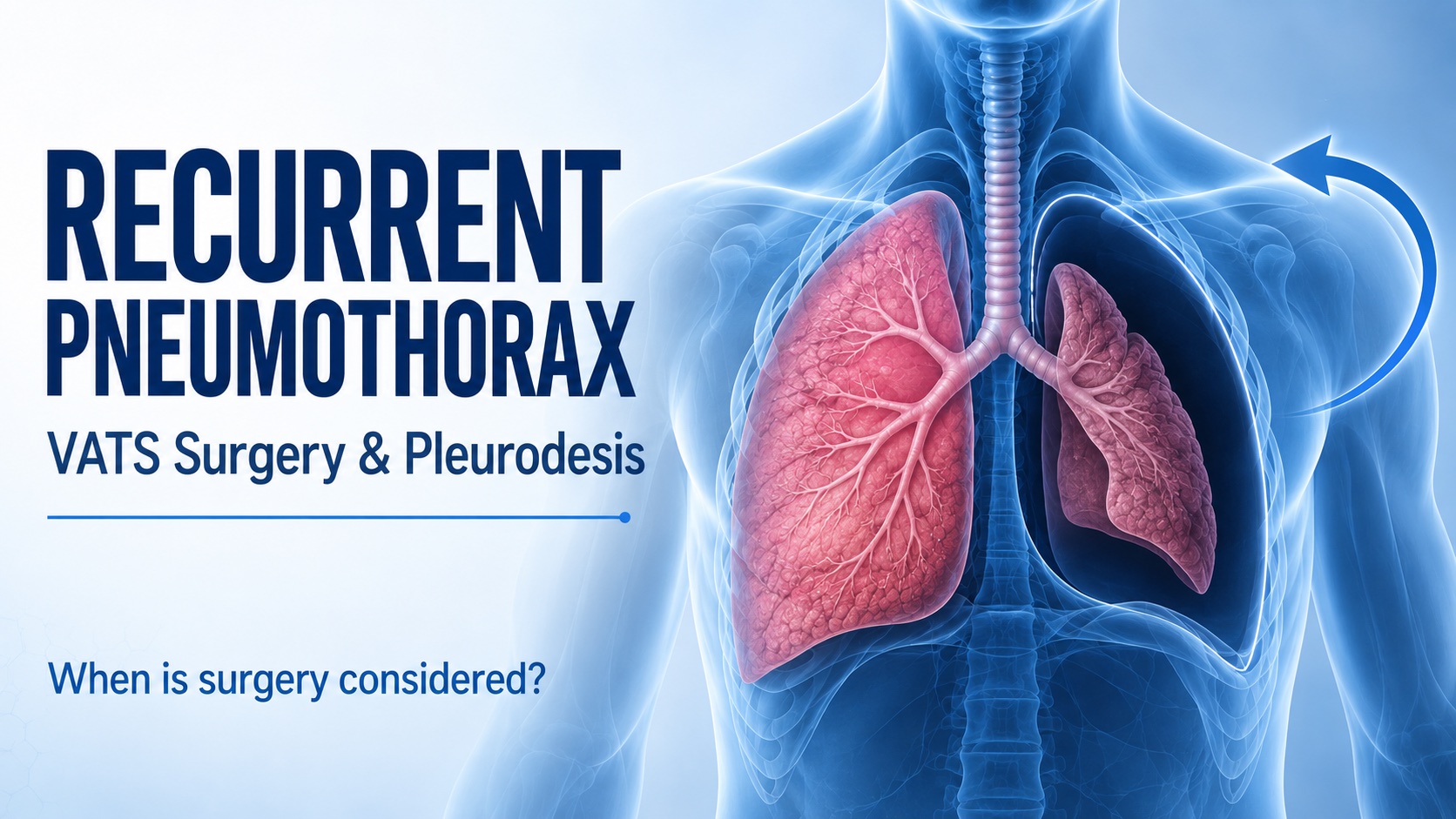
Recurrent Pneumothorax: When Are VATS and Pleurodesis Needed?
- Dr. Parveen Yadav
- Sep 24, 2026
Related Posts
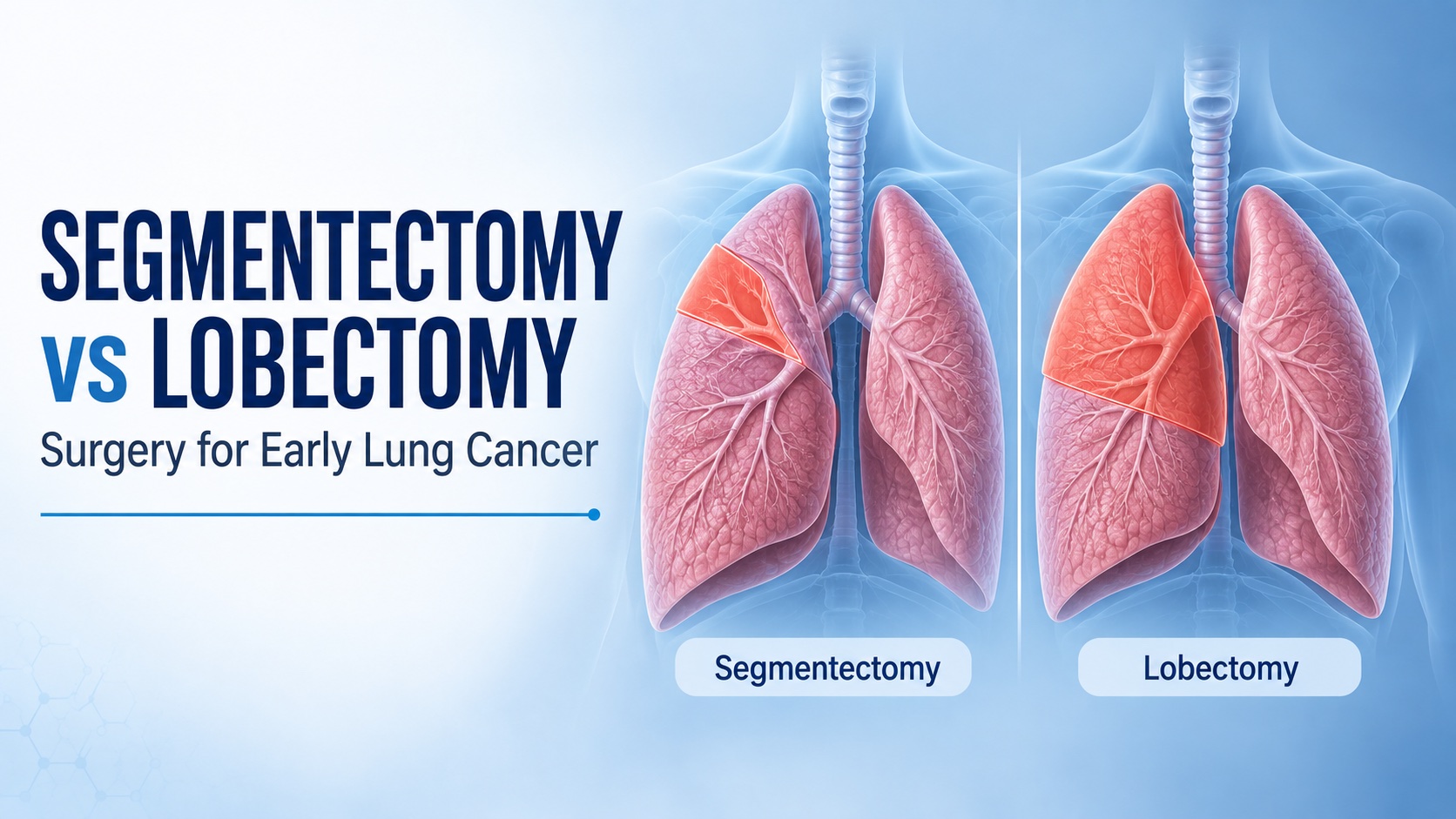
Segmentectomy vs Lobectomy: Choosing Surgery for Early Lung Cancer
Compare segmentectomy and lobectomy for early lung cancer: who may suit lung-sparing surgery, why lymph nodes matter, and what to ask your thoracic surgeon.
- Read More
- Sep, 20 2026
A Lung Nodule on CT Scan: What Happens Next?
A clear guide to lung nodules found on CT scans: what they are, why many are benign, and how specialists decide on follow-up, PET-CT or biopsy.
- Read More
- Sep, 08 2026
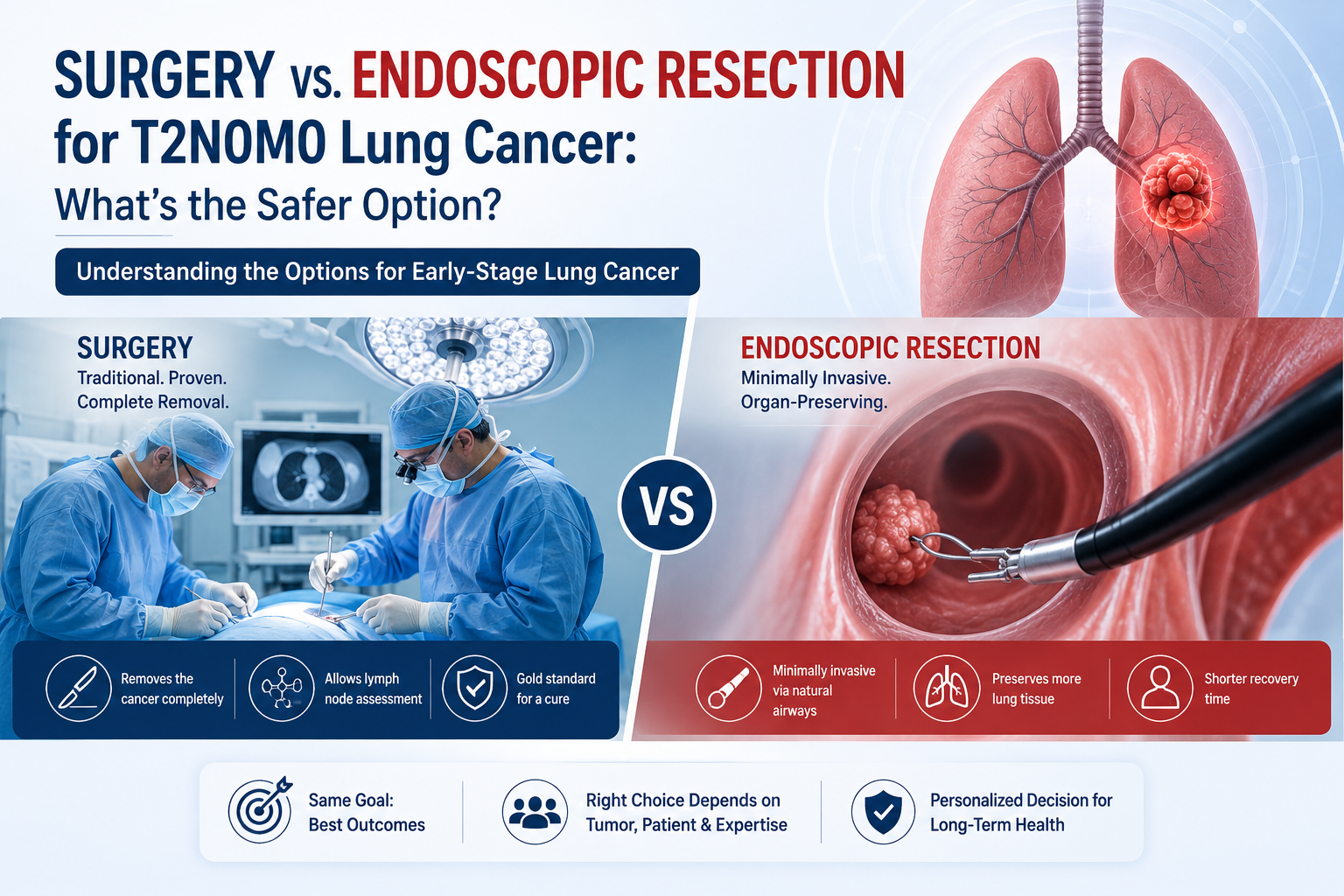
Surgery vs. Endoscopic Resection for T2N0M0 Lung Cancer: What’s the Safer Option?
T2N0M0 lung cancer diagnosis? Compare surgery vs. non-surgical options like SBRT. Learn about safety, survival rates, and what's the safer choice for you.
- Read More
- Aug, 20 2026
Copyright 2026 © Dr .Parveen Yadav all rights reserved.
Proudly Scaled by Public Media Solution!