- Call : +91 9540210956
- Email: [email protected]
- Artemis Hospital Sector 51 Gurgaon
- 09Am - 5Pm


Food Stuck in Chest: Causes, Warning Signs and When to Get Help
- Home
- Blog Details
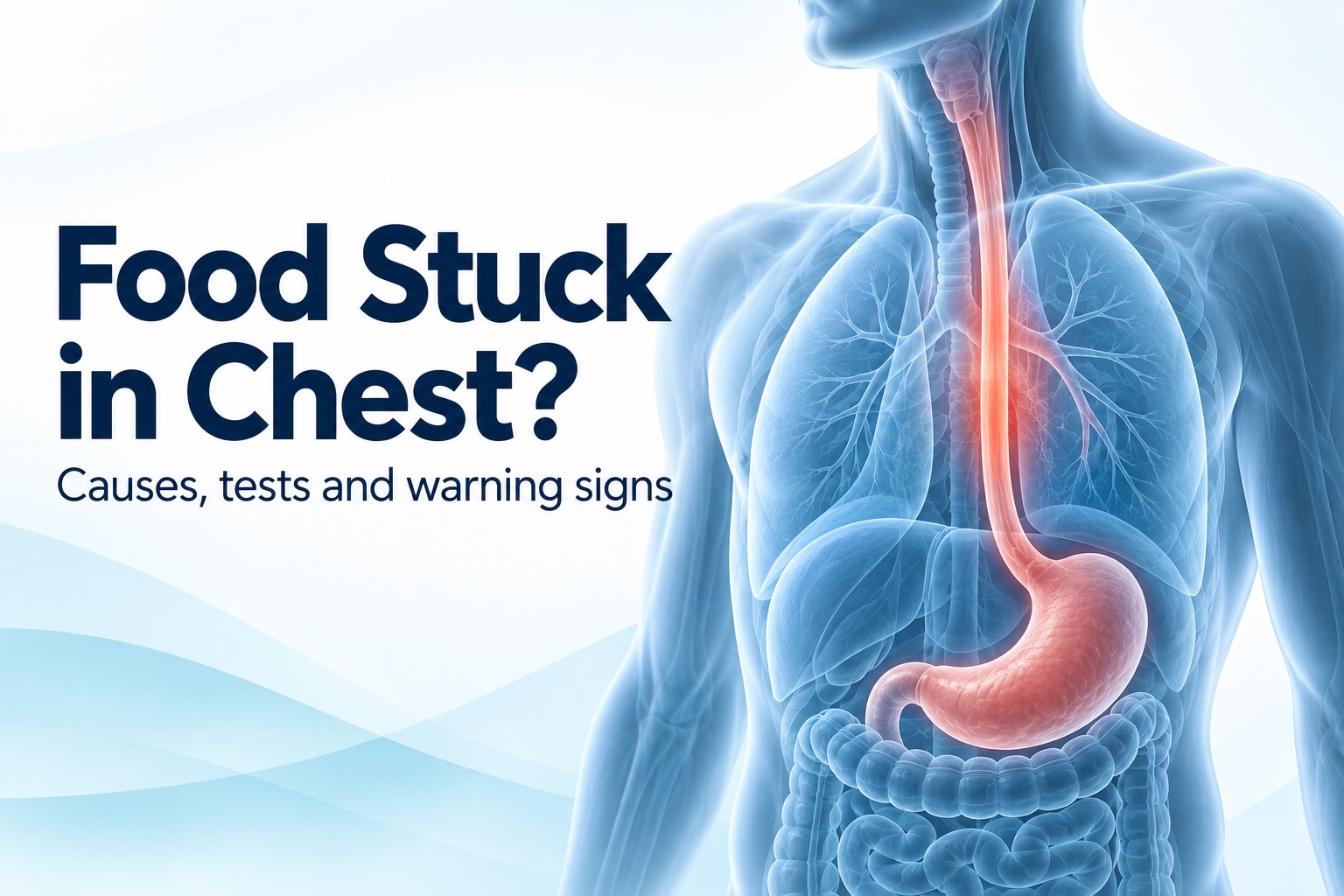
You swallow a bite of dinner, but it seems to stop behind your breastbone. You pause, swallow again, and wonder whether this is acidity, something you ate too quickly, or a more serious problem with your food pipe.
A feeling of food stuck in the chest can be a symptom of dysphagia, meaning difficulty swallowing. Reflux-related inflammation, a narrowed food pipe, allergic inflammation and problems with the muscles of swallowing can all cause it. Cancer is another possible cause, but the sensation alone cannot tell you which condition is responsible.
This guide explains the differences, which tests help, and when you should seek urgent care.
Food Stuck Right Now? When to Seek Emergency Help
If you cannot swallow your saliva, are drooling, have difficulty breathing, or have severe chest pain, go to the nearest emergency department immediately. Inability to breathe or speak may mean choking and needs emergency assistance.
If food still feels lodged after a meal, seek urgent medical assessment even if you can breathe and swallow saliva. Do not keep eating, force down water or fizzy drinks, or try to make yourself vomit to clear it. Being able to breathe does not exclude a blocked food pipe.
A specialist may need to remove the obstruction with an endoscope. The American Society for Gastrointestinal Endoscopy distinguishes complete obstruction requiring emergency endoscopy from other food impactions requiring urgent treatment. These are hospital decisions, not a reason to wait at home.
What Does Difficulty Swallowing Actually Mean?
The esophagus, or food pipe, is the muscular tube that carries food from your throat to your stomach. Problems can arise while starting a swallow or after food has entered this tube.
- Coughing or choking as you swallow: This can suggest difficulty coordinating swallowing and protecting the airway.
- Food catching after you swallow: A sticking sensation in the chest can suggest a problem within the esophagus.
- Pain when swallowing: Doctors call this odynophagia. It can accompany inflammation and other conditions and deserves assessment.
Tell your doctor whether solids, liquids or both cause trouble, and whether the problem comes and goes or is becoming more frequent. The NHS guidance on dysphagia also highlights weight loss, dehydration and repeated chest infections as possible consequences of swallowing difficulties.
Common Causes of Food Feeling Stuck in the Chest
1. Acid Reflux and Esophageal Inflammation
Reflux occurs when stomach contents travel back into the esophagus. Alongside heartburn or a sour taste, it can cause painful or difficult swallowing. However, some people with reflux do not have typical heartburn.
It is tempting to label every discomfort after a meal as acidity. Recurrent food sticking needs a medical assessment, even if an antacid reduces the burning. The NIDDK advises seeing a doctor for swallowing problems, persistent vomiting, unexplained weight loss or signs of digestive bleeding.
2. A Narrowing or Ring in the Food Pipe
A stricture is a narrowed section of the esophagus. A Schatzki ring is a thin ring of tissue that can also restrict the passage. Solid food may catch at these points, sometimes intermittently. A piece of meat or bread can reveal a problem that was already there.
These are among the recognised causes of food impaction described by ASGE. An episode that clears on its own still deserves follow-up, particularly if it has happened before.
3. Eosinophilic Esophagitis
Eosinophilic esophagitis, often shortened to EoE, is an inflammatory condition involving immune cells in the food pipe. Adults can experience repeated food sticking or a blockage. Some also have asthma, eczema or other allergic conditions.
Diagnosis requires assessment of tissue samples from the esophagus. It cannot be confirmed by symptoms or a routine allergy test alone. Treatment may include prescribed medicines, a supervised dietary approach and, when needed, treatment of narrowing. The American Academy of Allergy, Asthma & Immunology explains why ongoing follow-up matters.
4. Achalasia and Swallowing Muscle Problems
Sometimes the passage is not simply narrowed: the muscles do not move food normally. In achalasia, the muscle at the lower end of the esophagus does not relax properly, and normal movement along the tube is disrupted.
Both food and drinks can become difficult to swallow. Undigested food may come back up, and chest discomfort or weight loss can develop. Tests such as manometry, which measures muscle pressures, help identify the problem. NHS information on achalasia describes treatments that help food pass more easily.
5. Esophageal Cancer
Esophageal cancer can make swallowing progressively harder. A person may first struggle with solid foods and later with softer foods or liquids. Unplanned weight loss, painful swallowing or vomiting after meals may occur alongside it.
These symptoms also occur with non-cancerous conditions. As the American Cancer Society explains, symptoms need investigation rather than a diagnosis based on how they feel. For a broader overview, see our guide to food pipe cancer symptoms.
Reflux, Narrowing or a Muscle Problem: How Do They Compare?
| Pattern | Possible explanation | What to discuss |
|---|---|---|
| Burning or sour taste with swallowing discomfort | Reflux or inflammation | Whether investigation is needed alongside reflux treatment |
| Solid food catches intermittently | Ring, narrowing or EoE | Endoscopy and whether biopsies are appropriate |
| Both solids and liquids are difficult | Possible muscle movement disorder | Endoscopy and specialised swallowing tests |
| Swallowing steadily worsens, with weight loss | Narrowing, including a possible tumor | Prompt specialist assessment |
Is This the Same as a Lump in the Throat?
Not always. Globus is the feeling of a lump in the throat even though eating and drinking remain normal. Royal Berkshire NHS guidance distinguishes this sensation from an actual swallowing difficulty.
If food genuinely catches, swallowing hurts or you are losing weight, do not assume it is globus or anxiety. Our article on LPR and overlapping cancer symptoms discusses related throat concerns; repeated food sticking needs its own evaluation.
Which Tests Might You Need?
A gastroenterologist usually leads the initial assessment of food sticking in the esophagus. Depending on the findings, tests may include:
- Upper GI endoscopy: A flexible camera examines the food pipe and can identify inflammation, narrowing or an abnormal growth. Tissue samples can be taken when appropriate.
- Barium swallow: X-ray images track swallowed contrast to show the shape and movement of the esophagus. This is a planned investigation, not a home remedy or a substitute for urgent care during an obstruction.
- Esophageal manometry: Pressure measurements assess how the swallowing muscles and lower valve work.
Not everyone needs every test. Read more about the role of endoscopy and tissue sampling in our guide to esophageal investigations.
What to Tell Your Doctor
Before a planned appointment, write down when symptoms began, which foods cause problems, whether liquids are affected and whether meals now take longer. Mention earlier blockages, reflux treatment, allergies, previous procedures and any weight change. Bring previous endoscopy and biopsy reports if available.
Ask what the next step will be if the first test is normal but symptoms continue. Also ask for an individual eating and drinking plan if swallowing is difficult. Quietly switching to softer food can hide the impact of the problem without explaining its cause.
Frequently Asked Questions
Can acid reflux make food feel stuck?
Yes, reflux can be associated with swallowing difficulties. Repeated sticking still needs investigation; relief from heartburn medicine does not explain every possible cause.
Does food stuck in the chest always mean cancer?
No. Inflammation, rings, strictures and muscle disorders can cause similar symptoms. Progressive difficulty or weight loss makes prompt assessment especially important.
Should I drink water to push stuck food down?
Do not force food or drinks down when you suspect a blockage. Seek urgent assessment. Inability to swallow saliva or breathing difficulty requires emergency care.
Do I need surgery?
Not necessarily. Treatment depends on the cause and may involve medicines or an endoscopic procedure. Achalasia and confirmed tumors require a more specific discussion of treatment options.
Getting the Right Specialist Advice
Repeated food sticking is a reason to arrange assessment, even when you can manage by changing what you eat. Start with a physician or gastroenterologist; a thoracic or upper GI surgical team may become involved when the findings call for surgical expertise.
If investigations have identified an esophageal condition requiring a surgical opinion, book a consultation with Dr. Parveen Yadav to review your reports and discuss the next steps. A food blockage happening now should be assessed in an emergency department rather than through a routine appointment.

Dr. Parveen Yadav
18+ Yrs Exp | 5,700+ Thoracic & Robotic Cancer Surgeries
Dr. Parveen Yadav is a Director and Senior Consultant in Thoracic and Surgical Oncology, specializing in minimally invasive and robotic lung and esophageal surgeries, with advanced training from AIIMS and Tata Memorial Hospital.
View Full ProfileRecent Posts
Thymectomy for Myasthenia Gravis: Who Benefits, Surgery and Recovery
- Dr. Parveen Yadav
- Oct 25, 2026
Ground-Glass Lung Nodules: Follow-Up, Cancer Risk and When Surgery Is Needed
- Dr. Parveen Yadav
- Oct 21, 2026
Lung Function Tests Before Lung Surgery: FEV1, DLCO and Fitness Explained
- Dr. Parveen Yadav
- Oct 17, 2026

Does a Positive PET-CT Always Mean Lung Cancer?
- Dr. Parveen Yadav
- Oct 14, 2026
Related Posts
Thymectomy for Myasthenia Gravis: Who Benefits, Surgery and Recovery
Learn who may benefit from thymectomy for myasthenia gravis, what research shows, how robotic and VATS surgery differ, and how to prepare for recovery.
- Read More
- Oct, 25 2026
Ground-Glass Lung Nodules: Follow-Up, Cancer Risk and When Surgery Is Needed
Understand pure ground-glass and part-solid lung nodules, CT follow-up intervals, PET and biopsy limitations, and when surgery may be considered.
- Read More
- Oct, 21 2026
Lung Function Tests Before Lung Surgery: FEV1, DLCO and Fitness Explained
Understand spirometry, FEV1, DLCO and exercise tests before lung surgery, how results guide planning and what to ask about your breathing reserve.
- Read More
- Oct, 17 2026
Copyright 2026 © Dr .Parveen Yadav all rights reserved.
Proudly Scaled by Public Media Solution!