


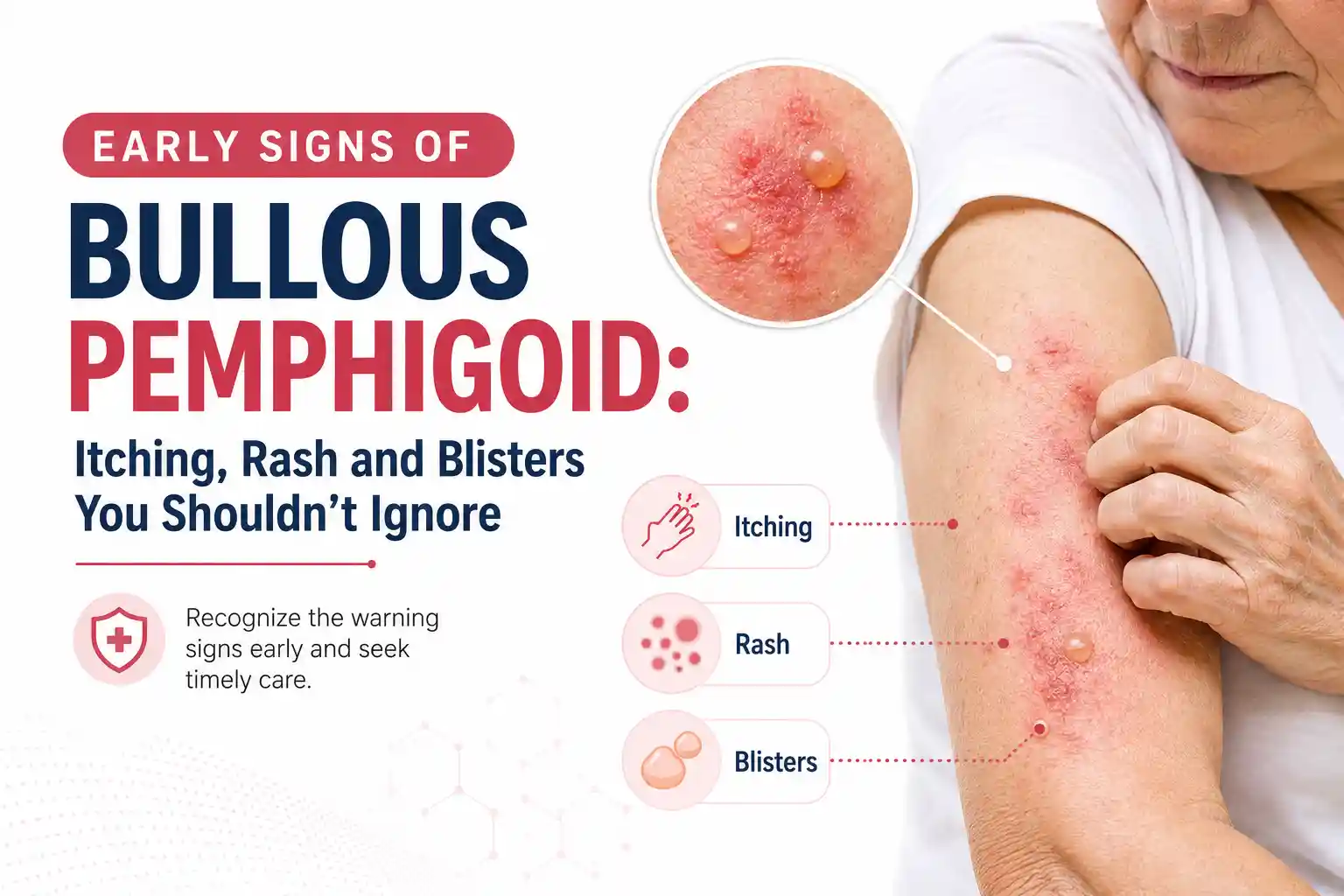
Skin changes can feel easy to dismiss , a bit of itching here, a rash there. But when bullous pemphigoid symptoms appear, the skin is sending a serious signal that something is wrong below the surface. This is a bullous skin disease caused by the immune system mistakenly attacking the tissue that holds the outer and inner layers of skin together.
If you or someone you know in Delhi or Gurgaon has been dealing with unexplained itching, a spreading rash, or large fluid-filled blisters, this article will help you understand what you may be looking at , and when it is time to call a specialist.
Bullous pemphigoid is the most common form of autoimmune bullous disease. It develops when the immune system produces antibodies that target proteins in the basement membrane , the thin layer that anchors the epidermis (outer skin) to the dermis (deeper skin). Once those anchoring proteins are disrupted, fluid accumulates and forms blisters called bullae.
It primarily affects adults over 60, though it can occur at any age. Triggers are not always clear, but certain medications, infections, and UV light exposure have been linked to its onset. In cities like Delhi, where pollution and heat stress affect skin health year-round, early recognition matters.
One of the most important things to understand about bullous pemphigoid symptoms is that the disease typically unfolds in stages. Blisters do not appear overnight , the skin gives warnings weeks or months before that point.
The earliest sign is often itching without any visible rash or blister. The itch can be mild at first, but it usually becomes persistent and intense. Many people in this phase are treated for eczema, allergic reactions, or dry skin , which means the actual diagnosis gets delayed.
If you are in your 60s or older and experiencing unexplained itching that does not respond to standard antihistamines or moisturizers, keep that detail in mind when you speak to a doctor.
Before blisters form, many patients develop a red, raised rash that looks like hives or eczema. The rash can appear on the abdomen, inner thighs, groin, armpits, or the inner sides of the arms. At this stage, the skin may feel tight or burning, not just itchy.
In some cases, this rash phase can last for several weeks or months. During this window, a skin biopsy or blood test for specific antibodies (anti-BP180 and anti-BP230) can confirm the diagnosis before blisters develop.
The hallmark feature of this bullous skin disease is the appearance of large, tense blisters filled with clear fluid. Unlike the fragile blisters of pemphigus vulgaris, these are firm and do not rupture easily.
Blisters can appear on:
In Gurgaon's hot and humid summers, blisters can become secondarily infected if not managed quickly. Open, weeping skin in high-sweat areas is a fast route to bacterial complications.
Blisters in bullous pemphigoid tend to cluster on areas of friction and movement , the inner thighs, lower abdomen, forearms, and skin folds. They are usually symmetrical, appearing on both sides of the body.
Mucous membrane involvement (mouth, eyes, esophagus) is relatively uncommon in bullous pemphigoid, which distinguishes it from other forms of bullous disease. When oral blisters do appear, they tend to be less severe and less frequent.
Not all blistering diseases are the same. Getting the right diagnosis matters because treatment approaches differ considerably.
| Feature | Bullous Pemphigoid | Pemphigus Vulgaris | Dermatitis Herpetiformis |
| Blister type | Large, tense, firm | Soft, flaccid, fragile | Small, clustered |
| Nikolsky's sign | Negative | Positive | Negative |
| Location | Trunk, limbs | Mouth, trunk | Elbows, knees, buttocks |
| Typical age | 60+ | 40-60 | Any age |
| Linked condition | Autoimmune | Autoimmune | Celiac disease |
For a deeper look at the different types of bullous disease and how they are diagnosed, the team at Chest Surgery India provides detailed clinical information.
If a doctor suspects bullous pemphigoid, the standard diagnostic workup includes:
Hospitals in South Delhi and parts of Gurgaon now have dermatology units capable of performing DIF in-house, which reduces wait time for results significantly.
Bullous disease treatment focuses on suppressing the abnormal immune response and protecting the skin from further damage. The primary approach involves corticosteroids , topical creams for mild cases, and oral steroids such as prednisolone for moderate-to-severe presentations.
When long-term steroid use is a concern , which it often is in older patients , doctors may add steroid-sparing immunosuppressants such as:
Wound care is equally important. Open blisters need to be drained under sterile conditions, dressed appropriately, and monitored for infection.
For patients searching for bullous disease treatment near them in Delhi-NCR, specialist care covering both medical management and skin wound support is available.
Do not wait for blisters to appear. See a dermatologist or specialist if:
Patients in Gurgaon's DLF areas, Sector 56, and South Delhi localities like Saket, Vasant Kunj, and Green Park have access to specialist referral pathways. Do not let a commute delay a diagnosis that is very treatable when caught early.
There is no guaranteed way to prevent bullous pemphigoid since the trigger is an immune system malfunction. However, a few practical steps can reduce risk or prevent worsening:
If you are concerned about symptoms that match the pattern above, early evaluation is the most effective step you can take. The specialists at Chest Surgery India work with patients dealing with complex bullous skin diseases, including diagnosis, medical management, and specialist referrals across Delhi and Gurgaon.
explore bullous disease treatment options or contact the team directly.

18+ Yrs Exp | 5,700+ Thoracic & Robotic Cancer Surgeries
Dr. Parveen Yadav is a Director and Senior Consultant in Thoracic and Surgical Oncology, specializing in minimally invasive and robotic lung and esophageal surgeries, with advanced training from AIIMS and Tata Memorial Hospital.
View Full Profile
Robotic vs VATS lobectomy? An expert guide to choosing the best lung cancer treatment in Gurgaon & Delhi. Learn the pros, cons, and key differences.
A lung cancer diagnosis is overwhelming. A second opinion can confirm your path, find better treatments, and give you critical peace of mind. Learn why
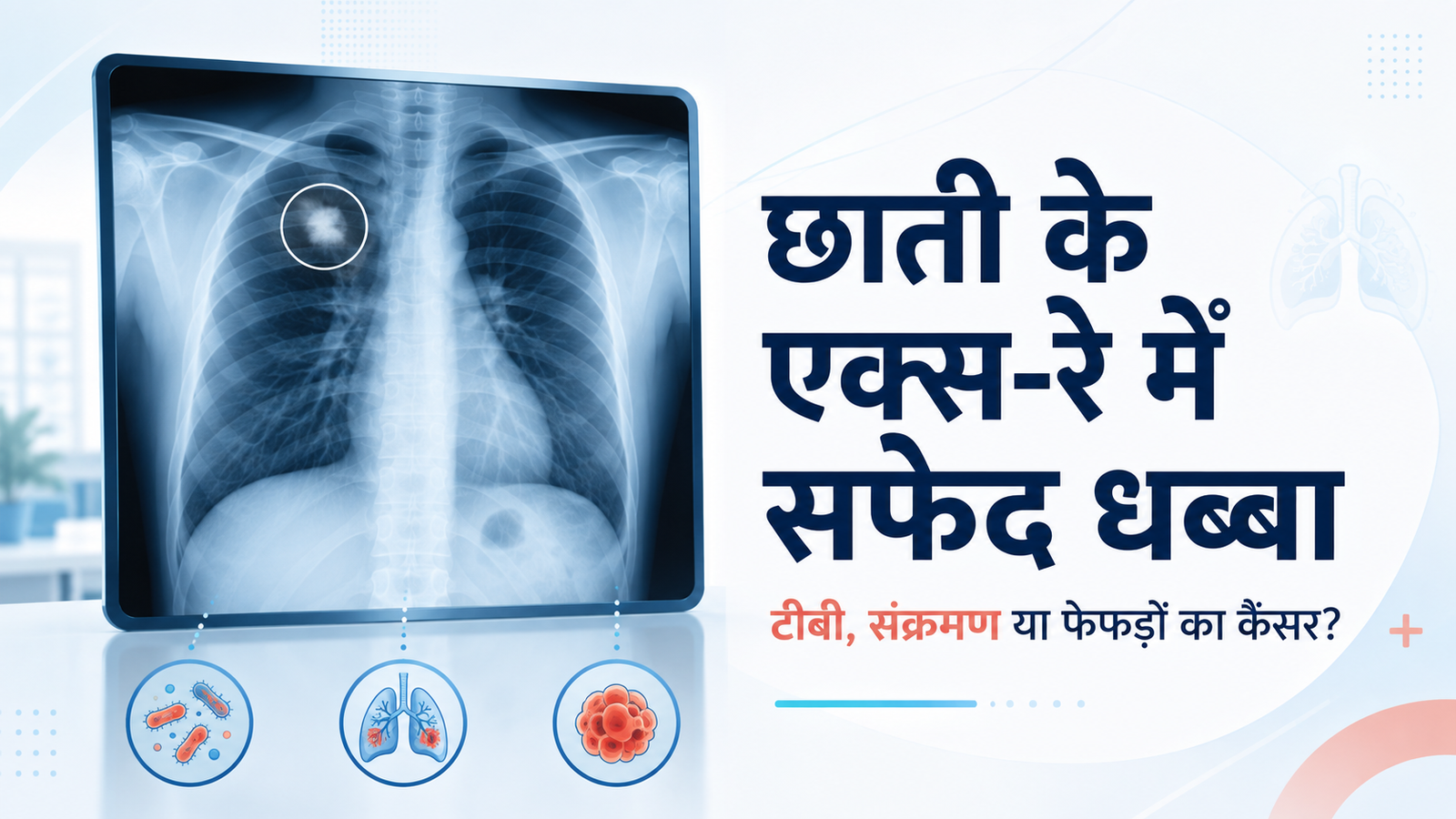
छाती के X-Ray में सफेद धब्बा दिखने का मतलब हमेशा कैंसर नहीं होता। जानें इसके संभावित कारण, टीबी और लंग कैंसर में अंतर तथा जरूरी जांच।
Copyright 2026 © Dr .Parveen Yadav all rights reserved.
Proudly Scaled by Public Media Solution!