messenger
whatsapp

सीने में गांठ के कारण और इलाज | Dr. Parveen Yadav

  • Home
  • सीने में गांठ के कारण और इलाज | Dr. Parveen Yadav
Blog

सीने में गांठ के कारण और इलाज | Dr. Parveen Yadav

  • Medically reviewed by
    Dr. Parveen Yadav
    18+ Yrs Exp | 5,700+ Thoracic & Robotic Cancer Surgeries
  • Apr 06, 2026

जब एक छोटी-सी गाँठ ने पूरी ज़िंदगी बदल दी

रमेश जी 47 साल के थे। दिल्ली-NCR में एक सरकारी दफ्तर में काम करते थे। एक रात नहाते वक्त उ

नकी पत्नी ने उनकी बाईं पसली के पास एक छोटी-सी उभरी हुई गाँठ महसूस की। रमेश जी को न कोई दर्द था, न कोई थकान। उन्होंने सोचा, 'बस चरबी होगी। तेल-मालिश से ठीक हो जाएगी।'

तीन महीने बाद वही गाँठ बड़ी हो गई थी। साँस लेते वक्त हल्की-सी खिंचन होने लगी। जब वो पहली बार मेरे OPD में आए, तो उनके चेहरे पर घबराहट थी। CT Scan और बायोप्सी रिपोर्ट ने बताया कि वो गाँठ एक malignant chest wall tumor था, जो पसली की हड्डी से निकल रहा था।

अगर वो तीन महीने पहले आ जाते, तो इलाज बहुत आसान होता।

यह कहानी सिर्फ रमेश जी की नहीं है। हर हफ्ते मेरी OPD में ऐसे कई मरीज़ आते हैं, जिन्होंने सीने की गाँठ को महीनों तक नज़रअंदाज़ किया, क्योंकि उन्हें पता ही नहीं था कि यह कब खतरनाक हो सकती है और कब नहीं।

इस ब्लॉग में मैं, Dr. Parveen Yadav, आपको वह सब बताऊंगा जो ज़्यादातर वेबसाइट्स बताना भूल जाती हैं: सीने में गाँठ के असली कारण, उसके खतरनाक लक्षण, जाँच का सफर, और उसका सही इलाज।
 

सीने में गाँठ क्या होती है?

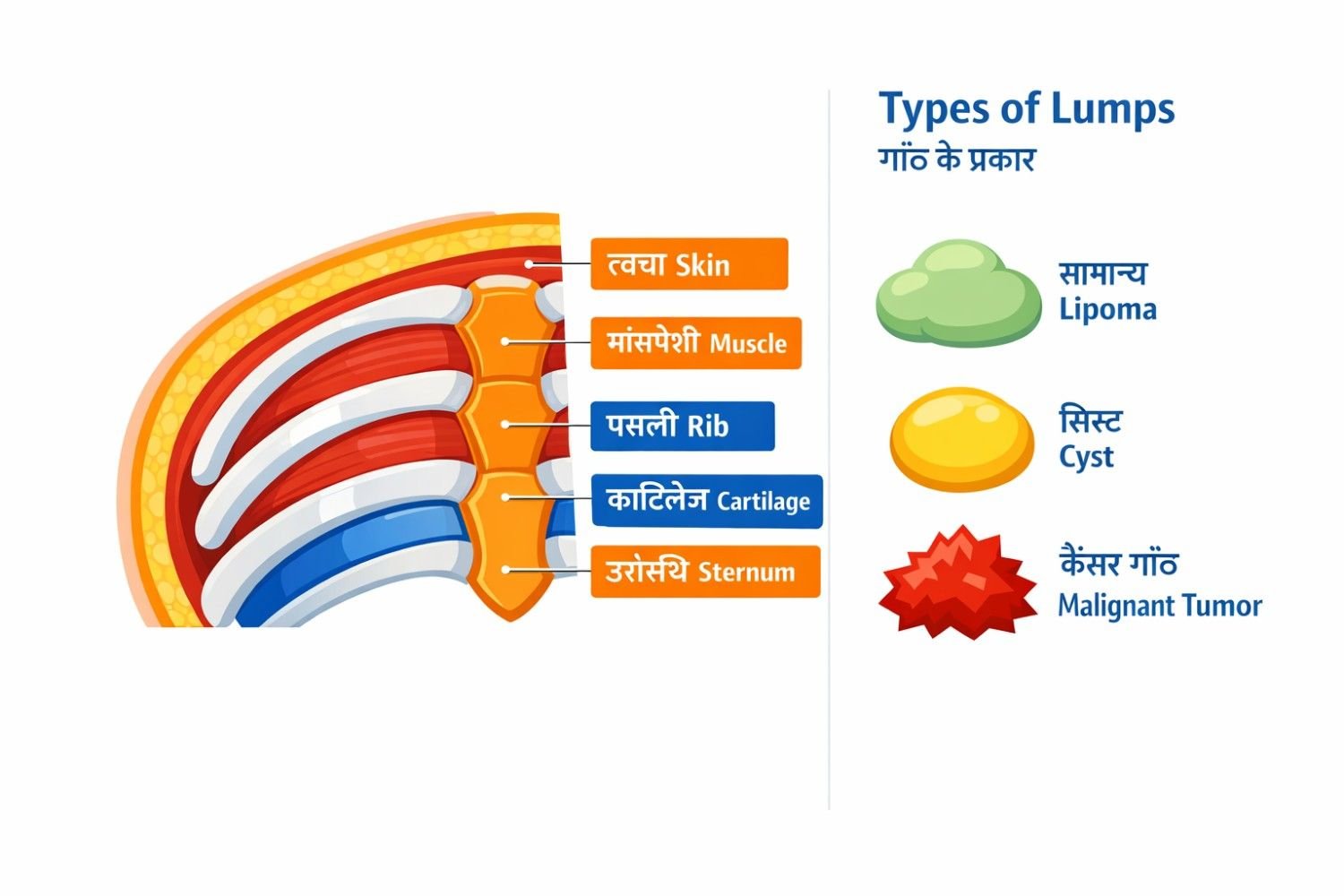
सीने में गाँठ (Chest Lump) का मतलब है छाती की दीवार पर, उसके अंदर या उसके नीचे किसी असामान्य उभार का होना। यह गाँठ त्वचा में, मांसपेशियों में, हड्डी में या कार्टिलेज में कहीं भी हो सकती है।

सीने की दीवार (Chest Wall) में यह परतें होती हैं:

•        त्वचा (Skin) और चमड़े के नीचे की चरबी

•        मांसपेशियां (Muscles)

•        पसलियां (Ribs) और उनके बीच की मांसपेशियां

•        कार्टिलेज (Cartilage) और उरोस्थि (Sternum)


दो मुख्य प्रकार की गाँठें होती हैं:

•        Primary: जो सीधे chest wall की किसी परत से उत्पन्न होती है

•        Secondary: जो किसी और अंग, जैसे फेफड़े या स्तन, के कैंसर से फैलकर यहाँ आती है


महत्वपूर्ण आँकड़ा: NCBI की 2024 की रिपोर्ट के अनुसार, primary chest wall tumors कुल आबादी के केवल 2% में होते हैं, और उनमें से लगभग 50% benign यानी गैर-कैंसर होते हैं। लेकिन बिना जाँच के यह तय करना असंभव है कि आपकी गाँठ किस श्रेणी में है।


सीने में गाँठ के कारण: सामान्य से लेकर गंभीर तक

जो वेबसाइट्स नहीं बतातीं: Secondary Tumors की संख्या Primary से ज़्यादा है

ज़्यादातर लोग सोचते हैं कि chest lump हमेशा chest का ही cancer होता है। लेकिन असलियत यह है कि chest wall पर पाई जाने वाली बहुत सी गाँठें दूसरी जगह के cancer से फैलकर आती हैं, जैसे फेफड़े या स्तन का कैंसर।

A. सामान्य (Non-Cancer) कारण

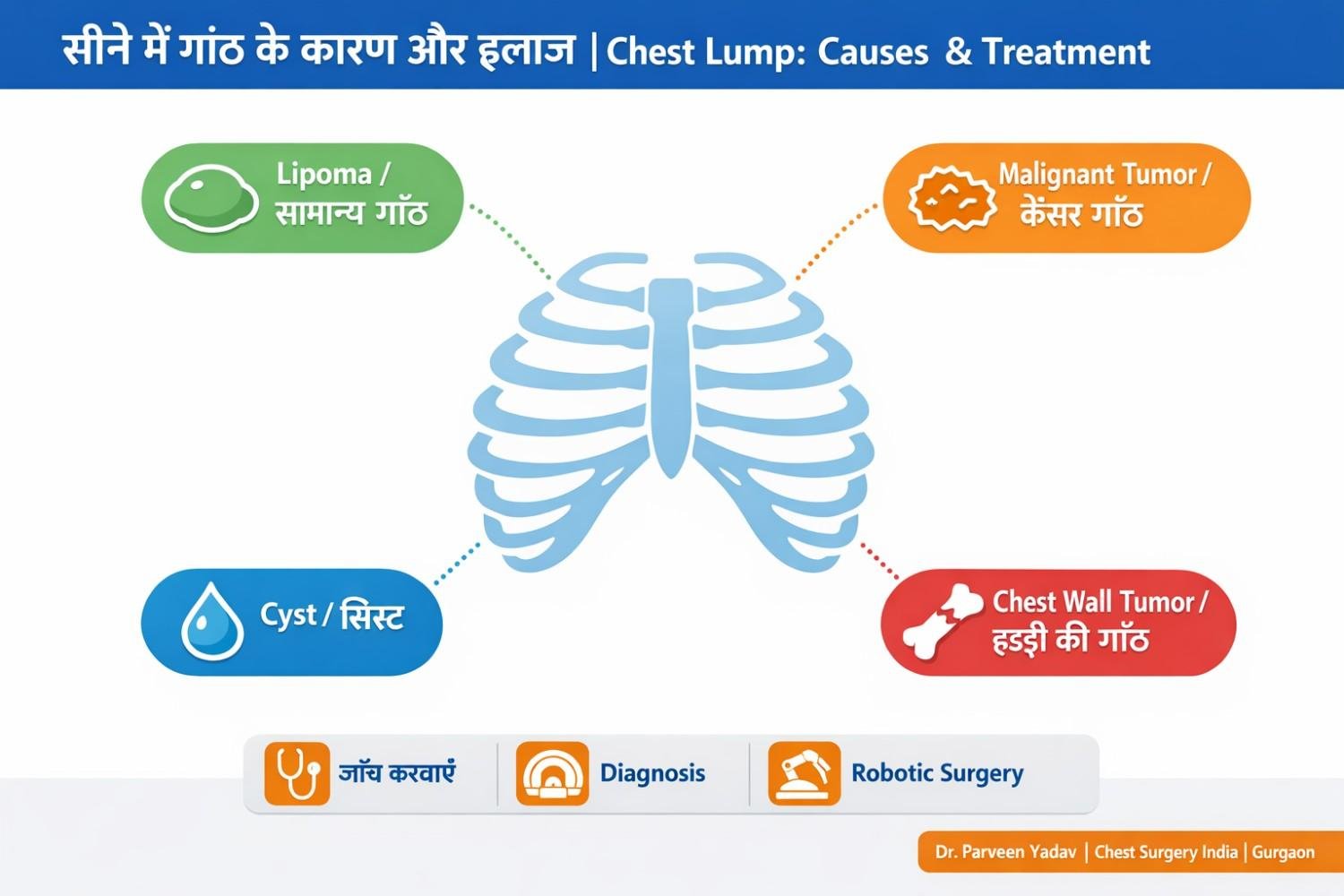
1.     Lipoma (चरबी की गाँठ): नरम, हिलने वाली, दर्दरहित गाँठ जो चरबी कोशिकाओं से बनती है। सबसे आम और लगभग हमेशा सुरक्षित।

2.     Sebaceous Cyst: त्वचा के नीचे बनने वाली द्रव-भरी थैली। दबाने पर महसूस होती है।

3.     Abscess (पस वाली गाँठ): बैक्टीरिया के कारण बनती है। बुखार, लालिमा और गर्माहट के साथ।

4.     Hematoma: चोट के बाद खून जमा होने से बनी गाँठ।

5.     Fibroadenoma: महिलाओं में हार्मोनल बदलाव के कारण, खासकर 14 से 35 साल में।

6.     Gynecomastia: पुरुषों में निप्पल के पास, हार्मोन असंतुलन के कारण। यह cancer नहीं है लेकिन जाँच ज़रूरी है।

7.     Osteochondroma: पसली या shoulder blade में हड्डी से निकलने वाली सबसे आम benign bone tumor।

8.     Fibrous Dysplasia: हड्डी में normal bone की जगह रेशेदार ऊतक बन जाता है।


B. गंभीर (Cancer) कारण

•        Chondrosarcoma: chest wall का सबसे आम primary malignant tumor, जो कार्टिलेज से उत्पन्न होता है।

•        Ewing's Sarcoma: बच्चों और युवाओं में पाया जाने वाला aggressive bone tumor।

•        Lung Cancer का फैलाव: जब फेफड़े का कैंसर chest wall पर आ जाए।

•        Breast Cancer का फैलाव (Secondary): chest wall पर metastasis।

•        Lymphoma: lymph nodes की सूजन जो chest पर उभर सकती है।


सबसे ज़रूरी बात: अगर गाँठ sternum यानी सीने की बीच की हड्डी पर है, तो इसे हमेशा गंभीरता से लें।

Journal of Thoracic Disease (2024) के अनुसार sternal tumors लगभग हमेशा malignant होते हैं।


क्या आपने हाल ही में सीने पर कोई गाँठ महसूस की है?

देरी न करें। अभी Chest Surgery India, Gurgaon में appointment बुक करें


ये लक्षण दिखें तो तुरंत डॉक्टर से मिलें

घर पर खुद जाँचने की Red Flag Checklist

यह section अधिकांश websites पर नहीं मिलता। यह checklist आपको बताएगी कि अगले 48-72 घंटों में specialist से मिलना कितना ज़रूरी है:

•        गाँठ 2 हफ्ते में बड़ी हो गई हो

•        दबाने पर भी गाँठ न हिले, जड़ी हुई लगे

•        बिना कारण बुखार, रात को पसीना, या वज़न घटना

•        साँस लेने में तकलीफ या सीने में खिंचन

•        खाँसी में खून आना

•        गाँठ के ऊपर की त्वचा लाल, सख्त या धंसी हुई हो

•        गाँठ sternum (सीने की बीच की हड्डी) पर हो

•        पहले कभी कोई cancer रह चुका हो

•        बांह या कंधे में अजीब दर्द के साथ गाँठ हो


अगर इनमें से कोई भी एक लक्षण है, तो यह सामान्य नहीं है। Thoracic Surgeon से मिलना ज़रूरी है।


सामान्य गाँठ vs. कैंसर गाँठ: कैसे पहचानें?

यहाँ सबसे पूछे जाने वाले सवाल का जवाब है:


विशेषतासामान्य गाँठकैंसर गाँठ
दर्दआमतौर पर नहींहो भी सकता है, न भी
बनावटनरम, हिलने वालीकठोर, जड़ी हुई
वृद्धिधीमी या नहींतेज़, लगातार
त्वचासामान्यलाल, सख्त, धंसी हुई
बुखार/थकाननहींहो सकता है
साथ में लक्षणकोई नहींखांसी, वज़न घटना


याद रखें: दर्द नहीं है, इसका मतलब यह नहीं कि गाँठ safe है। Malignant tumors अक्सर महीनों तक painless रहते हैं।
 

जाँच का सफर: डॉक्टर के पास जाने पर क्या होगा?

यह section most websites पर नहीं मिलता। मरीज़ और उनके परिवार को अक्सर नहीं पता होता कि पहली visit में क्या expect करें:

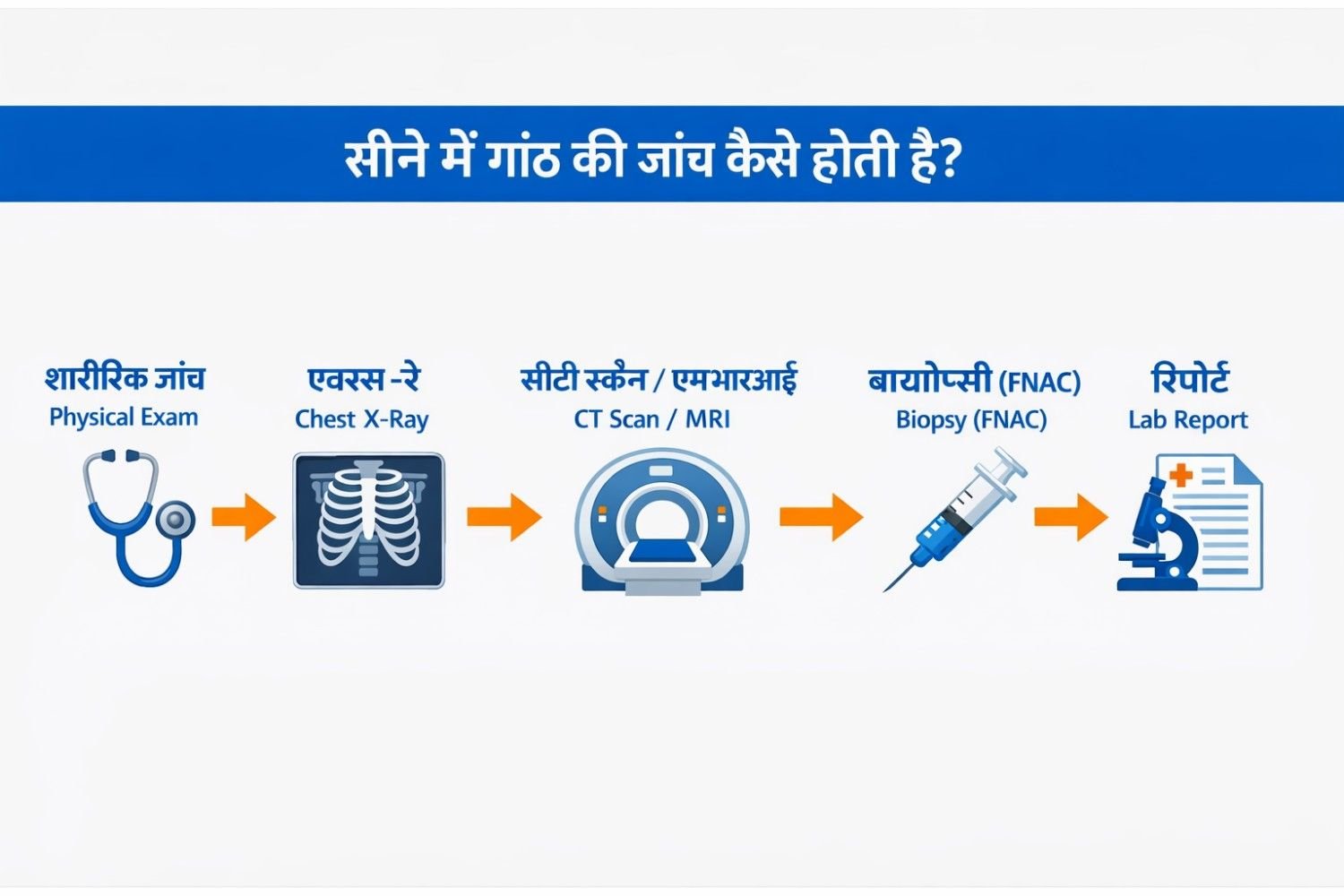
Step 1: Clinical Examination (शारीरिक जाँच)

डॉक्टर गाँठ का आकार, कठोरता, हिलना और आसपास की त्वचा की स्थिति देखते हैं। यह 5-10 मिनट की simple प्रक्रिया है।

Step 2: Imaging Tests (स्कैन)

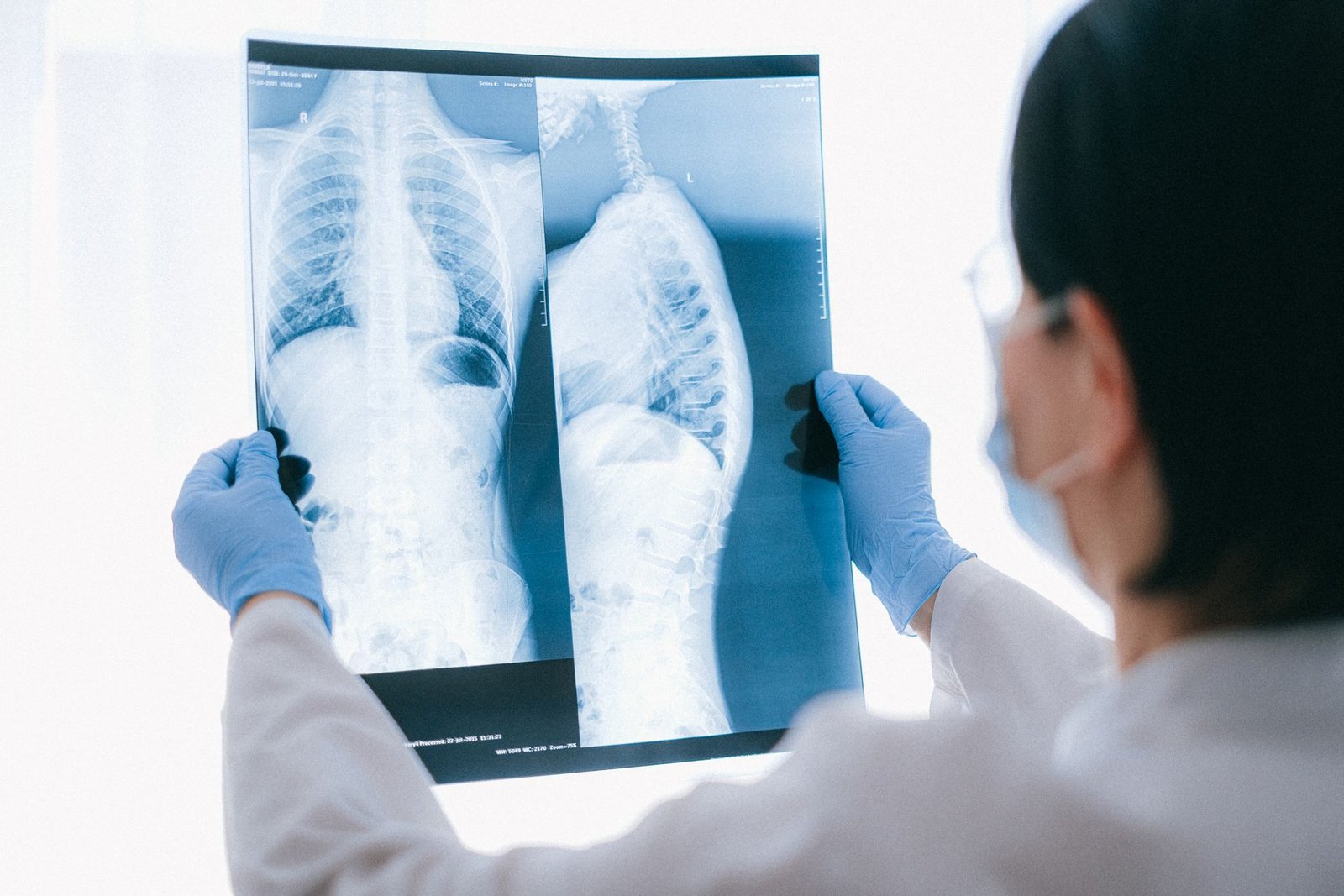
•        Chest X-Ray: पहला कदम। NCBI के अनुसार, 20% chest wall tumors यहीं detect हो जाते हैं।

CT Scan: हड्डी, मांसपेशी और blood vessels की जाँच के लिए सबसे अच्छा। (Source: NCBI, 2026)

•        MRI: नरम ऊतकों की detailed जाँच के लिए CT से बेहतर।

•        PET-CT: यह जानने के लिए कि cancer शरीर में और कहाँ फैला है।

•        Ultrasound: सतह की गाँठ की guided biopsy के लिए उपयोगी।

Step 3: Biopsy (नमूना जाँच): इसे सुनकर घबराएं नहीं

Biopsy का मतलब है गाँठ से थोड़ा-सा tissue लेकर lab में जाँचना। यह cancer confirm करने का सबसे सटीक तरीका है।

•        FNAC (Fine Needle Aspiration Cytology): पतली सुई से, बिना बेहोशी के, 10 मिनट में।

•        Core Needle Biopsy: थोड़ी मोटी सुई, ज़्यादा accurate रिपोर्ट।

•        Surgical Biopsy: जब needle biopsy काफी नहीं हो।


NCBI StatPearls (2025) के अनुसार, histopathologic evaluation (बायोप्सी की lab रिपोर्ट) diagnosis और treatment plan दोनों के लिए critical है। आज molecular genetic testing भी होती है जो treatment choice को और precise बनाती है।


इलाज के विकल्प: एक गाँठ, कई रास्ते

A. Benign (सामान्य) गाँठ का इलाज

•        Watch and Wait: छोटी, stable, दर्दरहित गाँठ के लिए 3-6 महीने में follow-up।

•        Aspiration: Cyst से सुई के ज़रिए द्रव निकालना।

•        Surgical Removal: Lipoma, बड़े cyst या osteochondroma के लिए।

B. Malignant (कैंसर) गाँठ का इलाज

सर्जरी (Resection): कैंसर को जड़ से हटाना।

NCBI StatPearls (2025) के अनुसार, R0 margins (पूरी तरह साफ़ किनारे) के साथ surgical resection curative treatment की नींव है।

Chest Wall Reconstruction: पसली हटाने के बाद chest wall को titanium plates, mesh या muscle flap से दोबारा बनाना।

Chemotherapy: Surgery से पहले tumor छोटा करने के लिए, या बाद में।

Radiation Therapy: Surgery के बाद बची हुई कैंसर कोशिकाओं को खत्म करने के लिए।

Targeted Therapy / Immunotherapy: नए molecular treatments जो specific cancer cells को target करते हैं।


Robotic और Minimally Invasive Surgery: कम दर्द, तेज़ ठीक होना

Chest Surgery India में उपलब्ध आधुनिक तकनीकें:

•        Da Vinci Robotic Surgery: छोटे चीरे, बेहतर precision, जल्दी recovery

•        VATS (Video-Assisted Thoracoscopic Surgery): बिना बड़े चीरे के chest wall तक पहुँच

•        3D Imaging + PET-CT Fusion: tumor की exact location और spread

•        Chest Wall Reconstruction: titanium mesh, muscle flaps से structural repair


Chest lump की जाँच करवाना चाहते हैं?

Artemis Hospital, Sector 51, Gurgaon में Dr. Parveen Yadav की OPD में मिलें। Call: +91 9540210956


भारत में देरी का खतरा: यह आँकड़ा आपको चौंकाएगा

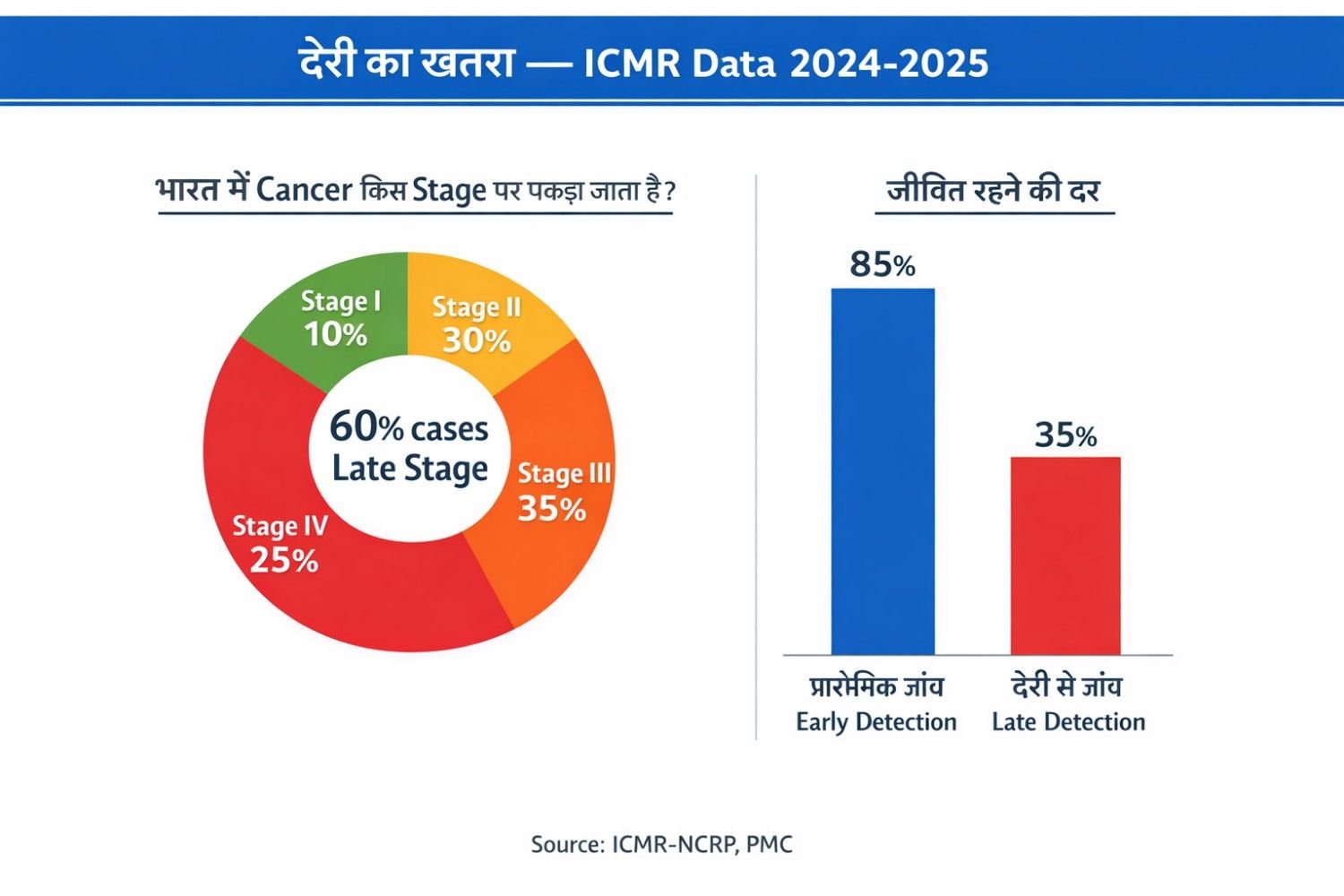
ICMR-NCRP की ताज़ा रिपोर्ट के अनुसार, India में cancer के कुल मामले 2022 में 14.6 लाख थे और 2025 तक यह 1.57 करोड़ तक बढ़ने का अनुमान है। India में हर 9 में से 1 व्यक्ति को जीवन में एक बार cancer होने का खतरा है।

सबसे चिंताजनक बात: PMC की study के अनुसार India में लगभग 60% breast और chest cancer के मामले Stage III या IV में diagnose होते हैं। मरीज़ तब तक नहीं आते जब तक गाँठ बहुत बड़ी न हो जाए।


देरी क्यों होती है? तीन सबसे बड़े कारण:

•        'अपने आप ठीक हो जाएगी' की सोच

•        घरेलू नुस्खों पर भरोसा

•        डॉक्टर के पास जाने में झिझक या डर


लेकिन यह सच है कि जितनी जल्दी diagnosis होती है, उतना ही बेहतर इलाज और उतनी ही लंबी ज़िंदगी। Chest wall के malignant tumors में average 5-year survival लगभग 60% है, जो early stage में बहुत बेहतर हो जाती है। 

घर पर Self-Examination: कैसे करें?

यह guidance ज़्यादातर Hindi websites पर नहीं मिलती:

1.     शॉवर या नहाने के बाद, जब त्वचा ढीली हो, हाथ की उँगलियों से सीने पर धीरे-धीरे हाथ फेरें।

2.  किसी भी उभार, कठोरता, या asymmetry को नोट करें।

3.  गाँठ का अनुमानित आकार (किसी सिक्के से compare करें), hardness और movement नोट करें।

4.  अगर 2 हफ्ते में बदलाव आए या कोई भी Red Flag symptom हो, तो doctor के पास जाएं।


Self-exam cancer का alternative नहीं है। यह सिर्फ early warning tool है।


निष्कर्ष: गाँठ छोटी हो या बड़ी, नज़रअंदाज़ मत करें

रमेश जी की कहानी एक reminder है कि हमारा शरीर जब कोई संकेत देता है, तो उसे सुनना ज़रूरी है। सीने में गाँठ हमेशा cancer नहीं होती, लेकिन बिना जाँच के यह तय करना घातक हो सकता है।

इस ब्लॉग की मुख्य बातें:

•        50% chest wall tumors benign होते हैं, लेकिन बिना जाँच के कोई नहीं जानता।

•        Sternum पर गाँठ, तेज़ growth, और कई लक्षण एक साथ आएं तो तुरंत जाँच करवाएं।

•        Chest X-Ray, CT, MRI और FNAC/Biopsy से accurate diagnosis होती है।

•        Early diagnosis में treatment बहुत आसान और ज़्यादा effective होता है।

•        India में 60% cases late stage में आते हैं, जो completely avoidable है।

•        Robotic और minimally invasive surgery से कम दर्द और तेज़ recovery होती है।


एक सवाल सोचकर जाइए: अगर आपके किसी प्रियजन को ऐसी गाँठ हो, तो क्या आप उन्हें 3 महीने इंतज़ार करने देंगे?

अगर जवाब 'नहीं' है, तो खुद के लिए भी यही करें। 


Free Second Opinion लें: सीने की गाँठ के बारे में अभी पूछें

Second Opinion Thoracic Surgeon India | Call: +91 9540210956 | Artemis Hospital, Gurgaon


अक्सर पूछे जाने वाले सवाल (FAQ)

1. क्या सीने की हर गाँठ cancer होती है?

नहीं। NCBI के अनुसार, लगभग 50% primary chest wall tumors benign होते हैं। Lipoma, cyst और fibroadenoma बहुत आम और सुरक्षित हैं। लेकिन बिना जाँच के यह तय करना संभव नहीं है।

2. FNAC दर्दनाक होती है?

नहीं। FNAC एक बहुत पतली सुई से की जाती है, जो 5-10 मिनट में हो जाती है। अधिकांश मरीज़ इसे injection जैसा बताते हैं।

3. सीने की गाँठ के लिए कौन से डॉक्टर से मिलें?

Thoracic Surgeon या Surgical Oncologist से। अगर Gurgaon या Delhi-NCR में हैं, तो chest wall specialist ज़रूरी है क्योंकि diagnosis और treatment दोनों ही specialized होते हैं।

4. क्या बिना ऑपरेशन के गाँठ ठीक हो सकती है?

यह गाँठ के प्रकार पर निर्भर करता है। Cysts को aspiration से, infections को antibiotics से ठीक किया जा सकता है। लेकिन solid tumors (benign या malignant) को अक्सर surgical removal की ज़रूरत होती है।

5. क्या Robotic Surgery chest lump के लिए safe है?

हाँ। Robotic और minimally invasive surgery से कम blood loss, छोटे चीरे और तेज़ recovery होती है। Gurgaon के Artemis Hospital में Da Vinci Robotic System available है।

6. Sternum पर गाँठ हो तो क्या करें?

Sternum (सीने की बीच की हड्डी) पर गाँठ को हमेशा गंभीरता से लें। Research बताती है कि sternal tumors अक्सर malignant होते हैं। तुरंत Thoracic Surgeon से मिलें।

स्रोत और संदर्भ (Sources)

निम्नलिखित विश्वसनीय medical sources से डेटा लिया गया है:

1. NCBI StatPearls: Chest Wall Tumors (2025-2026)

2. ICMR-NCRP: Cancer Incidence Estimates India 2022 & Projection 2025 (PMC)

3. PMC: Benign Tumors of the Chest Wall, Journal of Thoracic Disease (2024)

4. PMC: Chest Wall Tumors and Surgical Techniques (2022)

5. AIIMS New Delhi: Malignant Chest Wall Tumors, Ann Surg Oncol (2024)

6. PMC: Breast Cancer in India: Present Scenario and Challenges

7. NCBI: Lung Cancer Screening in India (PMC, 2024)

Dr. Parveen Yadav

Dr. Parveen Yadav

18+ Yrs Exp | 5,700+ Thoracic & Robotic Cancer Surgeries

Dr. Parveen Yadav is a Director and Senior Consultant in Thoracic and Surgical Oncology, specializing in minimally invasive and robotic lung and esophageal surgeries, with advanced training from AIIMS and Tata Memorial Hospital.

View Full Profile

Our Latest Blogs

How Are Lung Tumors Diagnosed? Tests Every Patient Should Know

Lung tumors sit at the more serious end of the thoracic surgery spectrum, and for good reason. Whether a mass turns out to be benign or malignant, the window between first suspicion and confirmed diagnosis matters enormously. Miss it, or move slowly, and options narrow. Catch it early, get to the right surgeon, and the picture changes dramatically. Outcomes across the board have improved in the last decade, largely because of how much better we have gotten at finding these tumors before they declare themselves loudly. This guide walks through what patients and families actually need to understand: how doctors confirm a diagnosis, what the tests involve, and what surgical options look like depending on what the imaging and pathology reveal. Understanding Lung Tumors Not every lung tumor is cancer, though the word "tumor" understandably triggers that fear. Benign tumors, such as hamartomas or certain carcinoid tumors, grow slowly, do not invade surrounding tissue, and rarely spread anywhere. Malignant tumors are a different matter. Lung cancer is broadly split into two categories: Non-Small Cell Lung Cancer, or NSCLC, and Small Cell Lung Cancer. NSCLC makes up roughly 85% of all cases and is the type most often addressed through surgery. Understanding which type a patient has, and at what stage, shapes every decision that follows. Causes and Risk Factors The relationship between tobacco and lung cancer is so well established it barely needs restating, yet it still accounts for more than 70% of cases in India. What gets less attention is everything else. Occupational exposure to asbestos or radon gas contributes significantly in certain populations. Air pollution is no longer a minor footnote, particularly in Indian urban centers where non-smokers are presenting with lung cancer at rates that were uncommon two decades ago. Family history matters too. A first-degree relative with lung cancer raises individual risk, even without smoking history. Patients with COPD or pulmonary fibrosis also carry elevated baseline risk and often warrant screening conversations earlier than others. And passive smoking, despite being underreported, represents a real and prolonged exposure pathway for many patients. Recognizing the Symptoms The problem with early-stage lung tumors is that they often produce no symptoms at all. By the time symptoms appear, the disease may already be at an advanced stage. That is why the symptoms themselves, when they do show up, should be taken seriously rather than attributed to a lingering cold or seasonal fatigue. A cough that has lasted more than three weeks and is not resolving is worth investigating. Blood in the sputum, even a small amount, should prompt immediate evaluation. Unexplained weight loss, chest tightness that worsens with deep breathing, or progressive breathlessness over weeks or months, all of these warrant a thoracic workup. Recurrent chest infections, particularly two or more episodes of pneumonia in the same lung region, can sometimes be the first indication of an obstructing mass. Hoarseness that has appeared without an obvious cause, such as a viral illness, can reflect nerve involvement near the lung apex. None of these symptoms is diagnostic on its own. Taken together with clinical history, they provide a clear enough signal to act. Diagnosis and Evaluation: Tests Every Patient Should Know Getting to a confirmed diagnosis requires layering multiple investigations in a logical sequence. A single test rarely tells the whole story. Imaging Studies The chest X-ray remains the usual starting point in most clinical settings, though it has real limitations. It can flag an abnormality but cannot characterize it with enough precision to guide decisions. High-Resolution CT, or HRCT, is where meaningful evaluation begins. It maps the tumor precisely: size, location, relationship to the airway, proximity to vascular structures, and whether any lymph nodes appear enlarged. In most thoracic surgery centers, this is the foundational pre-operative imaging tool. PET-CT adds a metabolic dimension that HRCT alone cannot provide. It identifies whether a lesion is metabolically active, which correlates strongly with malignancy, and it detects spread to distant sites that might otherwise be missed. For staging purposes, it is essentially indispensable. MRI of the chest is not first-line but becomes relevant when there is suspected involvement of chest wall structures or major blood vessels. Tissue Diagnosis Imaging tells you where the tumor is. Tissue tells you what it is. CT-guided percutaneous needle biopsy is minimally invasive and works well for peripheral lesions that can be accessed through the chest wall without passing through major structures. For tumors involving the central airways, bronchoscopy allows direct visualization and targeted sampling, often combined with bronchoalveolar lavage or transbronchial lung biopsy depending on the location. EBUS, or endobronchial ultrasound, is a technique that deserves wider patient awareness. It allows sampling of mediastinal lymph nodes through a bronchoscopic approach, without any surgical incision. For staging, particularly in determining whether cancer has reached the nodes between the lungs, EBUS has changed what is possible without resorting to open surgery. When none of these approaches yields adequate tissue, VATS biopsy, a video-assisted thoracoscopic procedure, provides the most reliable access to lesions that are otherwise unreachable. Laboratory and Molecular Testing Pulmonary function tests measure how much lung reserve a patient has, which directly influences whether and what kind of surgery is feasible. For malignant cases, molecular profiling has become a cornerstone of treatment planning. Testing for EGFR mutations, ALK rearrangements, ROS1 fusions, and PD-L1 expression can determine whether a patient is a candidate for targeted therapy, which in some cases works better than chemotherapy with fewer side effects. Routine blood work and tumor markers round out the pre-treatment assessment. Treatment Options Treatment is never decided by a single specialist. A well-run multidisciplinary tumor board, combining the perspectives of a thoracic surgeon, medical oncologist, and radiation oncologist, evaluates each case against the full picture: tumor type, stage, the patient's overall health, lung function, and personal circumstances. For resectable tumors, surgery is still the most effective and potentially curative option. Chemotherapy is used as adjuvant treatment after surgery to lower the risk of recurrence, or as the primary treatment modality when surgery is not an option. Stereotactic Body Radiotherapy, known as SBRT, offers a non-surgical alternative for early-stage disease in patients who cannot tolerate an operation. Targeted therapies and immunotherapy have reshaped the treatment of advanced NSCLC considerably, particularly for patients with actionable mutations, where disease control is often achievable with far less systemic toxicity than traditional chemotherapy. Types of Lung Surgery Lobectomy Removing an entire lobe of the lung is the most commonly performed curative operation for NSCLC, and for good reason. Oncologically, it offers the best margins and the most thorough removal of regional lymph nodes. In early-stage disease, lobectomy is the standard against which other procedures are measured. Wedge Resection When a patient's lung function does not support removal of an entire lobe, or when a peripheral lesion is small and well-defined, a wedge resection removes a localized segment of tissue around the tumor. It preserves more lung parenchyma but comes with a slightly higher local recurrence risk compared to lobectomy, which is why patient selection matters. Segmentectomy An anatomical segmentectomy sits between lobectomy and wedge resection in both scope and risk. It removes a defined bronchopulmonary segment with its corresponding vascular and lymphatic anatomy. For selected patients with small peripheral tumors and limited pulmonary reserve, segmentectomy is increasingly recognized as an acceptable oncological approach. Pneumonectomy Removal of an entire lung is reserved for centrally located tumors where a lesser resection would leave disease behind. It carries a higher operative risk than lobectomy and demands thorough pre-operative cardiopulmonary assessment. Pneumonectomy is performed far less frequently than it was two decades ago, partly because minimally invasive techniques have expanded what is resectable through more conservative approaches. Minimally Invasive Approaches VATS, or Video-Assisted Thoracoscopic Surgery, has become the preferred approach for most resectable lung tumors in experienced thoracic centers. Using small port incisions and a thoracoscopic camera, surgeons can perform lobectomies, segmentectomies, and biopsies with outcomes that match or exceed open thoracotomy in appropriately selected patients. Robotic-Assisted Thoracic Surgery, or RATS, extends this further with three-dimensional visualization and instruments that articulate at angles no human wrist can replicate, which is particularly useful during complex dissections around the hilum. Benefits of Advanced Minimally Invasive Surgery The practical differences between VATS or robotic surgery and open thoracotomy matter greatly to patients during recovery. Post-operative pain is significantly reduced, hospital stays typically run two to four days rather than five to seven, and patients return to daily activity much faster. Wound-related complications are less common, cosmetic outcomes are considerably better, and in most cases, post-operative lung function is better preserved than after open surgery. Recovery and Post-Operative Care The recovery protocol after lung tumor surgery is structured and predictable for most patients. Hospital stay ranges from two to five days depending on the procedure and how the patient responds in the immediate post-operative period. A chest drain is placed during surgery to evacuate air and fluid; it is removed once drainage has settled, usually within a day or two of the procedure. Breathing exercises using an incentive spirometer begin within the first 24 hours. This is not optional. Keeping the alveoli inflated in the early post-operative period significantly reduces the risk of atelectasis, which is one of the more common early complications. Pain is managed through multimodal analgesia, often including epidural or paravertebral nerve blocks, which reduce dependence on opioids and allow for more comfortable movement. Patients are encouraged to walk within 24 to 48 hours of surgery. The first CT scan after surgery is typically scheduled at three months, followed by regular oncology follow-up. Patients with reduced pre-operative lung function are usually referred for pulmonary rehabilitation once they are back home. Why Expert Thoracic Care Matters Lung tumor surgery is not a procedure that tolerates mediocrity. Outcomes correlate strongly with a surgeon's case volume, the center's access to VATS and robotic platforms, and the quality of multidisciplinary coordination around each patient. The same operation, performed at a low-volume center versus a dedicated thoracic surgery unit, can produce meaningfully different results. Choosing a dedicated center ensures accurate pre-operative staging, access to minimally invasive techniques, structured post-operative care, and proper integration with oncology for adjuvant treatment planning when needed. Conclusion Everything in lung tumor management flows from the diagnosis. An accurate diagnosis, staged correctly, with tissue that has been molecularly characterized where needed, is what makes targeted treatment possible. HRCT, PET-CT, EBUS, and the range of surgical options available today have put patients in a fundamentally better position than they would have been in even 15 years ago. If you or a family member has been told that a lung mass needs evaluation, do not wait. Consult a qualified thoracic surgeon, understand your staging, and make sure the treatment plan reflects the full picture of your specific case. Early action. Expert care. Better outcomes. Book a consultation with Dr. Parveen Yadav - Thoracic Surgeon at Artemis Hospital, Gurgaon - for a specialist evaluation.

Chest Pain That Won't Go Away: Heart or Lungs?

Persistent chest pain could be your heart, lungs, or a tumor. Learn the signs, red flags, and when to see a thoracic surgeon. Expert insights by Dr. Parveen Yadav.

Weight Loss & Fatigue: Could It Be Lung Cancer?

Unexplained weight loss and fatigue may be early signs of lung cancer. Dr. Parveen Yadav explains the biology, warning signs, and when to act.