


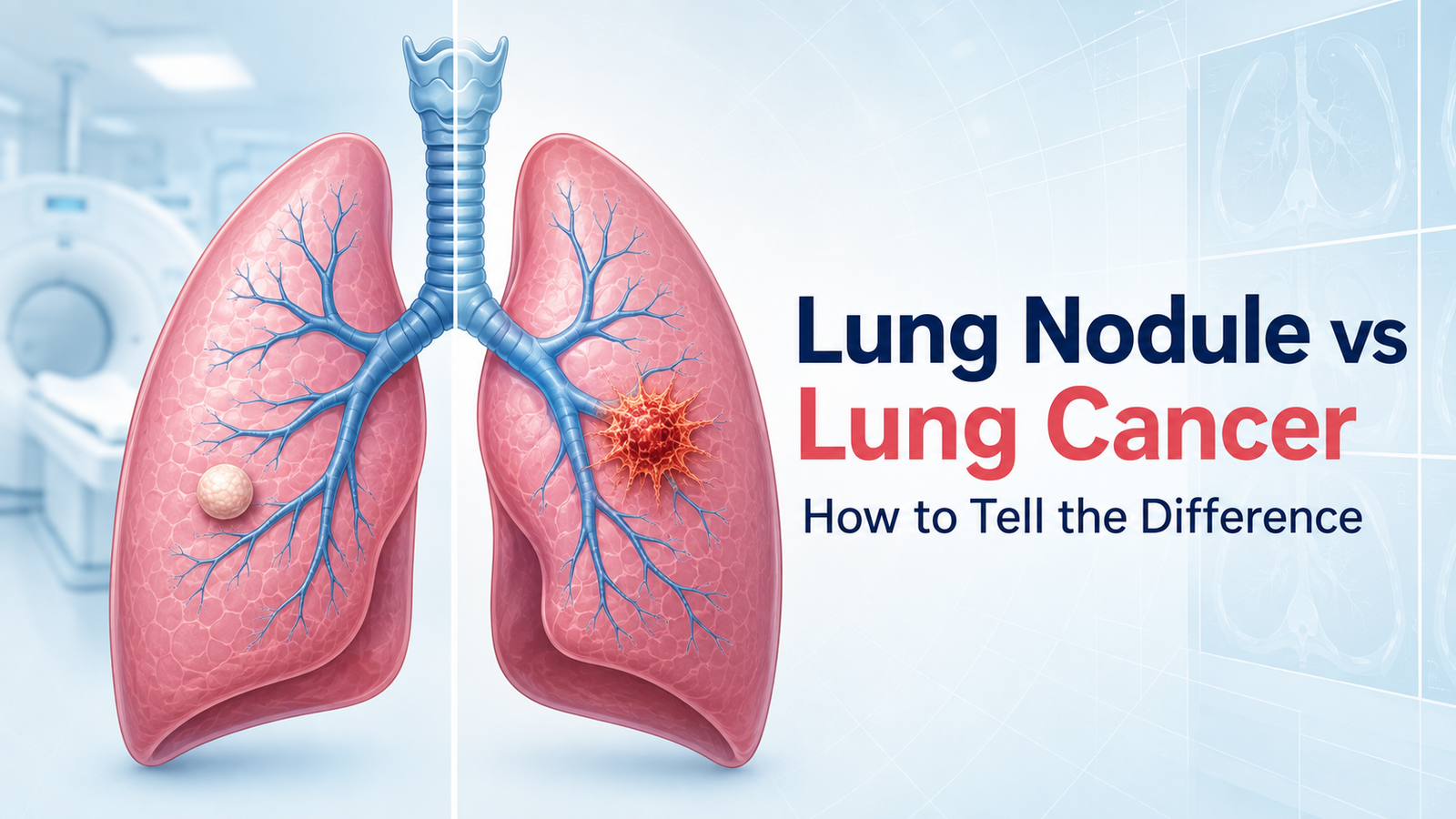
A lung nodule and lung cancer can look very similar on a chest X-ray or CT scan. This can be really worrying for patients. However just because you have a lung nodule it does not mean you have cancer. Many lung nodules are caused by infections, tuberculosis, inflammation or scar tissue.
The size and shape of the lung nodule can help doctors figure out if it is harmless or if they need to do tests. This guide will explain the differences between a lung nodule and lung cancer. It will also help you understand what usually happens after a lung nodule is found.
A lung nodule is a spot found inside the lung. It is usually discovered during a chest X-ray or CT scan. This scan is often done because of a cough, fever, chest pain or a routine health check-up.
If the spot is up to 3 centimetres it is generally called a lung nodule. If it is larger it is usually described as a lung mass. Needs to be checked more closely.
Lung nodules can look solid, hazy or partly solid on a CT scan. Most small lung nodules do not cause any symptoms. Are found by chance.
Lung cancer happens when abnormal cells in the lung grow uncontrollably and form a tumour. These cells can invade the surrounding lung. May spread to other parts of the body.
Some lung cancers start as lung nodules and do not cause any symptoms at first. That is why doctors pay attention to lung nodules that grow or change shape.
Many lung nodules are not cancerous. In India one of the common causes is a previous tuberculosis infection that has left a scar inside the lung.
Other possible causes of lung nodules include healed pneumonia, inflammation, fungal infection or a benign lung growth. Sometimes lung nodules can be caused by early-stage lung cancer or cancer that has spread to the lung from another organ.
Just because you have had tuberculosis before it does not mean a new lung nodule is harmless. If the lung nodule is growing or has features doctors will still need to do more tests.
There are some features that can help doctors figure out if a lung nodule is more likely to be harmless or cancerous. These features include the size, shape and growth of the lung nodule.
| Feature | Benign Lung Nodule | Suspicious or Cancerous Nodule |
|---|---|---|
| Size | Usually smaller | Often larger or growing |
| Border | Smooth and well-defined | Irregular, lobulated or spiculated |
| Growth | Remains stable | Changes in size or density |
| Calcification | May have a calcification pattern | May have no calcification or an irregular pattern |
| Symptoms | Usually causes no symptoms | May be associated with cough, blood in sputum or weight loss |
| Patient history | No major cancer risk factors | Smoking, older age or previous cancer |
These differences are useful. No single feature can confirm cancer. Some cancerous lung nodules may look small and smooth at first while tuberculosis and inflammation can sometimes look irregular.
The size of a lung nodule is one of the factors used to plan follow-up tests.
| Nodule Size | Usual Approach |
|---|---|
| Less than 6 mm | May not need routine follow-up in a low-risk patient |
| 6 to 8 mm | Usually monitored with follow-up CT scans |
| More than 8 mm | May require PET-CT, biopsy or specialist evaluation |
| More than 30 mm | Considered a lung mass and investigated more urgently |
These are general guidelines. The exact plan also depends on the lung nodules appearance the patients age, smoking history and whether the lung nodule has grown.
small lung nodules do not cause symptoms. However you should see a doctor if you experience a cough blood in your sputum shortness of breath repeated chest infections, chest or shoulder pain unexplained weight loss or persistent tiredness.
These symptoms can also occur with tuberculosis, pneumonia and other lung conditions. You will need tests to find out what is causing your symptoms.
If a lung nodule is found the first step is to review the CT images and compare them with any previous scans. This helps the doctor understand whether the lung nodule is new, stable or growing.
There are tests that can be used to evaluate a lung nodule. These include a CT scan, follow-up CT, PET-CT, bronchoscopy, CT-guided biopsy and surgical biopsy.
A PET-CT scan can provide information but it cannot confirm cancer on its own. Tuberculosis and other infections can also show increased activity on a PET-CT scan. That is why a biopsy may be needed for a diagnosis.
If a lung nodule represents an early-stage cancer finding it before it spreads can improve treatment options. A small and localised cancer may be removed surgically before it reaches lymph nodes.
At the time careful evaluation can prevent patients with harmless lung nodules from undergoing unnecessary biopsy or surgery.
Follow-up tests become especially important when the lung nodule is growing, larger than 8 mm, part-irregular or found in someone with a smoking or previous cancer history.
The management of a lung nodule depends on the estimated risk of cancer.
For an low-risk lung nodule you will need to compare it with previous scans, complete follow-up CT scans monitor for new respiratory symptoms and avoid smoking and exposure to lung irritants.
For an growing lung nodule you will need to consult a thoracic specialist consider a PET-CT scan undergo a biopsy if needed and discuss surgery if the lung nodule has a high possibility of being cancerous.
Not every lung nodule needs treatment. The goal is to avoid procedures without missing an early cancer.
The treatment for lung cancer depends on the type, size, location and stage of the cancer. When the cancer is small and has not spread surgery may be recommended.
Surgical options can include removing the lung nodule with a margin removing the affected lung segment or removing the complete lung lobe. Some operations may be performed using VATS or robotic surgery through incisions.
Some patients may also require radiation therapy, chemotherapy, targeted therapy or immunotherapy. The final treatment plan is decided after confirming the diagnosis and stage.
Being told that you have a lung nodule can cause anxiety, when the risk of cancer is low. Having a clear follow-up plan can make the situation easier to manage.
You should keep the CT images and reports from every scan, complete follow-up scans at the advised time inform your doctor if you develop new symptoms and avoid assuming that the lung nodule is cancer or old tuberculosis.
If biopsy or surgery has been recommended you may want to seek an opinion.
Previous scans are particularly valuable because they show whether the lung nodule has remained stable or changed.
It can be difficult to tell the difference between a lung nodule and lung cancer based on a single scan. Doctors must consider the lung nodules size, shape, density, growth and the patients medical history before deciding what to do
A small stable lung nodule may only need monitoring. A growing or suspicious lung nodule may require a PET-CT scan, biopsy or surgical evaluation.
If you have been found to have a lung nodule on your CT scan you should schedule a consultation, with Dr. Parveen Yadav for a review and personalised diagnostic plan. Bring your previous chest scans to the appointment. Early evaluation can provide clarity. Help you receive the right care at the right time.

18+ Yrs Exp | 5,700+ Thoracic & Robotic Cancer Surgeries
Dr. Parveen Yadav is a Director and Senior Consultant in Thoracic and Surgical Oncology, specializing in minimally invasive and robotic lung and esophageal surgeries, with advanced training from AIIMS and Tata Memorial Hospital.
View Full Profile
T2N0M0 lung cancer diagnosis? Compare surgery vs. non-surgical options like SBRT. Learn about safety, survival rates, and what's the safer choice for you.
Robotic vs VATS lobectomy? An expert guide to choosing the best lung cancer treatment in Gurgaon & Delhi. Learn the pros, cons, and key differences.
A lung cancer diagnosis is overwhelming. A second opinion can confirm your path, find better treatments, and give you critical peace of mind. Learn why
Copyright 2026 © Dr .Parveen Yadav all rights reserved.
Proudly Scaled by Public Media Solution!