


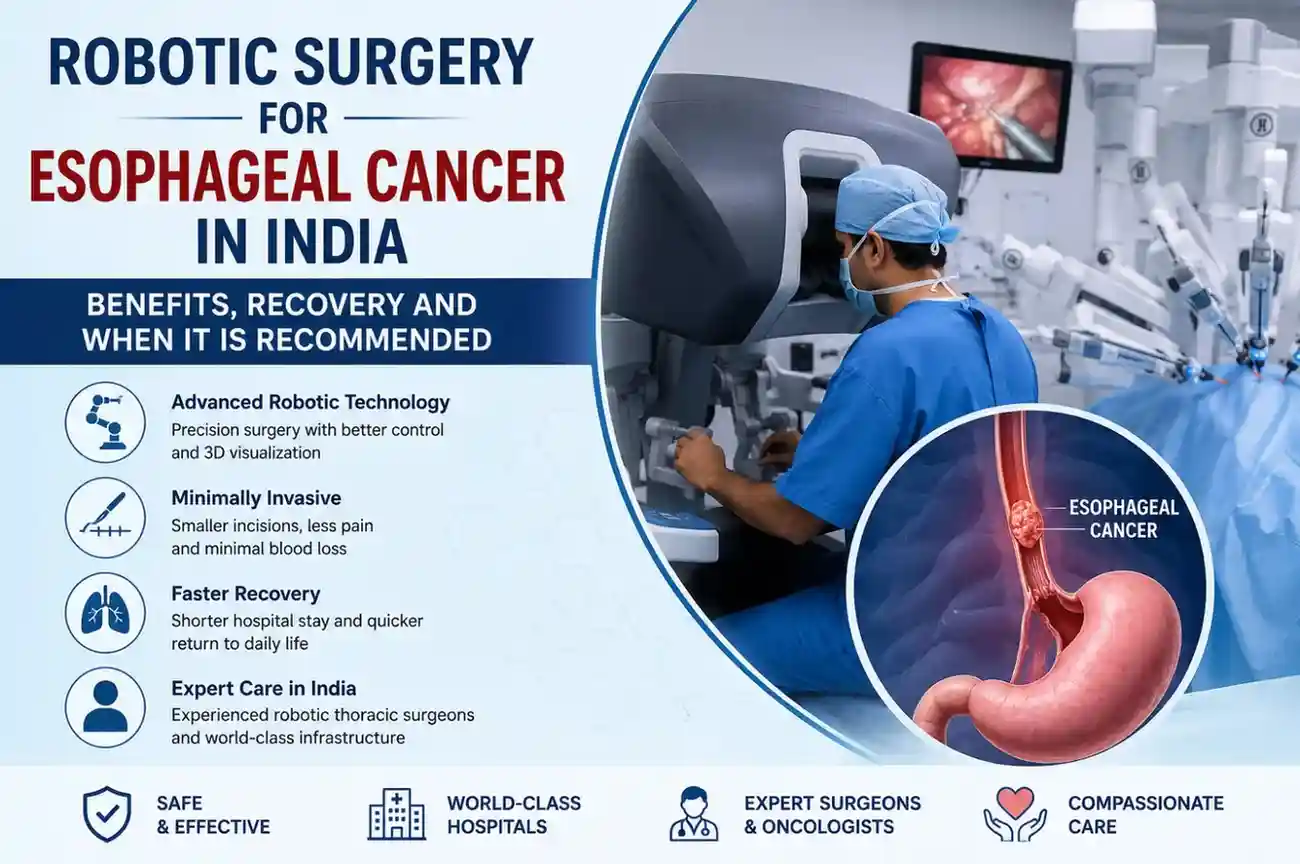
Searching for robotic surgery for esophageal cancer in India usually means one thing: you or someone close to you has received a serious diagnosis and wants the safest, most effective treatment option. Esophageal cancer, also called food pipe cancer, affects the tube that carries food from the mouth to the stomach. It can make swallowing difficult, affect nutrition, and create anxiety about surgery, chemotherapy, radiation, recovery, and long-term quality of life.
For many patients in Gurgaon, Delhi NCR, and other parts of India, robotic surgery has become an important option in the treatment of selected cases of esophageal cancer. It is not suitable for every patient, but when recommended after proper evaluation, it may help the surgeon operate with greater precision through smaller incisions.
At Chest Surgery India, patients looking for esophageal cancer treatment in Gurgaon, Delhi, can consult Dr. Parveen Yadav for diagnosis, surgical planning, minimally invasive treatment, and robotic surgery options where appropriate. The service page describes esophageal cancer care in Gurgaon and Delhi, including diagnosis and treatment options such as surgery, radiation therapy, chemotherapy, targeted therapy, laser therapy, and photodynamic therapy.
Robotic surgery for esophageal cancer is a type of minimally invasive surgery. In medical terms, it is often called robot-assisted minimally invasive esophagectomy, or RAMIE. During this procedure, the surgeon removes the cancer-affected portion of the esophagus and reconstructs the food passage, often using part of the stomach.
The robot does not perform the surgery by itself. The surgeon controls every movement from a console. The robotic system provides a magnified 3D view, fine movement control, and flexible instruments that can work in narrow areas of the chest and abdomen.
This matters because esophageal cancer surgery is one of the more complex cancer surgeries. The esophagus lies close to the lungs, heart, airway, major blood vessels, lymph nodes, and important nerves. A precise surgical approach can help the surgeon remove the tumor and lymph nodes while carefully protecting nearby structures.
Mayo Clinic notes that minimally invasive esophagectomy can be done through several small incisions using laparoscopic, thoracoscopic, or robot-assisted techniques in appropriate cases, and this approach can result in reduced pain and faster recovery compared with conventional surgery.
Esophageal cancer treatment is not always surgery first. The right sequence depends on the stage of cancer, tumor location, biopsy type, PET-CT or CT findings, lymph node involvement, nutritional condition, and the patient’s heart and lung fitness.
Some patients may need chemotherapy or radiation before surgery. Some may need surgery first. Some advanced or metastatic cases may be treated with non-surgical methods such as chemotherapy, immunotherapy, targeted therapy, or palliative care. The National Cancer Institute lists treatment options for stage II esophageal cancer that may include chemoradiation followed by surgery, surgery alone, chemotherapy followed by surgery, or definitive chemoradiation, depending on the case.
This is why patients searching for food pipe cancer treatment near me, robotic esophageal cancer surgery in Gurgaon, or esophageal cancer surgery in Delhi NCR should avoid making decisions based only on technology. The first priority should be accurate staging and specialist evaluation.
Robotic surgery may be recommended when the cancer is operable and the patient is fit enough to undergo major surgery. It is usually considered after the surgeon reviews all reports and examines the patient’s overall condition.
A patient may be considered for robotic esophageal cancer surgery when:
Robotic surgery may not be recommended when:
The key point is simple: robotic surgery is a tool, not a shortcut. The decision should be made by an experienced esophageal cancer surgeon after proper staging and risk assessment.
Open esophageal cancer surgery may require large incisions in the chest and abdomen. Robotic surgery is performed through smaller cuts. This can reduce trauma to muscles and tissues, which may support a smoother recovery in selected patients.
The robotic system gives the surgeon a high-definition, magnified 3D view. This can be helpful when operating near lymph nodes, blood vessels, nerves, and the airway.
Robotic instruments have wrist-like movement. This allows the surgeon to work carefully in tight spaces inside the chest. In esophageal cancer surgery, this precision can be valuable during lymph node dissection and reconstruction.
Robotic and minimally invasive surgery often involves smaller incisions. Mayo Clinic states that robotic surgery, as a minimally invasive approach, may offer benefits such as less pain and blood loss, shorter hospital stay, quicker recovery, and smaller scars.
Breathing-related complications are a major concern after esophageal cancer surgery because the operation involves the chest. A JAMA Network Open systematic review and meta-analysis found that RAMIE was associated with fewer pulmonary complications compared with video-assisted minimally invasive esophagectomy and open esophagectomy, while also noting the need for more studies on long-term cancer and functional outcomes.
Recovery still takes time because esophagectomy is major surgery. However, with smaller incisions, early mobilization, breathing exercises, pain control, nutritional support, and regular follow-up, many patients may return to basic daily activities sooner than they would after traditional open surgery.
Many patients reach a specialist after months of swallowing difficulty, weight loss, or persistent heartburn. The American Cancer Society lists common symptoms of esophageal cancer such as trouble swallowing, chest pain or heartburn, weight loss, hoarseness, chronic cough, vomiting after eating, tiredness, and blood in vomit or black stools if the cancer is bleeding. It also notes that many esophageal cancers do not cause symptoms until an advanced stage.
Consult a doctor if you notice:
These symptoms do not always mean cancer. They can occur due to GERD, narrowing, infection, inflammation, or other conditions. Still, persistent symptoms should be checked by a specialist.
Recovery starts before surgery. Patients with esophageal cancer often lose weight because swallowing becomes difficult. A good treatment team focuses on nutrition, breathing exercises, sugar and blood pressure control, smoking cessation, and physical preparation before the operation.
Your doctor may advise:
After robotic esophageal cancer surgery, the team monitors breathing, pain, drains, fluid balance, infection risk, and healing. Patients are encouraged to sit, stand, and walk as soon as it is medically safe. This helps reduce the risk of lung issues and blood clots.
Food is restarted gradually. Some patients may receive feeding through a tube at first. Oral liquids and soft foods are introduced only when the surgeon confirms that the new food passage is healing well.
After discharge, patients usually need small, frequent meals. Large meals can cause discomfort because the stomach has been repositioned or reshaped during reconstruction. Patients may need to eat slowly, chew well, avoid lying down immediately after meals, and follow a customized diet plan.
Chest Surgery India has a dedicated blog on what to eat after esophageal cancer surgery, which explains Indian diet choices after surgery, including soft and easy-to-digest foods.
Robotic surgery depends heavily on the surgeon’s training, case volume, judgment, and cancer surgery experience. The robot improves visibility and movement, but it does not replace the surgeon’s skill.
Dr. Parveen Yadav is listed as Director, Thoracic and Robotic Surgeries and Surgical Oncology, with 18+ years of experience in minimally invasive thoracic and robotic onco surgeries. His profile notes training in Surgical Oncology at AIIMS, a Thoracic Surgery Fellowship from Tata Memorial Hospital, Da Vinci robotic surgery certification, and more than 5,700 major thoracic procedures, including over 1,000 surgeries for esophageal cancer and other esophageal diseases.
For patients looking for a robotic esophageal cancer surgeon in Gurgaon, this experience is an important EEAT signal. Esophageal cancer surgery requires cancer knowledge, thoracic anatomy expertise, reconstruction skill, complication management, and long-term follow-up planning.
Before finalizing treatment, ask your surgeon:
If there is confusion after the first consultation, a second opinion can help patients and families understand the diagnosis and available options. Chest Surgery India has a second-opinion page for patients seeking guidance from a thoracic surgeon.
Robotic surgery for esophageal cancer in India is an advanced treatment option for selected patients. It may offer smaller incisions, better visualization, precise lymph node dissection, less pain, reduced blood loss, fewer pulmonary complications, and smoother recovery when performed by an experienced robotic thoracic cancer surgeon.
However, it is not the right choice for every case. The best treatment depends on cancer stage, tumor location, overall fitness, nutrition, lung function, previous treatment, and surgical risk.
For patients and families searching for esophageal cancer treatment in Gurgaon, food pipe cancer surgery near me, or robotic esophageal cancer surgery in Delhi NCR, the next step should be a specialist consultation with complete reports.
Book a consultation with Dr. Parveen Yadav at Chest Surgery India, Artemis Hospital, Sector 51, Gurgaon, to understand whether robotic surgery is suitable for your case. Patients can also share reports for a second opinion before making a treatment decision. The contact page lists Artemis Hospital Sector 51 Gurgaon, phone support, email, and OPD timing details.
Robotic surgery for esophageal cancer is a minimally invasive procedure where the surgeon removes the cancer-affected part of the food pipe using robotic instruments controlled from a console. It is also called robot-assisted minimally invasive esophagectomy, or RAMIE.
Robotic surgery can be safe and effective in selected patients when performed by an experienced thoracic robotic surgeon. Suitability depends on cancer stage, tumor location, fitness for anesthesia, lung function, heart health, and prior treatment.
Patients with operable esophageal cancer may be eligible if their overall health allows major surgery. The surgeon will review biopsy, endoscopy, CT scan, PET-CT, lung function, cardiac status, nutrition, and treatment history before recommending robotic surgery.
Robotic surgery may offer smaller cuts, less pain, better visualization, and faster recovery in selected cases. Open surgery may still be better or safer for some complex tumors. The decision should be personalized.
Recovery varies. Many patients begin walking in the hospital soon after surgery, but full recovery and diet adjustment may take several weeks. The patient may need small meals, soft foods, breathing exercises, and regular follow-up.
Some patients need chemotherapy, radiation, or both before or after surgery. This depends on the stage, biopsy type, lymph node involvement, and final pathology report.
No. The robot does not operate independently. The surgeon controls every movement. The robotic system only improves vision, flexibility, and precision.
You can consult Dr. Parveen Yadav at Chest Surgery India, Artemis Hospital, Sector 51, Gurgaon, for evaluation of esophageal cancer treatment and robotic surgery suitability.
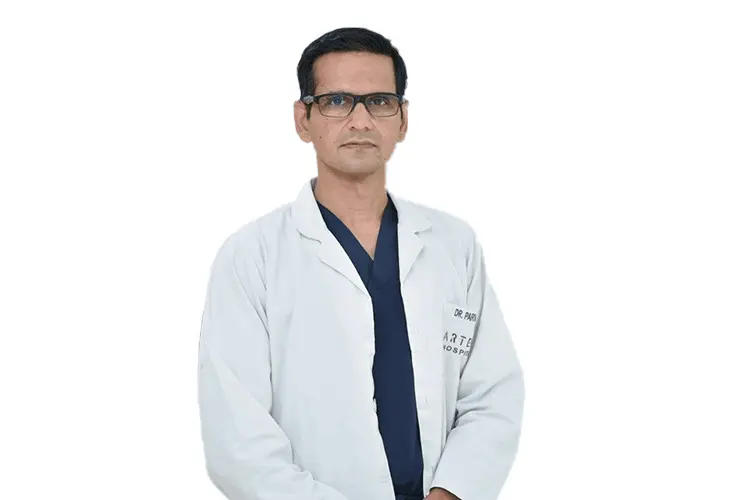
18+ Yrs Exp | 5,700+ Thoracic & Robotic Cancer Surgeries
Dr. Parveen Yadav is a Director and Senior Consultant in Thoracic and Surgical Oncology, specializing in minimally invasive and robotic lung and esophageal surgeries, with advanced training from AIIMS and Tata Memorial Hospital.
View Full Profile
Robotic vs VATS lobectomy? An expert guide to choosing the best lung cancer treatment in Gurgaon & Delhi. Learn the pros, cons, and key differences.
A lung cancer diagnosis is overwhelming. A second opinion can confirm your path, find better treatments, and give you critical peace of mind. Learn why
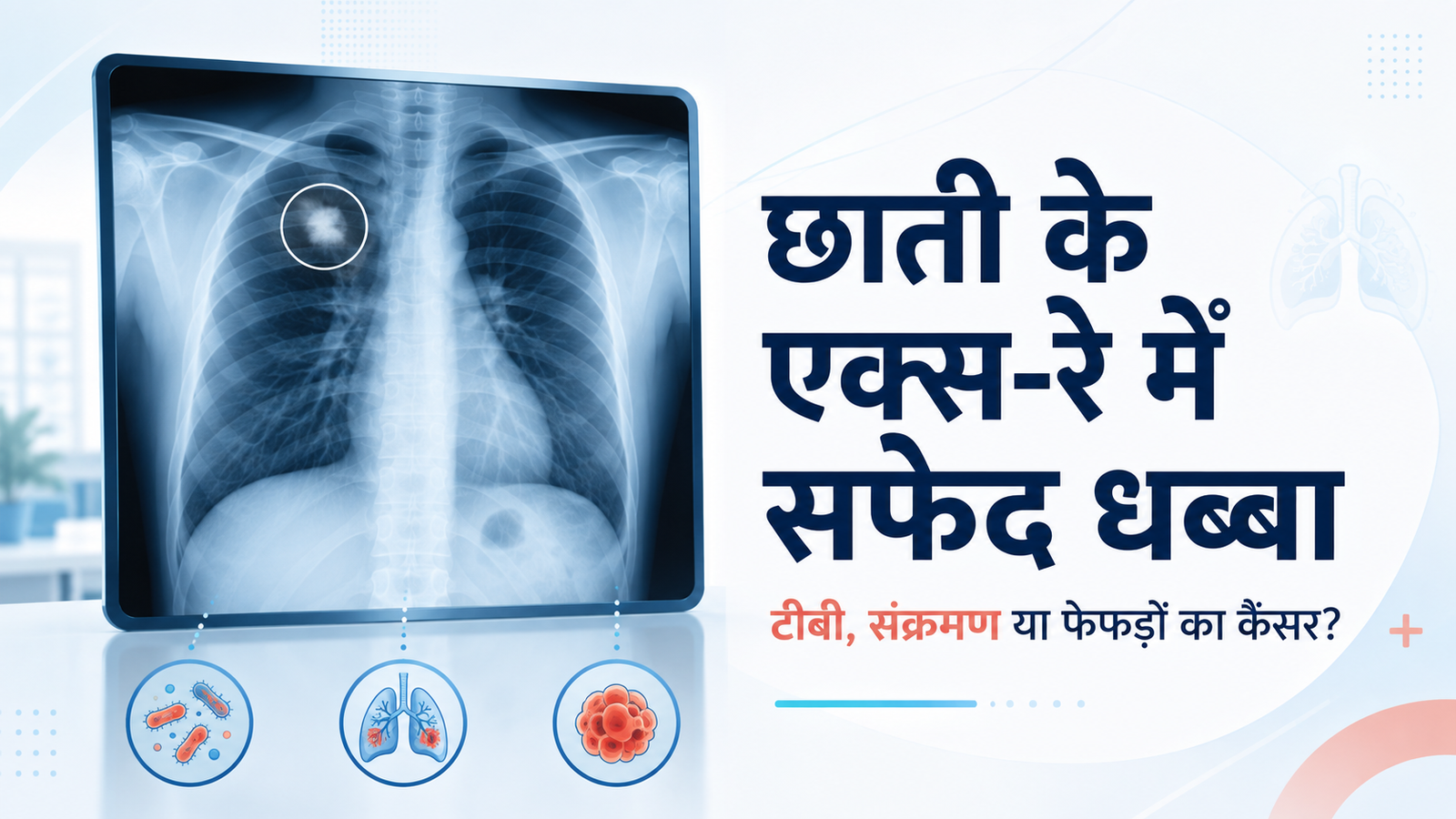
छाती के X-Ray में सफेद धब्बा दिखने का मतलब हमेशा कैंसर नहीं होता। जानें इसके संभावित कारण, टीबी और लंग कैंसर में अंतर तथा जरूरी जांच।
Copyright 2026 © Dr .Parveen Yadav all rights reserved.
Proudly Scaled by Public Media Solution!