


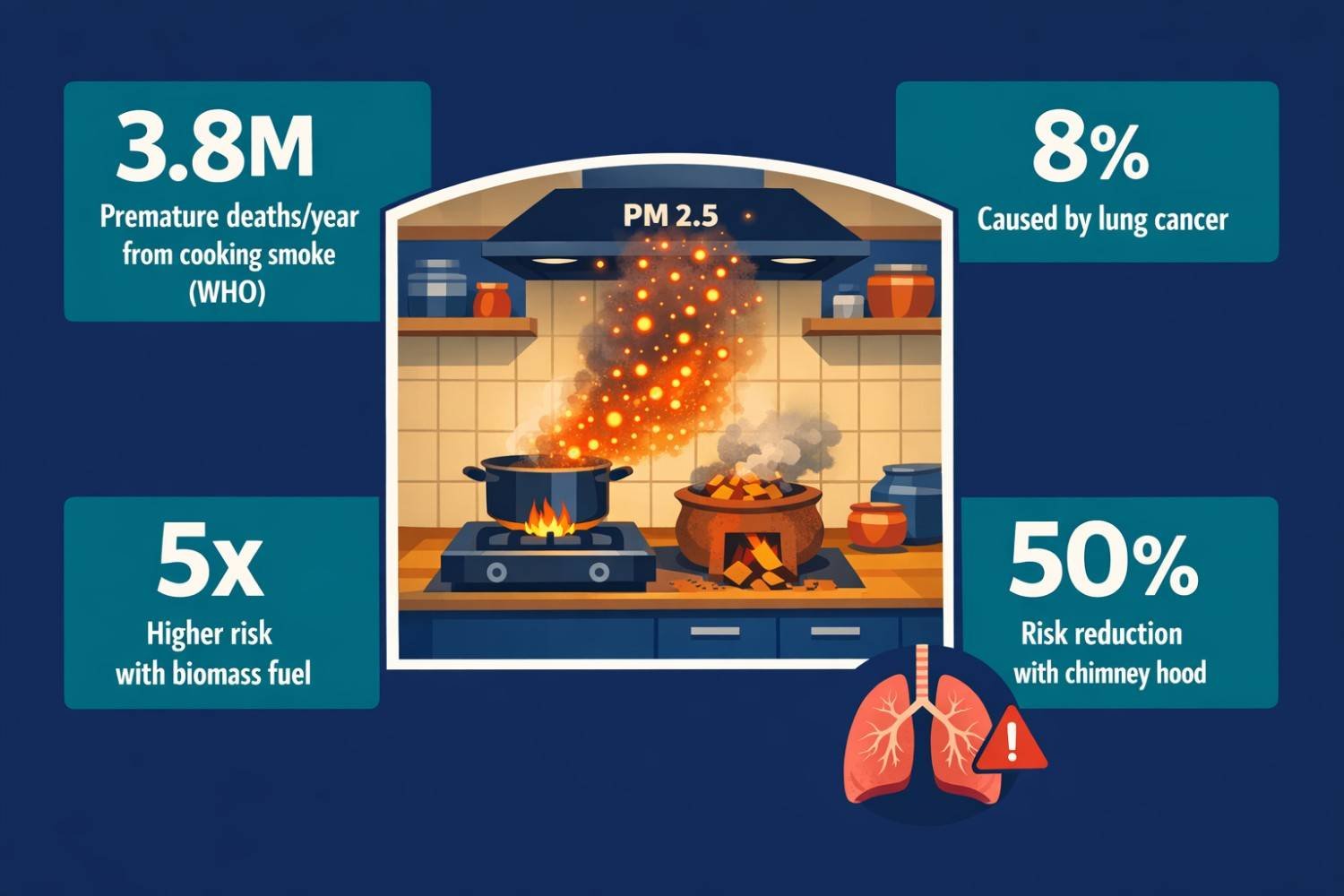
Sunita had never smoked a single cigarette in her life. At 52, she was the kind of woman who rose before sunrise to cook for her family, two hot meals a day, every day, for over 30 years. Mustard oil sizzling in an iron kadhai, dal pressure-cooking on a wood-fired chulha, turmeric clouds rising as onions hit the pan. Her kitchen smelled of home. It smelled of love. What nobody told Sunita, and what nobody tells millions of women across India, is that her kitchen also smelled of carcinogens.
When she came to me at Artemis Hospital with a persistent dry cough and chest tightness, the last thing on anyone's mind was lung cancer. She did not smoke. She was not a factory worker. She was a homemaker. Yet her CT scan told a different story. I have seen this more times than I can count:non-smoking women diagnosed with lung cancer, and cooking smoke is a major factor that most people never consider.
If you cook in an Indian kitchen, or love someone who does, this article is one of the most important things you will read this year.
What is cooking smoke? Cooking smoke is the mix of fine particles, gases, and toxic compounds released when food or fuel burns. In Indian kitchens, it includes polycyclic aromatic hydrocarbons (PAHs), benzene, formaldehyde, and acrolein -- all of which are classified as known or probable human carcinogens. |
Every time oil hits a hot pan, a chemical reaction begins. Depending on the fuel, oil type, cooking temperature, and ventilation, your kitchen air can fill with:
• PAHs (Polycyclic Aromatic Hydrocarbons) which form when organic matter burns at high heat; directly linked to DNA mutations in lung tissue
• Acrolein which is a pungent aldehyde released during high-heat frying; damages lung cell lining
• Formaldehyde which is classified as a Group 1 carcinogen by the IARC; released during gas stove combustion
• PM2.5 particles which are fine particles that travel deep into the alveoli and stay there
• Benzene and 1,3-butadiene which are found in biomass smoke and to cause DNA strand breaks
A study published in Scientific Reports found a dose-response relationship between cumulative cooking fume exposure and lung cancer. The more you cook in a poorly ventilated kitchen over years, the higher your risk climbs. Women who cooked for more than 160 "cooking time-years" had nearly twice the risk of lung cancer compared to those with low exposure.
The World Health Organization has flagged indoor air pollution from cooking as one of the most underappreciated health crises in the world. According to WHO data, household cooking pollution causes approximately 3.8 million premature deaths per year globally, and an estimated 8% of those deaths are attributed to lung cancer. That is roughly 304,000 lung cancer deaths a year from cooking alone.
Most Western articles on cooking smoke focus on gas stoves or electric grills. But India is a different story entirely. A PubMed study on indoor air pollution and lung cancer in Indian women found that among female lung cancer patients, 74.6% were non-smokers. Of those non-smokers, biomass fuel exposure carried an odds ratio of 5.33 for lung cancer risk, meaning biomass-using women were over five times more likely to develop lung cancer than women who used clean fuels.
Biomass fuels like wood, cow dung cakes, and crop residue are still the primary cooking fuel for roughly 700 million Indians, particularly in rural and semi-urban areas. These fuels burn at low efficiency, producing 10 to 20 times more particulate matter than LPG, according to research published in ScienceDirect.
If you live in a city apartment and cook on LPG or piped gas, you may think this does not apply to you. Think again. Urban Indian kitchens typically have:
• Small, enclosed spaces with limited cross-ventilation
• High-heat cooking methods like deep frying, tawa cooking, and heavy tempering (tadka)
• Frequent use of mustard oil, groundnut oil, and refined oils that produce more aldehydes when overheated
• Cooking without a chimney hood, or one that vents back indoors
A meta-analysis of 29 studies published in Sage Journals found that using a proper kitchen ventilation system reduced lung cancer risk with an odds ratio of 0.54, which is roughly a 46% reduction in risk. Most Indian kitchens do not have adequate ventilation.
In traditional Indian cooking, a common practice is to heat oil until it smokes visibly before adding spices or food. This is called kadhai pe dhuan aana, and it is precisely the most dangerous moment in the kitchen. Research from the American Journal of Epidemiology found that women who waited until fumes appeared from cooking oil before cooking had two to three times higher lung cancer risk than those who did not. That moment of visible smoke means the oil has already begun breaking down into toxic compounds.
| Fuel Type | PM2.5 Output | Carcinogens Released | Relative Cancer Risk |
| Wood / Dung Cake (Biomass) | Very High (10-20x LPG) | PAHs, Benzene, CO, Formaldehyde | Highest (OR: 5.33) |
| Kerosene | High | PAHs, Acrolein, Formaldehyde | High |
| LPG / PNG (Piped Gas) | Moderate | NOx, CO (with poor ventilation) | Moderate |
| Electric / Induction | Low | Oil fumes only (no combustion gas) | Lowest |
Sources: PubMed (2005), ScienceDirect (2024), American Lung Association. OR = Odds Ratio vs. clean fuel users.
Are you or a loved one showing respiratory symptoms? Early detection saves lives. Book a consultation with Dr. Parveen Yadav today: chestsurgeryindia.com/contact |
Here is the surprising truth about lung cancer in never-smokers: it is biologically different from smoking-related lung cancer. Non-smoker lung cancer is almost always adenocarcinoma, a type that grows in the outer edges of the lung and is often driven by specific genetic mutations, particularly EGFR (Epidermal Growth Factor Receptor) mutations. These mutations are far more common in Asian women who cook on biomass or in unventilated kitchens.
Why does this matter? Because EGFR-mutant lung cancer responds to targeted therapy drugs (like erlotinib or osimertinib) much better than standard chemotherapy. Knowing the mutation type can completely change the treatment plan and the outcome. Yet many patients come to me after months of treatment that was not tailored to their mutation profile, simply because this connection was not made early enough.
A PubMed study on Indian rural women found that biomass smoke exposure caused 2 to 5 times higher levels of PM2.5 and PM10 particles indoors compared to LPG homes. More importantly, it triggered oxidative stress and activation of the Akt signaling pathway, a cellular process directly linked to the development of lung cancer. The same study showed 6 times higher levels of a benzene metabolite in the urine of biomass-using women, indicating that carcinogens were being absorbed into the body through daily cooking.
Indian women, particularly homemakers and women in rural or semi-urban households, spend an average of 3 to 5 hours per day near a cooking fire. Studies have documented that cooking for more than 160 cumulative 'cooking-time-years' substantially elevates lung cancer risk. A woman who begins cooking at 18 and cooks for 4 hours a day is past that threshold by her late 50s.
This one is rarely talked about. In many Indian households, young children accompany their mothers in the kitchen. In biomass-fuel homes especially, children absorb proportionally more particulate matter because they breathe faster and their lung tissue is still developing. Exposure during childhood may prime the lungs for cancer decades later.
Professional cooks and kitchen staff in Indian restaurants are among the most exposed groups in the country. Open-flame cooking, heavy frying, and minimal kitchen ventilation in smaller establishments mean 8 or more hours of daily exposure to high levels of cooking fumes. Yet occupational lung health in Indian food-service workers is almost never screened or tracked.
What most people miss is that lung cancer caused by cooking fumes tends to develop quietly. The early symptoms often mimic common respiratory complaints and get dismissed as seasonal allergies or post-viral cough. Here is what to watch for:
| Symptom | Common Misdiagnosis | When to Suspect Lung Cancer |
| Dry cough lasting 3+ weeks | Allergy, post-viral cough | If no improvement with antihistamines |
| Breathlessness on mild exertion | Anemia, fitness issue | If progressive and unexplained |
| Chest tightness or dull chest ache | Acidity, costochondritis | Persistent, not food-related |
| Unexplained weight loss | Thyroid, stress | With any respiratory symptom |
| Voice hoarseness | Cold, acid reflux | If lasting more than 2–3 weeks |
| Blood in sputum | TB, bronchitis | Immediate evaluation required |
Not sure if your symptoms need attention? Get a free second opinion from a thoracic surgery specialist, no referral needed: chestsurgeryindia.com/second-opinion |
The single most impactful change you can make is improving airflow. A 2020 study in Scientific Reports found that long-term use of a proper fume extractor reduced lung cancer risk by more than 50%. In another meta-analysis, the protective effect was as high as 60% among heavy cooks. A chimney hood that vents outdoors (not a recirculating filter) is the gold standard.
If you or a family member is still cooking on wood, dung cakes, or crop residue, transitioning to LPG or an induction stove is one of the most protective health investments you can make. India's Pradhan Mantri Ujjwala Yojana (PMUY) scheme provides subsidized LPG connections to below-poverty-line households specifically for this reason. The American Lung Association confirms that electric and induction cooking produces the lowest levels of indoor air pollutants.
Stop heating oil until it smokes. Instead:
• Add a small piece of onion or garlic to the oil; when it starts to sizzle gently, the oil is ready
• Use a kitchen thermometer if you deep-fry regularly (ideal oil temp: 175-180°C, not smoking at 230°C+)
• Never leave oil unattended on high heat
• Switch to oils with higher smoke points for high-heat cooking (avocado oil, refined sunflower oil, ghee)
If you are a woman over 40, have cooked on biomass fuel for more than 10 years, and have any of the symptoms described above, ask your doctor about a low-dose CT scan (LDCT) of the chest. In the West, LDCT screening is recommended for high-risk smokers. But in India, high-risk groups must also include long-term biomass cooks and women from highly polluted cities, even if they have never smoked. Early-stage lung cancer caught on LDCT is treatable with minimally invasive robotic surgery with excellent outcomes.
| Action | Impact Level | Cost |
| Install a chimney hood (venting outdoors) | Very High | Medium |
| Switch from biomass to LPG/induction | Very High | Low to Medium |
| Open windows while cooking | High | Free |
| Avoid heating oil to smoke point | High | Free |
| Use exhaust fan during and 10 min after cooking | High | Low |
| Reduce frequency of deep frying | Medium | Free |
| Keep kitchen door closed from living area | Medium | Free |
| Annual chest check-up after age 40 (if high-risk) | Very High | Low |
Being diagnosed with lung cancer is frightening. But here is what I tell every patient who sits across from me: the stage at which we catch it makes all the difference. As a lung cancer specialist in Gurgaon, I have seen patients diagnosed at stage 1 live full, cancer-free lives after robotic-assisted Video-Assisted Thoracoscopic Surgery (VATS), a minimally invasive procedure where the tumor is removed through tiny incisions, with patients going home in 3 to 4 days.
If you are diagnosed, here is what the care journey looks like at a specialized thoracic center:
• Staging CT + PET scan which maps the size, location, and spread of the tumor
• Molecular/genetic testing which checks for EGFR, ALK, ROS1 mutations to guide targeted therapy
• Multidisciplinary tumor board where thoracic surgeon, oncologist, radiologist, and pathologist review your case together
• Surgical option assessment which includes VATS, robotic surgery, or open surgery depending on stage and location
• Adjuvant treatment plan which may include chemotherapy, targeted therapy, or immunotherapy if needed after surgery
As an oncologist in Gurgaon specializing in thoracic cancer, I work within a high-precision Da Vinci robotic surgery program that allows me to operate with greater accuracy, less blood loss, and faster patient recovery. Learn more about lung cancer treatment at Chest Surgery India.
Concerned about your risk? Take the first step today. Speak directly with Dr. Parveen Yadav, India's leading robotic thoracic surgeon, at Artemis Hospital Gurgaon. Call: +91 9540210956 or visit: chestsurgeryindia.com/contact |
Lung cancer is no longer just a smoker's disease, at least not in India. Decades of research now confirm that cooking smoke, biomass fuel, and poorly ventilated kitchens are real and significant contributors to lung cancer risk, especially among women. The problem is that we have normalized it. We have accepted smoke-filled kitchens as part of daily life, not realizing that the cumulative damage adds up, year after year.
Here are the key things to take away from this article:
• Cooking smoke contains real carcinogens: PAHs, benzene, formaldehyde, and acrolein
• Indian women are at higher risk because of biomass fuels, high-heat cooking, and low ventilation
• Non-smoker lung cancer is often adenocarcinoma driven by EGFR mutations, and it is treatable
• Ventilation alone can cut your lung cancer risk by over 50%
• Symptoms like a 3-week dry cough or progressive breathlessness deserve a chest CT, not just an antacid
• Early detection through LDCT screening is life-saving for high-risk non-smoking women
You cannot control outdoor air quality. But you can control what happens inside your kitchen. The question I want to leave you with is this: the next time someone in your family spends hours cooking over a smoky flame with the windows closed. Will you know what that exposure is adding up to?
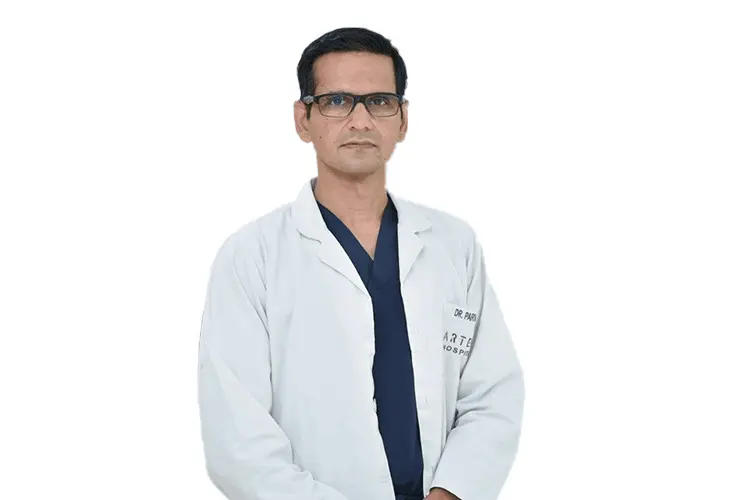
18+ Yrs Exp | 5,700+ Thoracic & Robotic Cancer Surgeries
Dr. Parveen Yadav is a Director and Senior Consultant in Thoracic and Surgical Oncology, specializing in minimally invasive and robotic lung and esophageal surgeries, with advanced training from AIIMS and Tata Memorial Hospital.
View Full Profile
Robotic vs VATS lobectomy? An expert guide to choosing the best lung cancer treatment in Gurgaon & Delhi. Learn the pros, cons, and key differences.
A lung cancer diagnosis is overwhelming. A second opinion can confirm your path, find better treatments, and give you critical peace of mind. Learn why
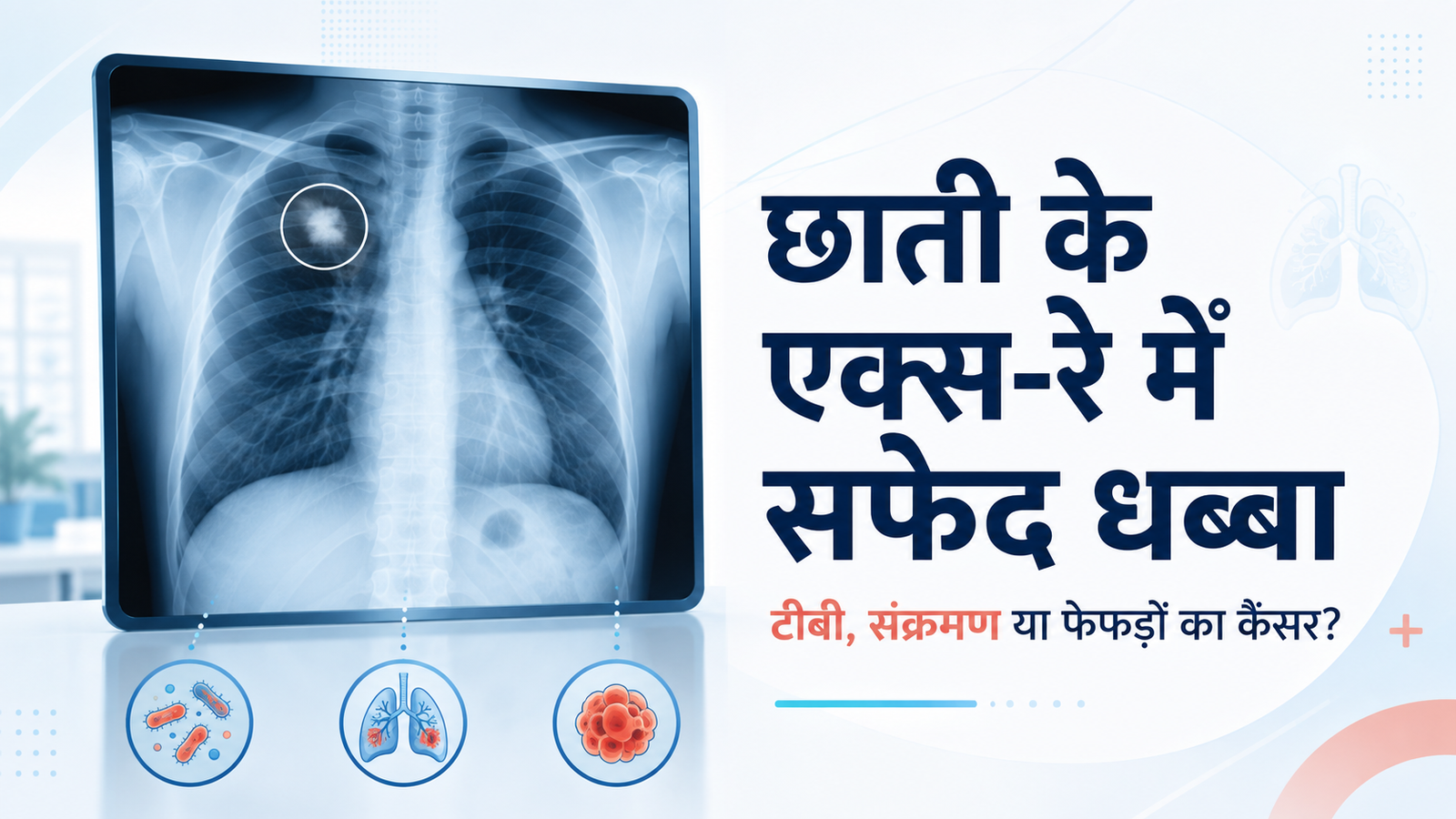
छाती के X-Ray में सफेद धब्बा दिखने का मतलब हमेशा कैंसर नहीं होता। जानें इसके संभावित कारण, टीबी और लंग कैंसर में अंतर तथा जरूरी जांच।
Copyright 2026 © Dr .Parveen Yadav all rights reserved.
Proudly Scaled by Public Media Solution!