- Call : +91 9540210956
- Email: [email protected]
- Artemis Hospital Sector 51 Gurgaon
- 09Am - 5Pm


Hiatal Hernia or Acid Reflux? Symptoms, Treatment and When Surgery Is Needed
- Home
- Blog Details
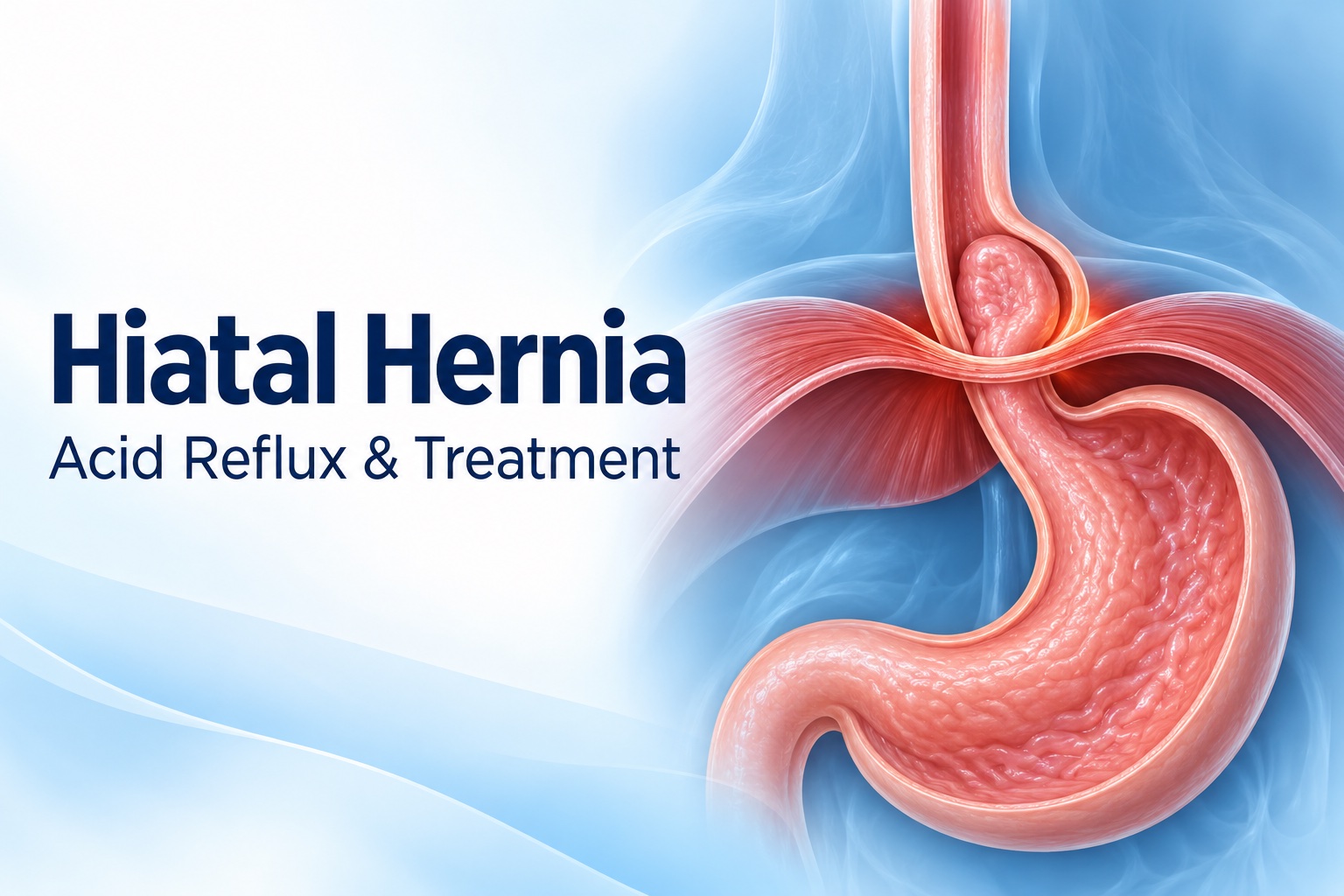
An endoscopy report says “small hiatus hernia,” while your symptoms feel like acidity, burning behind the breastbone or food coming back up after meals. Does the report explain everything, and does a hernia mean you need an operation?
A hiatal hernia is an anatomical change; acid reflux is the movement of stomach contents into the food pipe. They can occur together, but they are not the same diagnosis. Many people manage reflux without surgery, while some larger or more complicated hernias need a different assessment.
This guide explains the difference, symptoms that should not be dismissed as acidity, what tests are used before an operation and how to weigh the benefits and limitations of repair.
What Is a Hiatal or Hiatus Hernia?
The diaphragm is the muscle separating the chest and abdomen. The esophagus, or food pipe, passes through an opening called the hiatus before joining the stomach. In a hiatal hernia, part of the stomach moves above this opening.
“Hiatal” and “hiatus” refer to the same condition. A small hernia may be discovered during tests for another problem and may not cause symptoms. MedlinePlus explains the condition and why a finding without symptoms does not automatically need treatment.
The important details are the type and extent of the hernia, the symptoms and whether complications are present. “Hernia seen” is the beginning of a discussion, not a complete reason for surgery.
Sliding and Paraesophageal Hernias Are Different
With a sliding hernia, the junction between the esophagus and stomach moves above the diaphragm. This is commonly discussed alongside reflux. In a paraesophageal hernia, part of the stomach moves up next to the esophagus; mixed forms also occur.
UCSF's Department of Surgery guide explains why larger and paraesophageal hernias may need surgical assessment. Some can develop mechanical problems, including obstruction or impaired blood supply.
Ask the clinician which type you have and whether the main concern is reflux, mechanical symptoms or another complication. Two people using the same phrase “hiatal hernia” may be discussing quite different problems.
How Is It Related to GERD?
Gastroesophageal reflux disease, or GERD, develops when reflux causes troublesome symptoms or complications. The barrier at the lower end of the esophagus and the diaphragm normally helps prevent stomach contents returning upwards. A hiatal hernia can make that barrier less effective.
Heartburn and regurgitation are typical symptoms, but they do not identify the hernia type or prove that every symptom comes from reflux. NIDDK's symptoms and causes guide describes this relationship.
If you mainly have cough, throat symptoms or chest discomfort, describe those clearly rather than assuming the hernia is their cause. Our food-sticking guide explains why swallowing symptoms also deserve their own assessment.
Symptoms That Need Prompt or Emergency Assessment
Do not keep treating new swallowing difficulty, repeated vomiting, unexplained weight loss or signs of digestive bleeding as ordinary acidity. The NHS hiatus hernia guide highlights symptoms that require medical review.
Sudden severe chest or upper-abdominal pain with persistent retching, vomiting or inability to tolerate fluids requires urgent hospital assessment. A known hernia does not make such symptoms safe to manage at home. Mechanical complications are a particular concern with some larger hernias.
Likewise, chest pressure accompanied by breathlessness, sweating or faintness may be a heart emergency rather than reflux. The NHS heart attack guidance explains these warning signs. Seek emergency help rather than using an antacid response as a test of the cause.
How Do Doctors Establish What Is Causing the Symptoms?
The assessment starts with your symptom history, medicines and previous investigations. Important details include difficulty swallowing, symptoms after meals or lying down, regurgitation, bleeding and the effect of earlier treatment.
Upper GI endoscopy can examine the food pipe and stomach and look for inflammation or other abnormalities. Reflux monitoring measures reflux over time when confirmation is needed. NIDDK's diagnosis guide explains the roles of these tests.
A barium swallow may help define the anatomy and movement through the esophagus. Depending on the question, additional imaging may be useful. Ask what each test is intended to establish instead of assuming that every patient needs the same set.
What Can Help Without an Operation?
For reflux-related symptoms, treatment often begins with lifestyle measures and medication. Weight management when appropriate, avoiding meals close to bedtime and addressing personal triggers may help. A clinician may prescribe acid-suppressing treatment such as a proton pump inhibitor.
NIDDK's treatment guide explains these approaches. They treat reflux and its effects; they do not physically pull the stomach back through the diaphragm.
That distinction does not make medical treatment inadequate when it controls the problem that matters. Ask what your medicine is intended to achieve, how to take it and when to review symptoms. Do not continually increase treatment or stop a long-term prescription without an agreed plan.
Why Symptoms Despite Tablets Do Not Automatically Mean Surgery
Persistent symptoms need reassessment. The issue may be reflux that remains troublesome, a different diagnosis or a symptom not likely to improve with an antireflux operation.
The 2022 American College of Gastroenterology GERD guideline emphasises objective evidence and careful evaluation before invasive treatment. It recommends esophageal manometry before antireflux surgery to exclude conditions such as achalasia or absent contractility.
Ask whether reflux testing should be performed on or off treatment; the answer depends on what has already been established. Do not stop acid-suppressing medicines for a test unless the investigation team gives you instructions. A surgical decision should identify which symptom the operation is expected to improve.
When Might Surgery Be Appropriate?
A discussion may be reasonable when reflux is objectively established and remains significantly troublesome despite appropriate treatment, or when a large or complicated hernia creates a structural problem. Surgical fitness, swallowing function and patient preferences also matter.
For example, a small incidental hernia with well-controlled heartburn is a different situation from a hernia associated with obstructive symptoms. The recommendation should explain that difference, rather than treating all hernias as equivalent.
Use the appointment to ask: “Is the proposed operation mainly to reduce reflux, repair a mechanical problem, or both?” If the expected benefit is unclear, further investigation or review may be more useful than immediately choosing an operative technique.
What if a Larger Hernia Seems to Cause No Symptoms?
This is an area of uncertainty. The 2024 SAGES hiatal hernia guideline found insufficient direct evidence for a universal surgery-versus-surveillance recommendation in truly asymptomatic type II, III or IV hernias.
The assessment first needs to establish whether the person is genuinely asymptomatic. Seemingly unrelated breathlessness, exercise intolerance or anaemia may warrant investigation. The decision then considers the possibility of complications, operative risk and preferences.
Observation, when chosen, should include an explanation of symptoms that require urgent review. “No operation now” should come with a plan, rather than uncertainty about whom to contact.
What Does Hiatal Hernia Repair Involve?
Repair generally returns the stomach to the abdomen and reduces the enlarged opening in the diaphragm. An antireflux procedure may be added. In fundoplication, the upper stomach is wrapped around the lower esophagus to reinforce the reflux barrier.
The wrap can be partial or complete, depending on the plan. Guy's and St Thomas' explanation of fundoplication describes the procedure. The operation may be laparoscopic or robotic; these describe how the surgeon reaches and performs the repair, not a guarantee of the result.
Ask why the recommended repair and wrap suit your swallowing function and symptoms. A specific device or small incision should not replace that explanation.
Is Mesh Always Needed?
No single answer applies to every repair. In its 2024 guideline, SAGES did not make an evidence-based recommendation for or against mesh in type II–IV repair because the evidence did not establish a clear balance of benefits and harms.
If mesh is proposed, ask what problem it is intended to address, which material is planned and what alternatives are available. Avoid assuming that mesh always prevents recurrence or that every repair without it is inadequate.
What Are the Trade-Offs and Recovery Issues?
Potential problems include difficulty swallowing, gas-bloat symptoms, recurrent reflux or hernia recurrence, as well as general surgical risks. Some people need additional treatment. North Tees and Hartlepool's operation guide discusses these issues.
After fundoplication, eating usually needs a staged approach while swelling settles. Small mouthfuls, careful chewing and following the team's texture recommendations are important. Guy's and St Thomas' recovery guide explains the diet and symptoms to report.
Ask for written advice about food, medicines, lifting, work and follow-up. Inability to swallow fluids or persistent vomiting needs prompt contact with the surgical team or urgent assessment, rather than simply continuing a softer diet.
Questions to Take to the Specialist
- What type and extent of hiatal hernia do I have?
- Which symptoms are likely to come from reflux or the hernia?
- Do I need endoscopy, reflux monitoring, a barium study or manometry?
- Has non-surgical treatment been used adequately?
- What specific benefit would an operation aim to provide?
- What wrap or repair is proposed, and why?
- Could I need further medication or another procedure afterwards?
- If I choose observation, what should trigger urgent review?
Bring the original endoscopy, imaging and test reports, along with a list of medicines and your response to them. A short symptom diary can help distinguish burning, regurgitation, pain and swallowing difficulty instead of grouping everything under “gas.”
Frequently Asked Questions
Are hiatal hernia and acidity the same thing?
No. One describes anatomy and the other usually refers to symptoms attributed to reflux. They may coexist, but each needs to be understood in context.
Can a hiatal hernia go away with tablets?
Tablets can control reflux symptoms and reduce acid-related injury. They do not repair the opening in the diaphragm. That does not mean everyone needs repair.
Does finding a hernia mean I have cancer?
No. A hiatal hernia is not a cancer diagnosis. Symptoms such as progressive swallowing difficulty still need assessment for their own cause.
Will surgery mean I never need reflux medicine again?
That cannot be guaranteed. Ask about realistic symptom control, recurrence and the possibility of future treatment.
Arranging an Appropriate Review
A physician or gastroenterologist can usually begin the investigation of reflux and swallowing symptoms. If surgery is being considered, request a review by a team experienced in esophageal and hiatal conditions. You can contact Dr. Parveen Yadav's team to discuss an appropriate surgical opinion and share your existing reports.
Selected Guidelines and Patient Resources
- American College of Gastroenterology, 2022: confirming reflux and evaluating candidates for invasive treatment.
- SAGES, 2024: evidence and uncertainty in type II–IV hernia repair.
- NIDDK: reflux symptoms, diagnosis and treatment.
- Guy's and St Thomas': eating and recovery after fundoplication.

Dr. Parveen Yadav
18+ Yrs Exp | 5,700+ Thoracic & Robotic Cancer Surgeries
Dr. Parveen Yadav is a Director and Senior Consultant in Thoracic and Surgical Oncology, specializing in minimally invasive and robotic lung and esophageal surgeries, with advanced training from AIIMS and Tata Memorial Hospital.
View Full ProfileRecent Posts

Why Do My Hands Sweat So Much? Causes and Treatment for Sweaty Palms
- Dr. Parveen Yadav
- Oct 28, 2026
Thymectomy for Myasthenia Gravis: Who Benefits, Surgery and Recovery
- Dr. Parveen Yadav
- Oct 25, 2026
Ground-Glass Lung Nodules: Follow-Up, Cancer Risk and When Surgery Is Needed
- Dr. Parveen Yadav
- Oct 21, 2026
Lung Function Tests Before Lung Surgery: FEV1, DLCO and Fitness Explained
- Dr. Parveen Yadav
- Oct 17, 2026
Related Posts
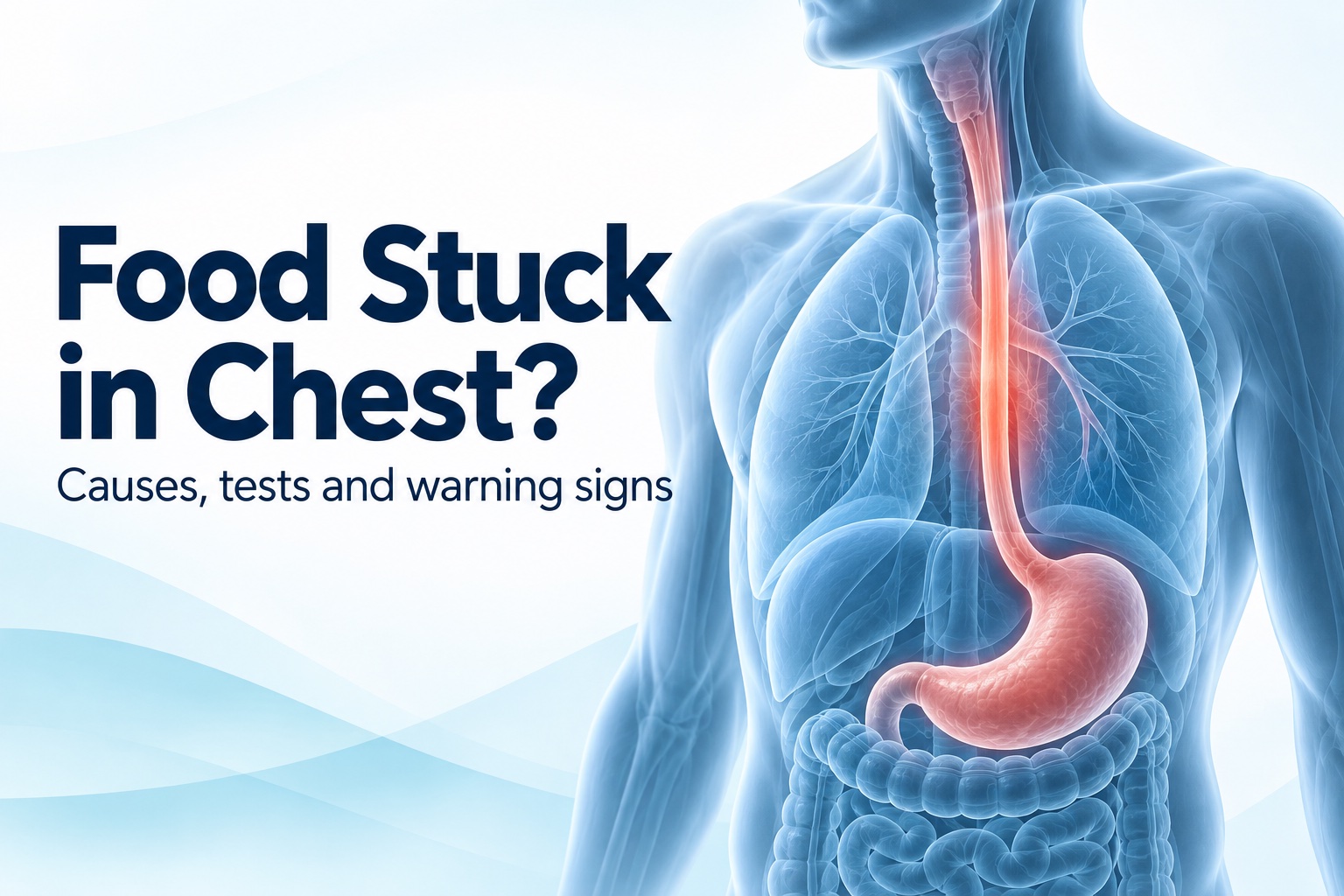
Food Stuck in Chest: Causes, Warning Signs and When to Get Help
Food feels stuck in your chest after eating? Learn about reflux, narrowing, swallowing problems, warning signs and when urgent endoscopy may be needed.
- Read More
- Sep, 28 2026
Why Do My Hands Sweat So Much? Causes and Treatment for Sweaty Palms
Struggling with sweaty palms? Compare antiperspirants, iontophoresis, injections and ETS surgery, including when to seek help and the risks to discuss.
- Read More
- Oct, 28 2026
Thymectomy for Myasthenia Gravis: Who Benefits, Surgery and Recovery
Learn who may benefit from thymectomy for myasthenia gravis, what research shows, how robotic and VATS surgery differ, and how to prepare for recovery.
- Read More
- Oct, 25 2026
Copyright 2026 © Dr .Parveen Yadav all rights reserved.
Proudly Scaled by Public Media Solution!