


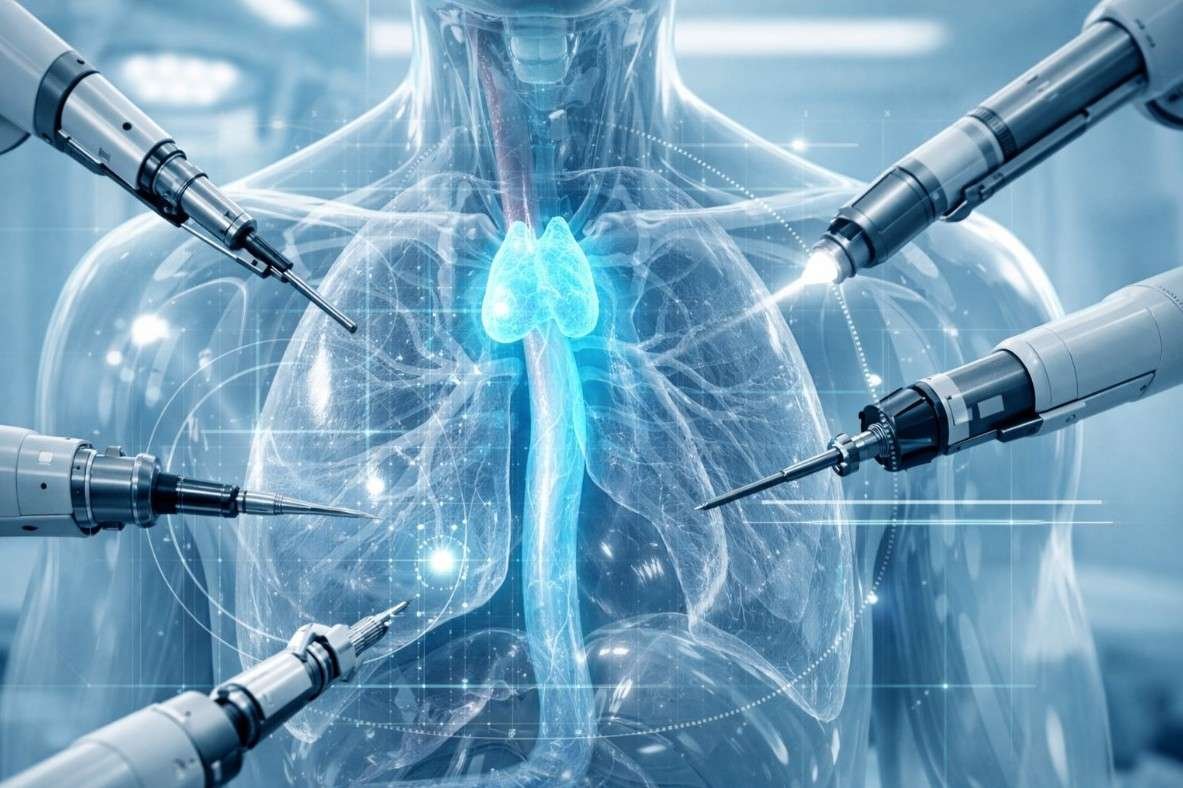
If you are looking for Esophageal Cancer Treatment in Gurgaon or Lung Cancer Treatment in Gurgaon, you need to understand one thing: the "Big Cut" is dying. For years, surgeons had to split the breastbone or spread the ribs to reach the heart and lungs. This caused massive pain. It left huge scars. It kept people in the hospital for weeks.
In 2026, we will do things differently. At Chest Surgery India, we use robots. We don't do this because it sounds cool. We do it because the data says it saves lives. Most experts agree that robotic systems allow us to work in tiny spaces where human hands just can't fit. This technology is no longer the future; it is the current requirement for high-quality oncology care.
We want to help you make a wise choice. If you are a patient or a family member, you are likely overwhelmed. This post breaks down how robotic technology treats diseases like thymoma and esophageal cancer. We will look at costs, recovery times, and the latest 2026 data from clinics across India. We aim to train you to see the difference between "traditional" care and "masterful" care.
Esophageal cancer is a tough fight. In India, we see over 75,000 new cases every year. Most of these are "Squamous Cell Carcinoma," which often requires aggressive surgery. Traditional surgery, or an "open esophagectomy," is tough on the body. Surgeons usually have to make three different cuts in the neck, chest, and stomach.
The robot uses "wristed" instruments. These tools turn 360 degrees. A human wrist cannot do that. Because these tools are so flexible, we don't have to spread your ribs. According to a 2025 report by medical researchers in India, avoiding rib-spreading is the single most significant factor in cutting down hospital stays. Patients who choose robotic surgery (RAMIE) often go home 5 to 7 days earlier than those who get open surgery.
Traditional surgery fails because it relies on 2D vision and rigid tools. In the narrow space of the chest, a surgeon needs to see around the heart and the great vessels. Traditional tools are like trying to eat with chopsticks through a keyhole. The robot is like having tiny, super-powered hands inside the body. This prevents "collateral damage" to healthy tissue.
A study from early 2026 found that the robot helps us see more lymph nodes. Why does this matter? Lymph nodes tell us if the cancer has spread. The more we find and remove, the better your chances of staying cancer-free. In fact, the 5-year survival rate for robotic esophagectomy in India is now showing a significant 11% lead over open surgery.
When people think of Lung Cancer Treatment in Gurgaon, they often think of chemotherapy. But surgery is usually the best way to cure early-stage cancer. We call the robotic approach RATS, which stands for Robotic-Assisted Thoracic Surgery.
Some doctors say older "VATS" (Video-Assisted) surgery is just as good. In 2026, we know that is not true for complex cases. VATS uses 2D monitors. It is like trying to drive a car while looking through a tablet screen. RATS gives the surgeon a 3D, 10x magnified view. The surgeon sees every tiny blood vessel. This means:
Most experts agree that a tired surgeon is a risk. Traditional thoracic surgery requires standing in awkward positions for 6 hours. In automatic surgery, the surgeon sits at a comfortable console. The robot filters out any tiny hand tremors. This ensures the first minute of surgery is just as precise as the last minute.
Thymoma is a tumor in the thymus gland. It sits right behind your breastbone. It is often linked to Myasthenia Gravis (MG), an autoimmune condition that makes your muscles weak.
The International Thymic Malignancy Interest Group (ITMIG) says we should never touch the tumor itself. Touching it can make cancer cells leak out. Robotic arms allow us to "shell out" the tumor by only touching the surrounding fat. This is the "No-Touch" technique. It is much easier to do with a robot than with traditional tools.
A study from early 2026 followed patients for over two decades. It found that 90% of patients with MG saw their symptoms get better after a robotic thymectomy. Most of these patients were back to their everyday lives within 2 to 3 weeks. Traditional "open heart" style thymectomies take 3 months to recover from.
| Feature | Open Surgery | VATS (Laparoscopic) | Robotic (RATS/RAMIE) |
| Incision Size | 15–20 cm | 3–4 Small Ports | 3 Tiny (8mm) Ports |
| Pain Level | High (Needs Opioids) | Moderate | Lowest (Minimal Meds) |
| Blood Loss | High | Low | Lowest |
| Vision | 2D Direct | 2D High Definition | 3D 10x Magnified |
| Nerve Sparing | Difficult | Moderate | Highest Precision |
| Lymph Node Yield | 15–20 Nodes | 20–25 Nodes | 25–35+ Nodes |
| Hospital Stay | 7–14 Days | 3–5 Days | 1–2 Days (Thymoma) |
| ICU Stay | 3–5 Days | 1–2 Days | 0–1 Days |
| Total Recovery | 8–12 Weeks | 4–6 Weeks | 2–3 Weeks |
| Conversion Risk | N/A | High (up to 28%) | Very Low (under 7%) |
Most people think robotic surgery is too expensive. In the US, it can cost $150,000. But in Gurgaon, at centers like Artemis Hospital, the cost is much lower.
In 2026, India will be a world leader in surgical tech. The SSI Mantra 3 system is a "Made in India" robot. It costs nearly one-third as much as the American Da Vinci system. According to a 2025 report by market analysts, this makes robotic cancer care accessible for the first time to middle-class families. This domestic innovation has broken the monopoly of Western companies.
When you look at the price, don't just look at the surgery bill. Think about the "Total Value":
As we move through 2026, we are seeing the rise of AI-assisted planning. Computers now help us find the perfect "cut line" before we even enter the operating room. Furthermore, 2026 marked the first successful long-distance thoracic telesurgeries in India. This means an expert in Gurgaon can operate on a patient in a remote city using high-speed 5G internet.
At the end of the day, the robot is just a tool. It is the surgeon’s hands that matter. Dr. Parveen Yadav has performed over 5,700 major thoracic procedures. Whether you need a lobectomy or a complex esophagectomy, the goal is the same: get the cancer out and get you home safely.
Ready to discuss your options? Contact Chest Surgery India
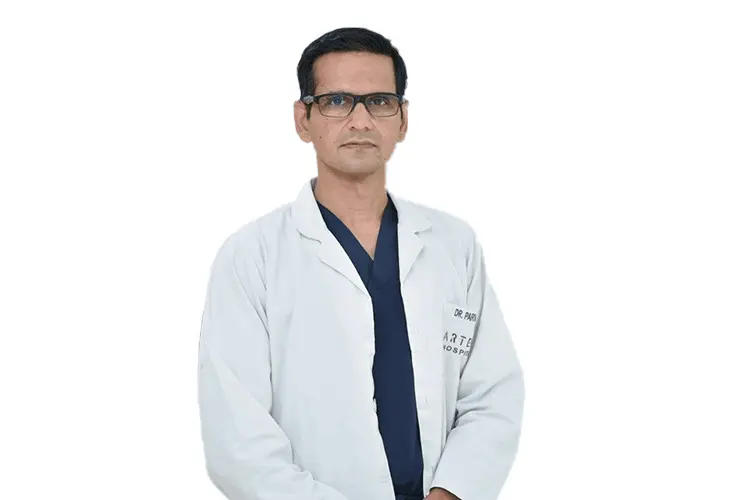
18+ Yrs Exp | 5,700+ Thoracic & Robotic Cancer Surgeries
Dr. Parveen Yadav is a Director and Senior Consultant in Thoracic and Surgical Oncology, specializing in minimally invasive and robotic lung and esophageal surgeries, with advanced training from AIIMS and Tata Memorial Hospital.
View Full Profile
Robotic vs VATS lobectomy? An expert guide to choosing the best lung cancer treatment in Gurgaon & Delhi. Learn the pros, cons, and key differences.
A lung cancer diagnosis is overwhelming. A second opinion can confirm your path, find better treatments, and give you critical peace of mind. Learn why
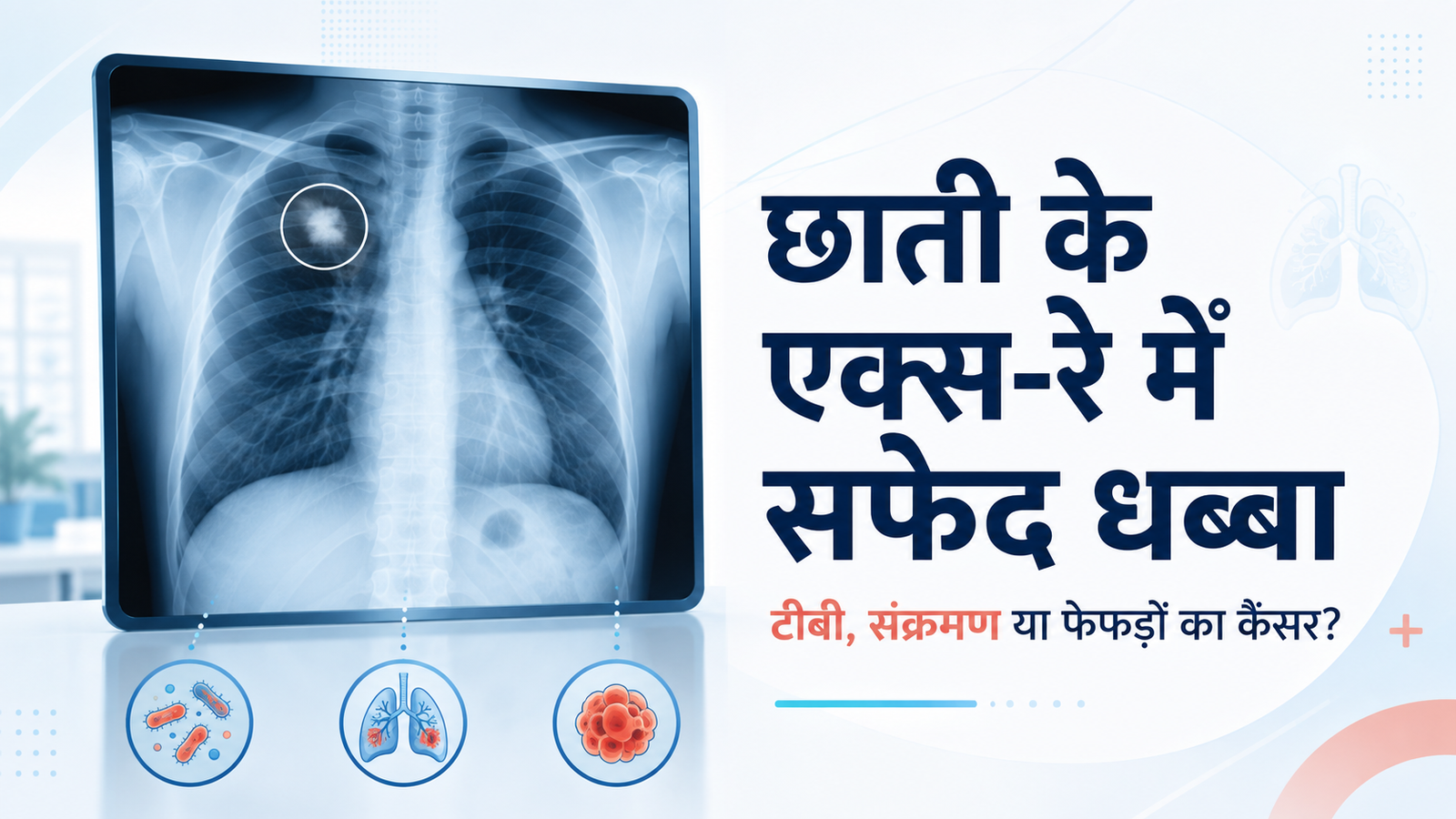
छाती के X-Ray में सफेद धब्बा दिखने का मतलब हमेशा कैंसर नहीं होता। जानें इसके संभावित कारण, टीबी और लंग कैंसर में अंतर तथा जरूरी जांच।
Copyright 2026 © Dr .Parveen Yadav all rights reserved.
Proudly Scaled by Public Media Solution!